Rob Adams a Painter's Blog painter's progress

June 14, 2012

The Jubilee on the Thames and London Streets

Filed under: London,Painting,Watercolour — Rob Adams @ 8:09 pm

Longer than I would have liked between posts, but I have been doing commercial work to refill the coffers that inflation is steadily depleting. I can’t get any interest from galleries so I’ll not be relying on landscapes and river scenes for a living anytime soon. That said I have covered my costs, which is as good as can be expected I suspect. It takes a fair while to establish any sort of reputation in any area of endeavour, I should know as I’ve done it several times in different specialities. So I know that it takes time and persistence. I sent images to several galleries that sell the sort of thing I do, but received no one single reply… not even a no thanks! So I will have to carry on putting in for as many of the open exhibitions as I can. The Marine exhibition of the RSMA is next and luckily due to the Queen ruling for a long time quite a few impressive nautical subjects hove into view in the river. The weather didn’t exactly help but I have three or so that will fit the bill as entries. I shan’t be surprised if I don’t get in as the standard is very high, but you never know. I am off to France to paint in Brittany in a week or so which should also throw up some contenders. The latest thing with open exhibitions is to allow you to enter digital versions for them to pre-pick. I am not sure about this, it may save framing costs but you wonder how the winnowing is done, do they have decent monitors… the process is not really fully explained.

It’s all watercolours this month as I have had breathing problems so too many solvents floating around in the room seemed a bad idea. I have been enjoying the painting though as I am trying to refine my balance of tight and loose. There are many people trying to be Alvaro Castagnet and Joseph Zbukvic and I can fully see why, I very much enjoy their dash and style. Both are fine draughtsmen and very strong on tone, colour and composition… they are also two of the hardest acts to follow for amateurs. Some admirers get pretty close mind you, but I am never quite sure about basing a personal style so closely on another painter who’s work you may admire. I myself very much admire the watercolours of Trevor Chamberlain and study his paintings to learn, but I don’t want to paint how he sees things I want to paint how I see them! Not that I would turn down some of his painting and compositional skills mind you. So here’s what I’ve got done we will start with the marine hopefuls I think… they can be clicked for larger versions.


.

watercolour

This is the Pelican of London moored on the Thames near Tower Bridge. The tide was low so I could get down on to the fore shore which really improves the composition with such subjects. The low view lifts the ship up and compresses the water. My first wash took an absolute age to dry, fortunately I had a book with me so I just read until it was ready. One of the advantages of a dead flat day. The warm yellow in the sky was an imaginative addition but by the time I had finished the afternoon was moving on into evening and it had almost become true!

.

watercolour

Here are Vic 56 and 92. VIC is Victualing Inshore Craft built by the admiralty. They looked very fine moored together, although it would have been nice to have had a brighter day, somehow the light rather suited these two old steamships in their matching yellow livery. The key to this picture was to get the water the right overall tone so that as few as possible marks had to be laid on top to define the ripples. I even did a little thumb nail test of the key tones so I was confident the various initial washes would dry the tone and hue I wanted. It is amazing how much such a simple thing helps. I still find it hard not to rush straight in with hastily mixed washes once the drawing is done, but a little pause for consideration nearly always pays dividends.

.

I have been considering this view for a while. It is only this time of year the sun shines down this very ordinary street in Brockley in South London. I set up perched on the bonnet of my car as usual… this prevents me being killed by passing motorists! I got all the drawing done and the first washes in but then the Landrover upped and offed, then to add insult to injury a big van parked in its place! So I had to finish up at home. Pity I need more practice at getting a 1/4 sheet done en plein air.

.

Not altogether sure about this one. Lots of good things, but I don’t like the centrality of the two sitting figures. I have gone down again since and done a few thumbnail sketches, so expect to see another version. There is a very good picture of this scene to be had so I will persevere.

.

This is Wapping high Street. I was out with the Wapping Group and just sizing this up when Trevor Chamberlain passed by. He had painted this very view himself many years ago and then apparently you got a glimpse of Tower Bridge at the end of the road. Nowadays we have to do with expensive and very ugly flats… Getting the light to flow through the picture was key to this one and also the balance of the greens. I might knock back the car on the left as people have pointed out it is a little too strong. Thanks to modern technology I shall test this in photoshop before risking any paint!

.

This St Alfege’s Church in Greenwich, designed by that great London architect Nicholas Hawksmoor Christopher Wren’s talented pupil. There has been a church on this site since 1012AD. It is another scene I have been meaning to do for a while. It is always hard to be on the spot when a subject is perfectly lit. I make a point of always carrying my camera and a sketch book with me even if I am just off to get a pint of milk. You just never know when some very humdrum scene will be transfigured by a moment of glorious light.

May 25, 2012

Whatever Happened to Decoration?

Filed under: Art History,Life Drawing,London,Painting,Thames,Uncategorized — Rob Adams @ 4:58 pm

From the dawn of mankind becoming self-conscious decoration has apparently been a part of our world. Indeed we think that the first appearance of them in the archeological record as being the heralds of our meteoric rise to prominence. Every culture, every civilisation from sophisticated to simple has beautified their possessions and selves with decoration. The first credible examples incised into chunks of pigment are 100,000 years old. Yet today we seem to fear it and eschew its use in most of our environment, and if it is used it is limited to clothing and the odd cushion cover. In “contemporary”  interiors and architecture it has vanished. There is not even a Wickipedia article that deals with its early history, or one on pattern making in early times. There are indeed hardly any books at all that I can find on the subject of our usage of pattern for decoration. The nearest is Archibald Christie’s excellent book Pattern design published in 1910. There are many pattern books detailing examples of ornament. From the Renaissance onwards there were compendious collections of historical decorative work that could be copied and enlarged upon. One of the most modern books published in the 1990’s deals only with the rearranging of existing motifs in a “cut and paste” manner not with originating new ones. A book that really goes into an area of historical design with the intent of equipping the reader with the tools to invent new motifs is George Bain’s wonderful book Celtic Art the Methods of Construction published in 1951. It has sadly been much abused since by new agers keen to be seen as part of some imaginary Celtic tradition.

So when and how exactly did decoration fall from grace? It was alive and well in the 1920’s with art nouveaux and deco. But in the last stages of rigor mortis by the 1970’s with brown and orange lozenges on a beige background. If you Google image search  “dinner plate” you get serried ranks of plain and minimally ornamented discs with the occasional historical “repro” that are available today. If you search for “dinner plate 1800” the results are strikingly different. In architecture there is today no ornamental content whatsoever. I do not count using a panel of mechanically pierced metal sheet here or there or “interesting” bolts on a staircase. The last redoubts of decoration are fabric and some wallpaper design, though these are dominated by photoshopped found images scattered about over surfaces with little sophistication.

So what could have occasioned such a dramatic change? The rise of mechanised production has to be a prime suspect. Take for example doors. A panelled or fielded door is to a considerable degree shaped by the limitations of its construction. The panels are there to fill in areas that do not need constructional strength as that is supplied by the rails and stiles. The  corners of the rails are if left sharp very prone to damage so a decorative mould is added to reduce wear. A modern door is two sheets of thin ply on a rectangular frame infilled with corrugated cardboard on end. The opportunities for decoration are as an unneeded surface layer rather than of practical purpose.

Another factor may be the automatic desirability of rare things. Once, for example, dinner plates could be cheaply decorated with transfers they become ubiquitous and thus less desirable. They can look as good or better than the hand painted ones and no one wants to inform their dinner guests before a meal that the crockery they are about to eat off in hand crafted and they should be appropriately impressed. This tends to leave the very very expensive as a niche product but cull the high to mid priced and cheaper offerings.

Architecture has been especially revolutionised by methods of construction, there are almost no places left for decoration to be put. Decoration in architecture has previously echoed practical necessity with outmoded structural features carried forward into decorative features. The classical column for example was a cluster of poles which became formalised into the fluted column we are familiar with. Many of the decorative strings of moulding we see in classical buildings were originally there as drip courses to throw off the rain from the vertical surfaces. Architecture is in effect no longer an art but a science, which is why we seem to live in a landscape filled with unremittingly dull, ugly and poorly proportioned buildings. Architects still see themselves as artists of course, but engineers and accountants really call the shots. The architects have nothing much to do but wear the Le Corbusier designed spectacles and look dapper. They are very fond of scribbly indecipherable drawings on paper napkins, which gives me the impression that designing buildings is secondary to the important business of eating in swish restaurants.

With the arrival of computer aided manufacture lavish surface decoration becomes a practicable possibility once more as cost of production drops but no examples that I have found have surfaced as yet.

I do wonder what a person from the Baroque of the Victorian era might make of our rather stark and sometimes visually bleak world.


.

HMS Ocean, warship, aircraft carrier, oil, plein air, painting, Greenwich, London, Thames, Rob Adams

I went down and painted HMS Ocean again. The tide was low once more which allowed me down on the foreshore.

.

wapping, tower bridge, Thames, London, Wapping Group, plein air, oils, Rob Adams

I managed to get to the Wapping Groups visit to Wapping, It was sunny but quite hazy and I did what I suppose is the iconic view. Changed a little now though by the arrival of Mr Piano’s Shard which is very near completion. Tricky light, a fair bit warmer than you would think when first assessing the scene.

.

Thames, wapping Group, Michael Richardson, John Stillman

Here’s Michael Richardson on the right with John Stillman both squinting into the light at the scene.

.

life drawing, nude

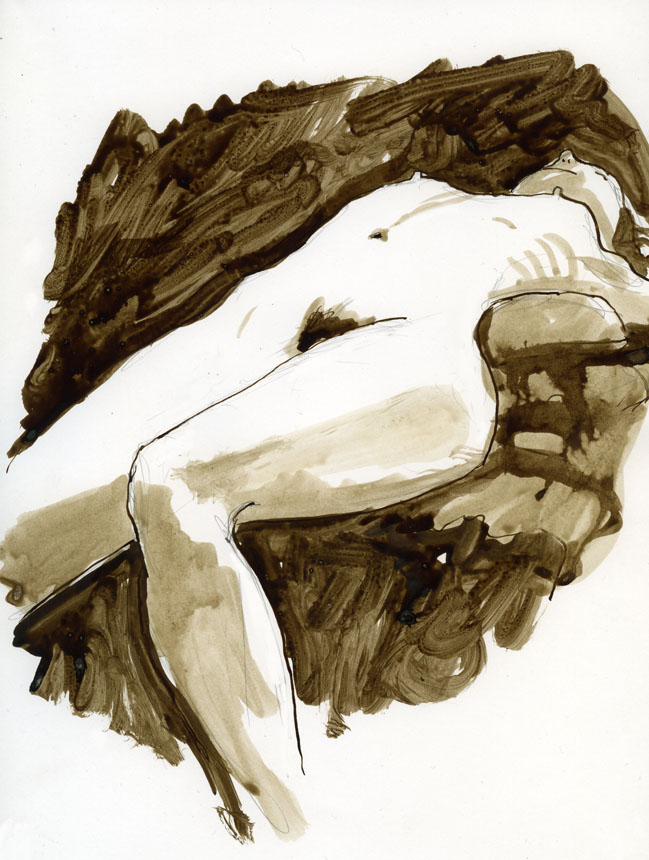
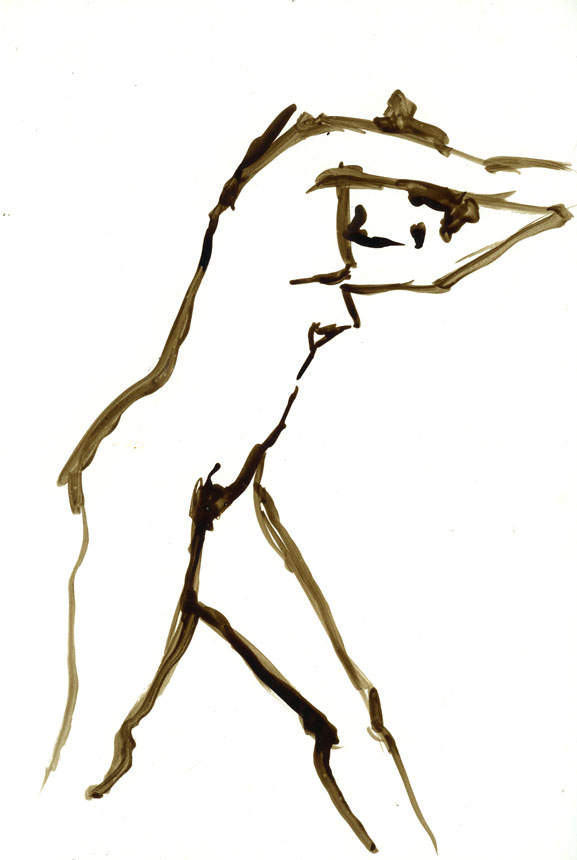
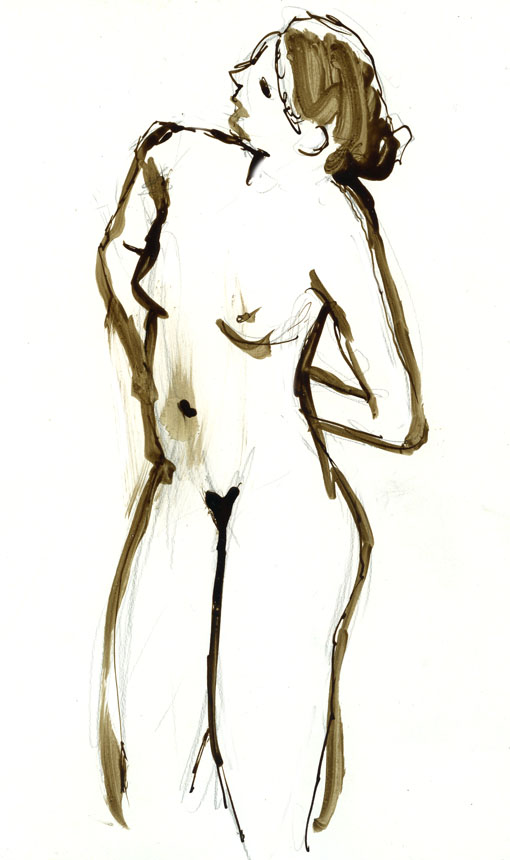
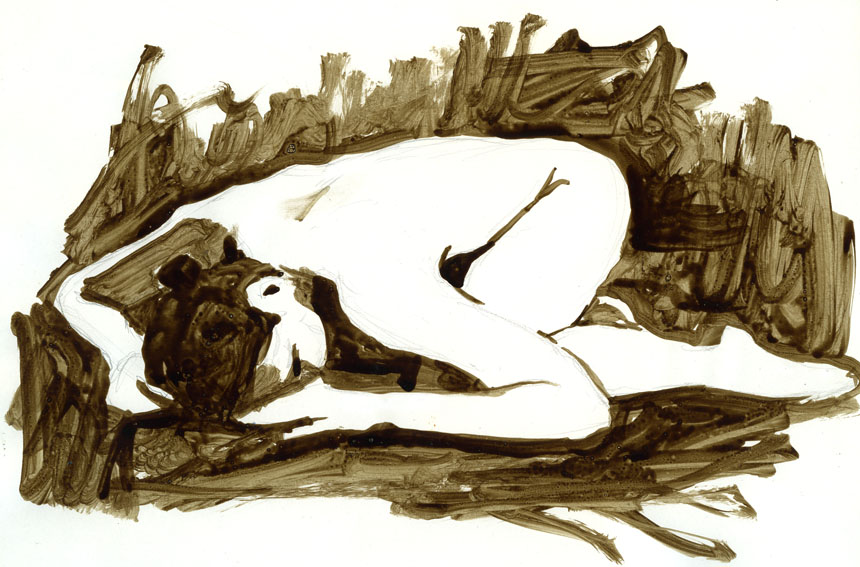
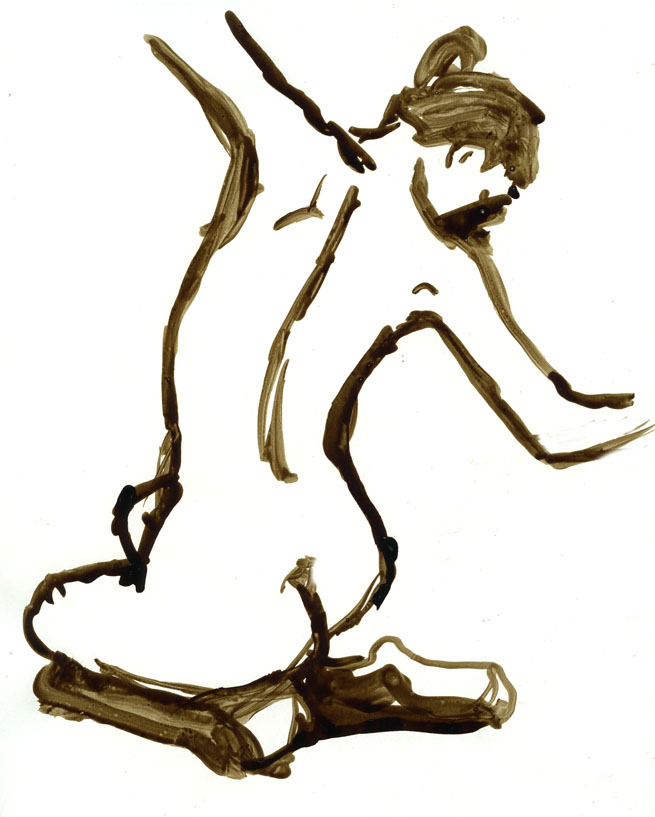
I decided to experiment with ink and brush on Bristol Board. Quite scary no where to hide here!

.

Life drawing, figure, nude

.

Life drawing, nude

.

Life drawing

.

Life Drawing

.

Life Drawing

.

Life Drawing

.

Life drawing

Back to the pencils briefly!

.

life drawing

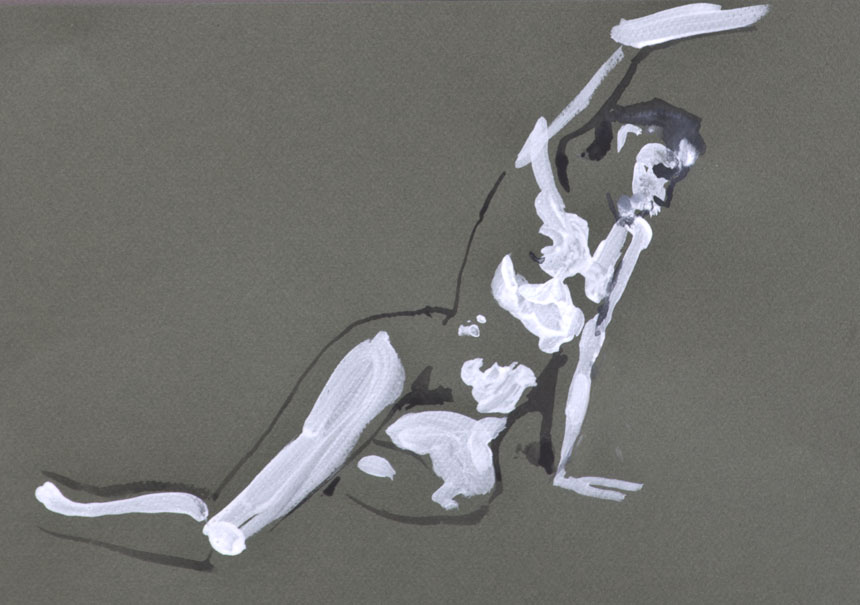
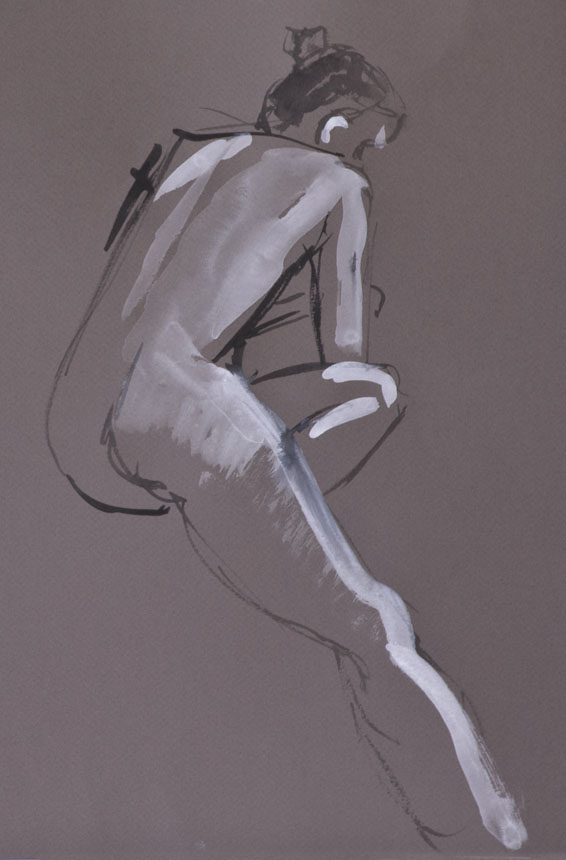
Another experiment. This time using black watercolour and acrylic white on Canson paper.

.

life drawing

.

Life drawing

That’s it! Thanks for looking.

« Newer PostsOlder Posts »

Powered by WordPress

error: Content is protected !!