From the dawn of mankind becoming self-conscious decoration has apparently been a part of our world. Indeed we think that the first appearance of them in the archeological record as being the heralds of our meteoric rise to prominence. Every culture, every civilisation from sophisticated to simple has beautified their possessions and selves with decoration. The first credible examples incised into chunks of pigment are 100,000 years old. Yet today we seem to fear it and eschew its use in most of our environment, and if it is used it is limited to clothing and the odd cushion cover. In “contemporary” interiors and architecture it has vanished. There is not even a Wickipedia article that deals with its early history, or one on pattern making in early times. There are indeed hardly any books at all that I can find on the subject of our usage of pattern for decoration. The nearest is Archibald Christie’s excellent book Pattern design published in 1910. There are many pattern books detailing examples of ornament. From the Renaissance onwards there were compendious collections of historical decorative work that could be copied and enlarged upon. One of the most modern books published in the 1990’s deals only with the rearranging of existing motifs in a “cut and paste” manner not with originating new ones. A book that really goes into an area of historical design with the intent of equipping the reader with the tools to invent new motifs is George Bain’s wonderful book Celtic Art the Methods of Construction published in 1951. It has sadly been much abused since by new agers keen to be seen as part of some imaginary Celtic tradition.
So when and how exactly did decoration fall from grace? It was alive and well in the 1920’s with art nouveaux and deco. But in the last stages of rigor mortis by the 1970’s with brown and orange lozenges on a beige background. If you Google image search “dinner plate” you get serried ranks of plain and minimally ornamented discs with the occasional historical “repro” that are available today. If you search for “dinner plate 1800” the results are strikingly different. In architecture there is today no ornamental content whatsoever. I do not count using a panel of mechanically pierced metal sheet here or there or “interesting” bolts on a staircase. The last redoubts of decoration are fabric and some wallpaper design, though these are dominated by photoshopped found images scattered about over surfaces with little sophistication.
So what could have occasioned such a dramatic change? The rise of mechanised production has to be a prime suspect. Take for example doors. A panelled or fielded door is to a considerable degree shaped by the limitations of its construction. The panels are there to fill in areas that do not need constructional strength as that is supplied by the rails and stiles. The corners of the rails are if left sharp very prone to damage so a decorative mould is added to reduce wear. A modern door is two sheets of thin ply on a rectangular frame infilled with corrugated cardboard on end. The opportunities for decoration are as an unneeded surface layer rather than of practical purpose.
Another factor may be the automatic desirability of rare things. Once, for example, dinner plates could be cheaply decorated with transfers they become ubiquitous and thus less desirable. They can look as good or better than the hand painted ones and no one wants to inform their dinner guests before a meal that the crockery they are about to eat off in hand crafted and they should be appropriately impressed. This tends to leave the very very expensive as a niche product but cull the high to mid priced and cheaper offerings.
Architecture has been especially revolutionised by methods of construction, there are almost no places left for decoration to be put. Decoration in architecture has previously echoed practical necessity with outmoded structural features carried forward into decorative features. The classical column for example was a cluster of poles which became formalised into the fluted column we are familiar with. Many of the decorative strings of moulding we see in classical buildings were originally there as drip courses to throw off the rain from the vertical surfaces. Architecture is in effect no longer an art but a science, which is why we seem to live in a landscape filled with unremittingly dull, ugly and poorly proportioned buildings. Architects still see themselves as artists of course, but engineers and accountants really call the shots. The architects have nothing much to do but wear the Le Corbusier designed spectacles and look dapper. They are very fond of scribbly indecipherable drawings on paper napkins, which gives me the impression that designing buildings is secondary to the important business of eating in swish restaurants.
With the arrival of computer aided manufacture lavish surface decoration becomes a practicable possibility once more as cost of production drops but no examples that I have found have surfaced as yet.
I do wonder what a person from the Baroque of the Victorian era might make of our rather stark and sometimes visually bleak world.
.

I went down and painted HMS Ocean again. The tide was low once more which allowed me down on the foreshore.
.
I managed to get to the Wapping Groups visit to Wapping, It was sunny but quite hazy and I did what I suppose is the iconic view. Changed a little now though by the arrival of Mr Piano’s Shard which is very near completion. Tricky light, a fair bit warmer than you would think when first assessing the scene.
.

Here’s Michael Richardson on the right with John Stillman both squinting into the light at the scene.
.
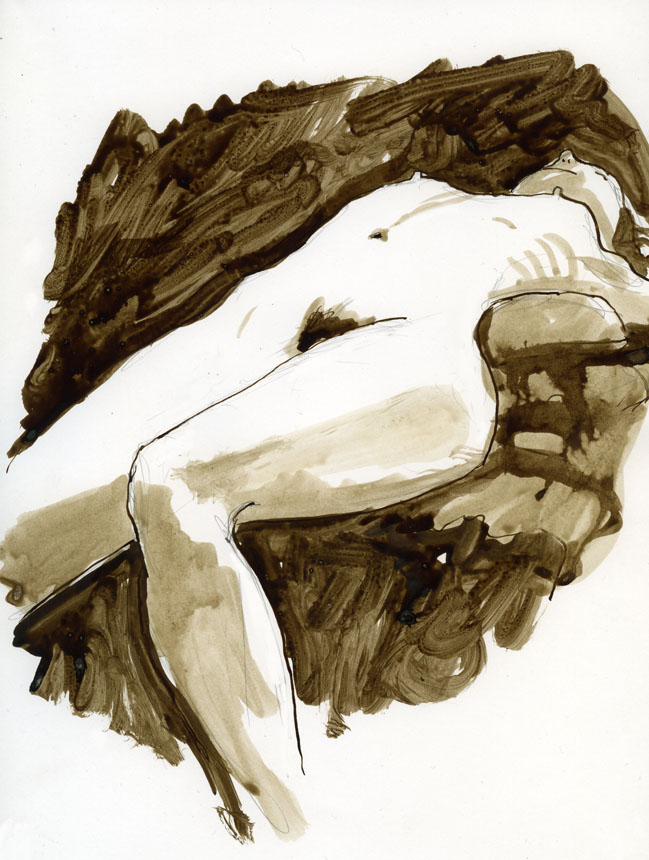
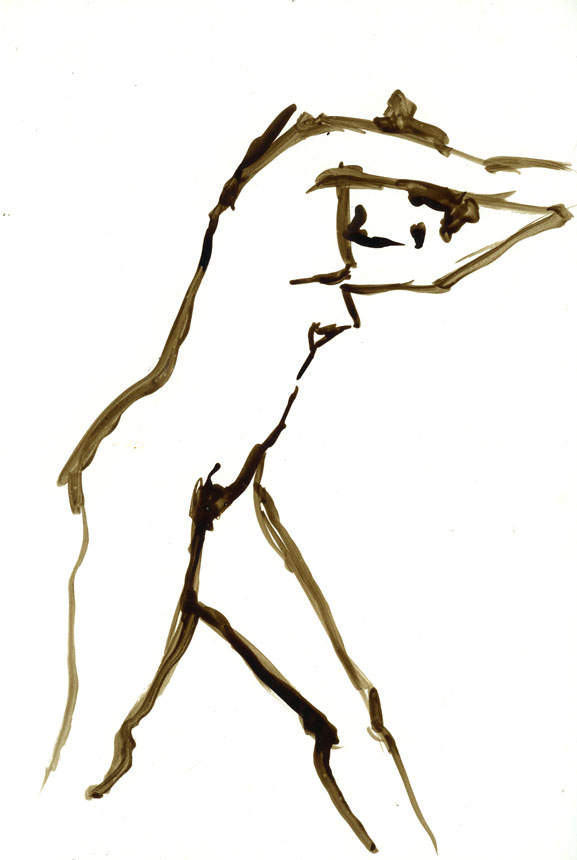
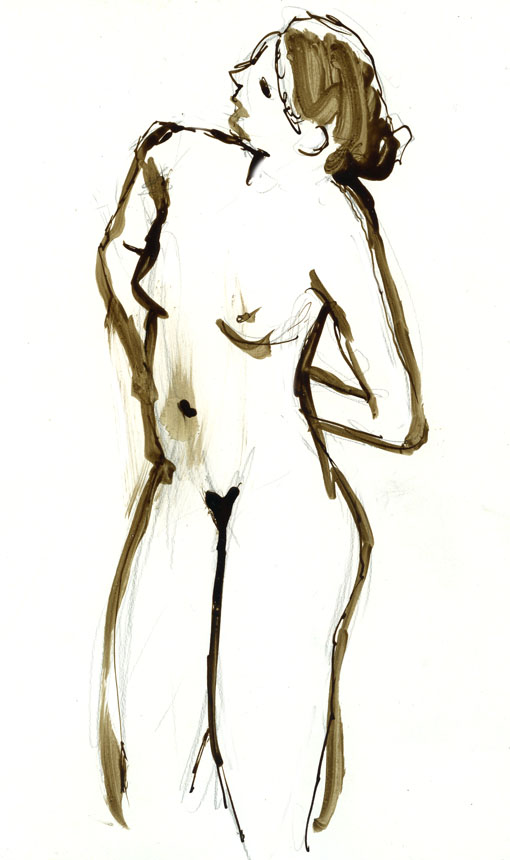
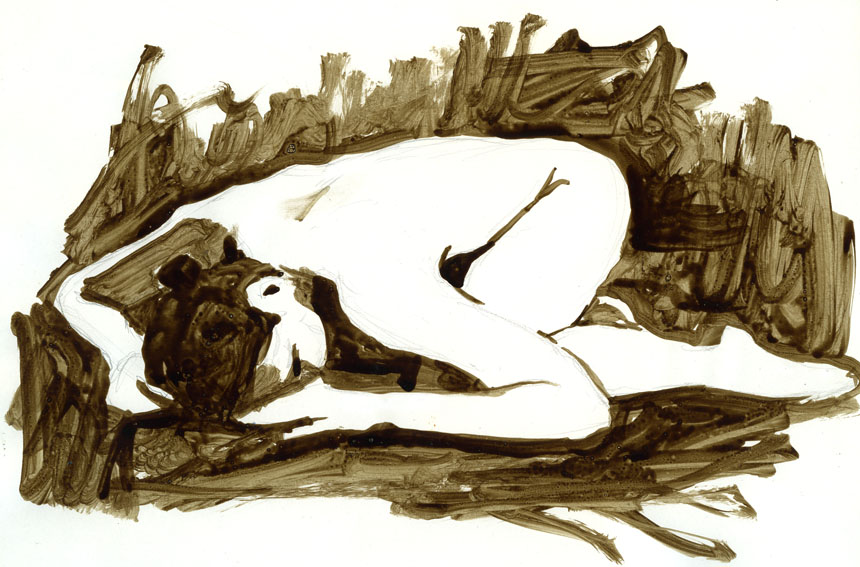
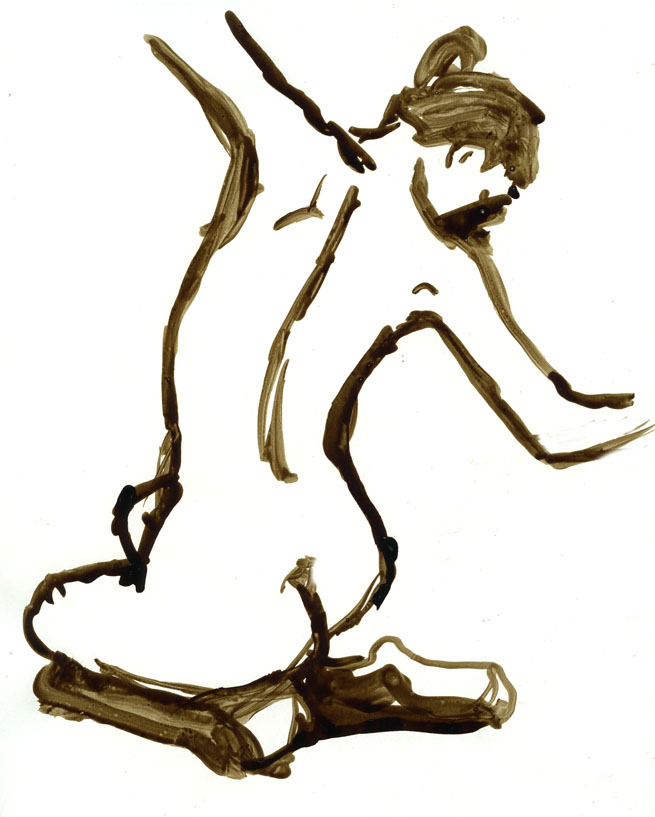
I decided to experiment with ink and brush on Bristol Board. Quite scary no where to hide here!
.
.
.
.

.
.

.

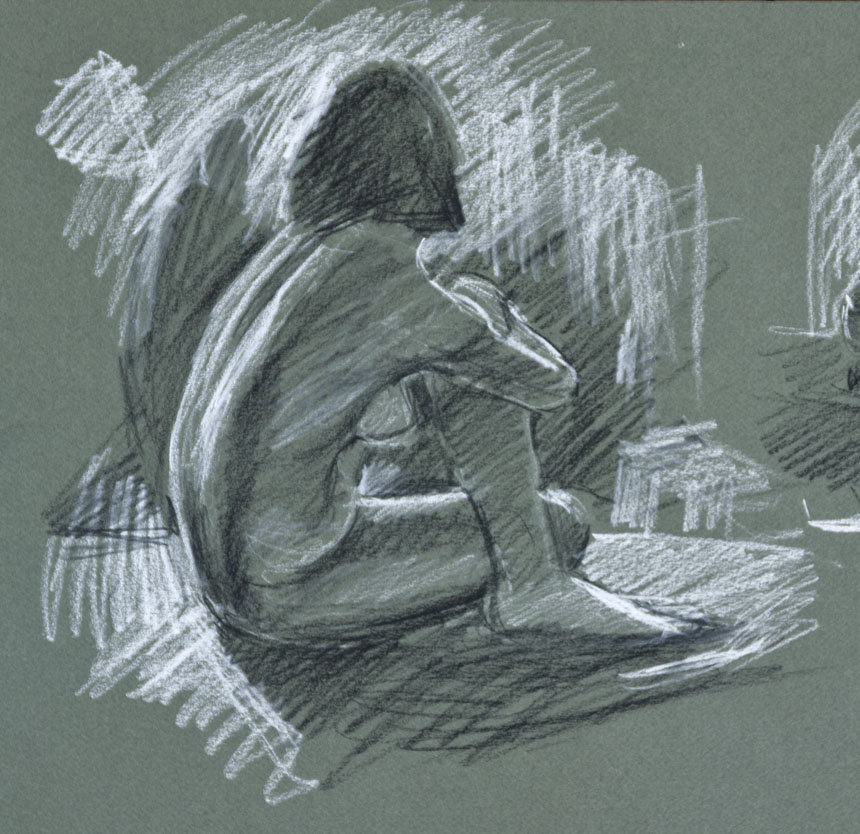
Back to the pencils briefly!
.

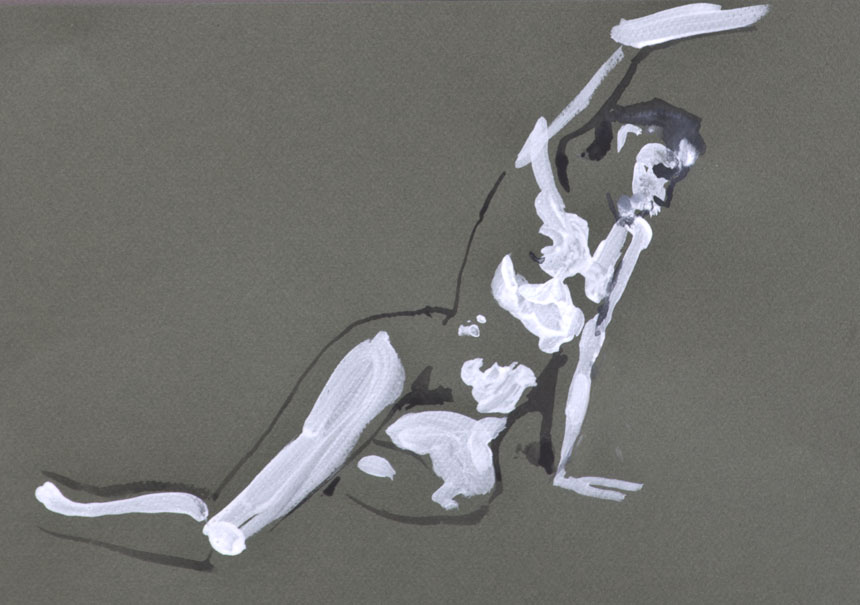
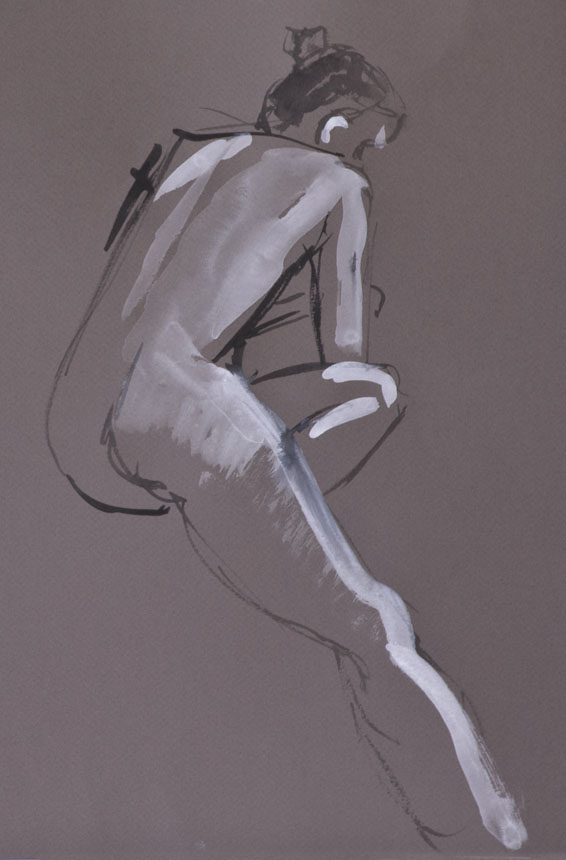
Another experiment. This time using black watercolour and acrylic white on Canson paper.
.
.
That’s it! Thanks for looking.