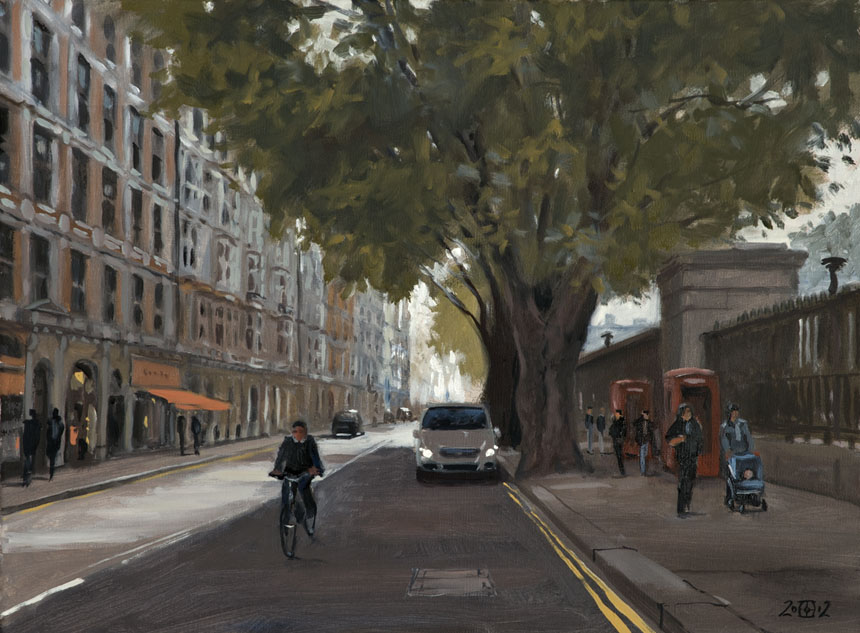
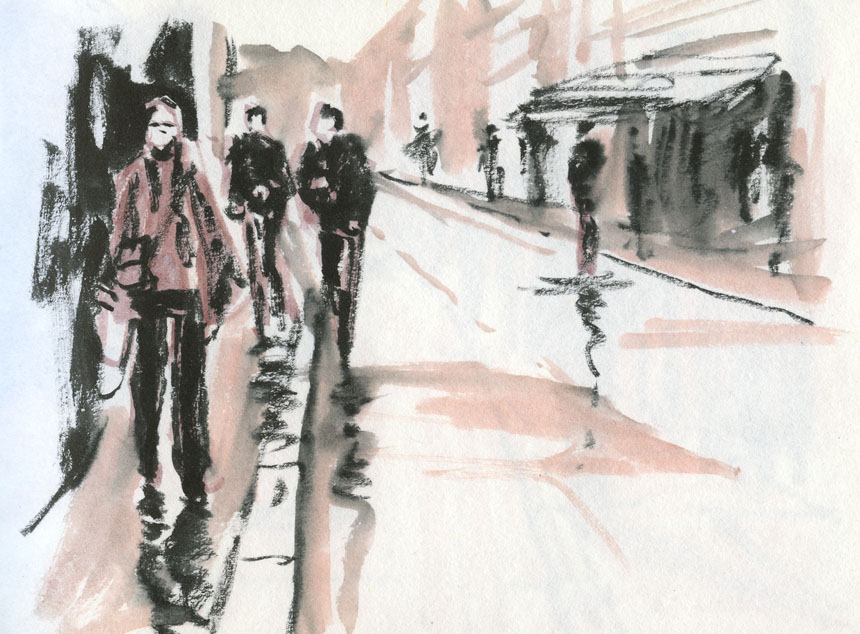
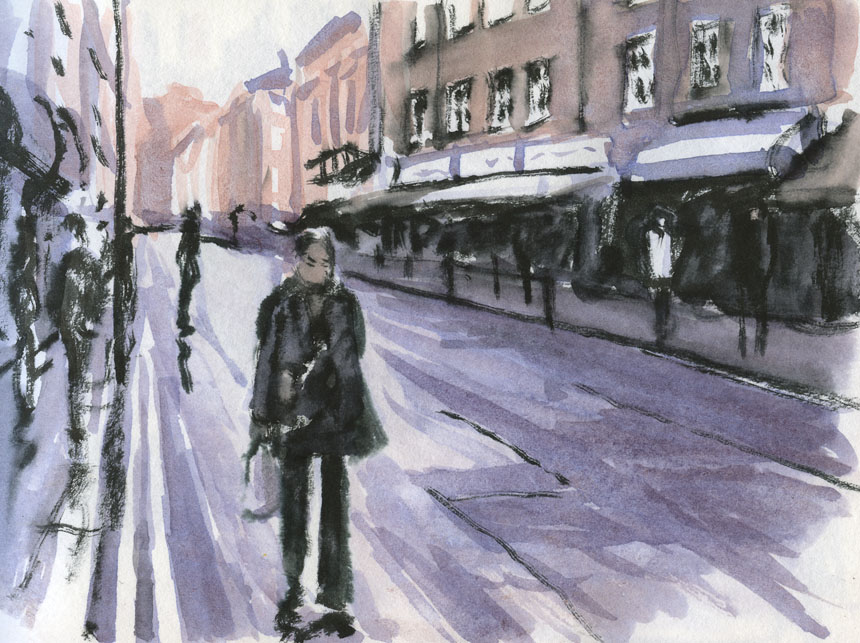
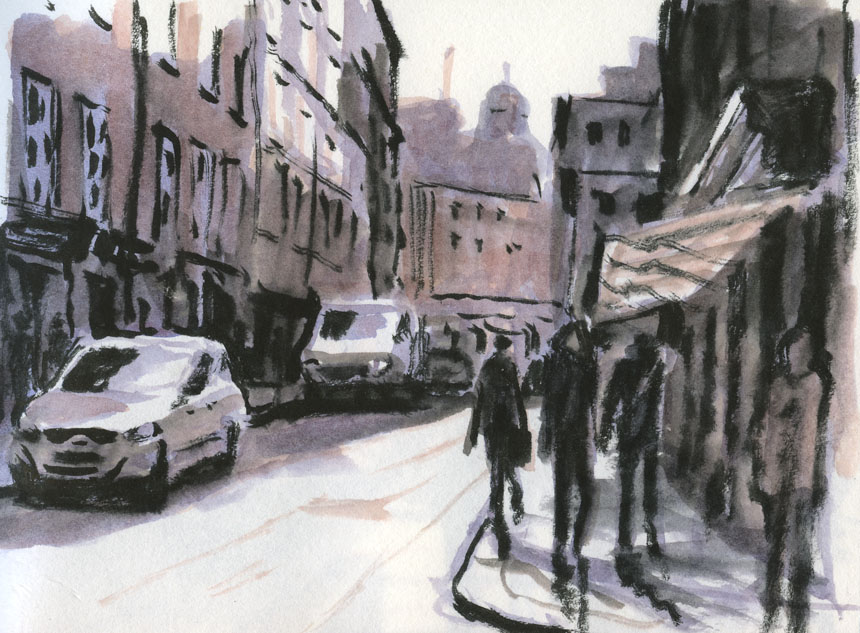
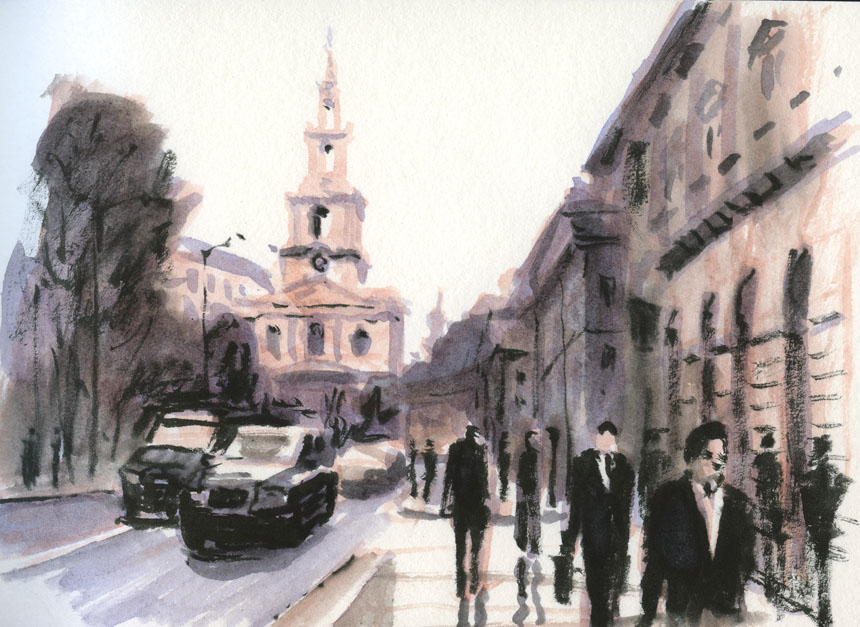
What makes a good picture? For each of us the answer will be a little bit different. There can I suppose be no definitive measure of quality. Though nowadays “the curator” has become the arbiter of worthiness. One person online assured me the the curator was more important than the individual artists and was in turn an artist who assembled collections of art from the work of others, I believe uber-artist was the term used. Saatchi Online is in the process of rolling out collections by 100 curators. The result is oddly uniform in the similarity of the choices.
It is possible that the curators of collections here might be better if they were drawn from a wider spectrum of people. At present they seem to me to be all from the rather academic fine art end and produce these rather predictable and somewhat unimaginative selections. Better might be artists who inhabit the many stylistic areas that are around today. I know the site hails from the very contemporary art scene, but that is only a small niche area of artistic endeavour on our varied planet. What we term “contemporary” in any case is really art exploring interesting ideas that are nearly a hundred years old now and things have moved on!
Today an artist can draw from and be inspired by any period or cultural side eddy from the whole of history which makes our time unique, maybe the curatorial choices should reflect that? I would not make this criticism except that the work on the site seems to display a wider spectrum of interest than is represented by the curatorial choices. The very idea of what a “curator” is has become ludicrously pumped up I cannot help but feel. Rather like “designers” were a decade or so ago.
The thing that struck me most about the 100 curators’ selections was that you could see hardly any sign of personal taste in any of them no, theme. If you look at someone’s home you usually get a feeling of someone’s likes and dislikes. The choices by the curators, to my eye looked as if they were very concerned about how others would see them via their selections, not I suspect what they might actually choose to surround themselves with. They were essentially safe and in the approved acceptable contemporary styles.
As an experiment I took 10 of the curators and put their choices in a single mosaic photoshopped image which really pointed out the uniformity in their selections. The main standout thing was that they, by a huge margin, preferred mechanically derived (photographic) images rather than seen images. In sculpture they preferred assemblies of actual things rather than made things. Installations often used repeated linear things. Paintings and photographs of places almost entirely consisted of gritty back street stuff badly photographed or a painting of a bad photograph.
Something striking in its absence was hardly anything that required a highly developed skill to achieve, by “high level” I mean the sort of skill that takes 10,000 hours or so to develop, in music a concert violinist for example. There were perhaps 3 or 4 examples as far as I could see of this kind of work. When I brought this up on their forum one agonised artist exclaimed, “What about the hundreds of thousands of hours I have spent honing my mind!” Well, I think he meant just living… well we all do that, but we don’t think of it as honing.
It is odd and somehow sad to my mind that the sometimes interesting, perceptive and poetic ideas that arrived with the advent of modernism a 100 year ago have, rather than promoting freedom of expression, done the exact opposite. I do wonder if the main reason may not be the camera, having made a machine to see for us we have lost the confidence to see for ourselves. The cameras version of our world has become the gold standard against which our own personal visions are judged.
If I make such comments on line I am immediately labeled as a traditionalist, when in fact I feel uncomfortable with both the “a child could do that” tendency and the idea that there is some sort of “traditional” old fashioned art we can all rebel against. To me there is the inspired and uninspired in all arenas of visual art and I fail to see why any particular area should be viewed dismissively.
Modernism, so called, and its off shoots has not I think been much helped by becoming the officially approved style. A state sponsored style should be a prime target for rebellion, deconstruction and the shooting of sacred cows, but if rebellion and deconstruction are the sacred cows themselves what sort of gun might you need to shoot them? It is perhaps for this reason that modernism makes a rather poor vernacular style, it is by its very nature quite elitist and exclusive. Its essential nihilism is unlikely to appeal widely, which limits the type of people it can reach. It is academic in its nature made by intellectuals for intellectuals. Although it is of course necessary to have some learnt visual and cultural education to appreciate art objects, I feel the current mode of art creation is in large part too inaccessible.
Certainly one attribute I want my own work to have is to be easily grasped in a straightforward manner, but I also attempt to have qualities included that might take more than a casual or single glance to be appreciated.
A mixed bag in the paintings this post as I have been busy with earning a few bucks to allow me to paint yet more pictures! Some can be clicked for larger view.
.
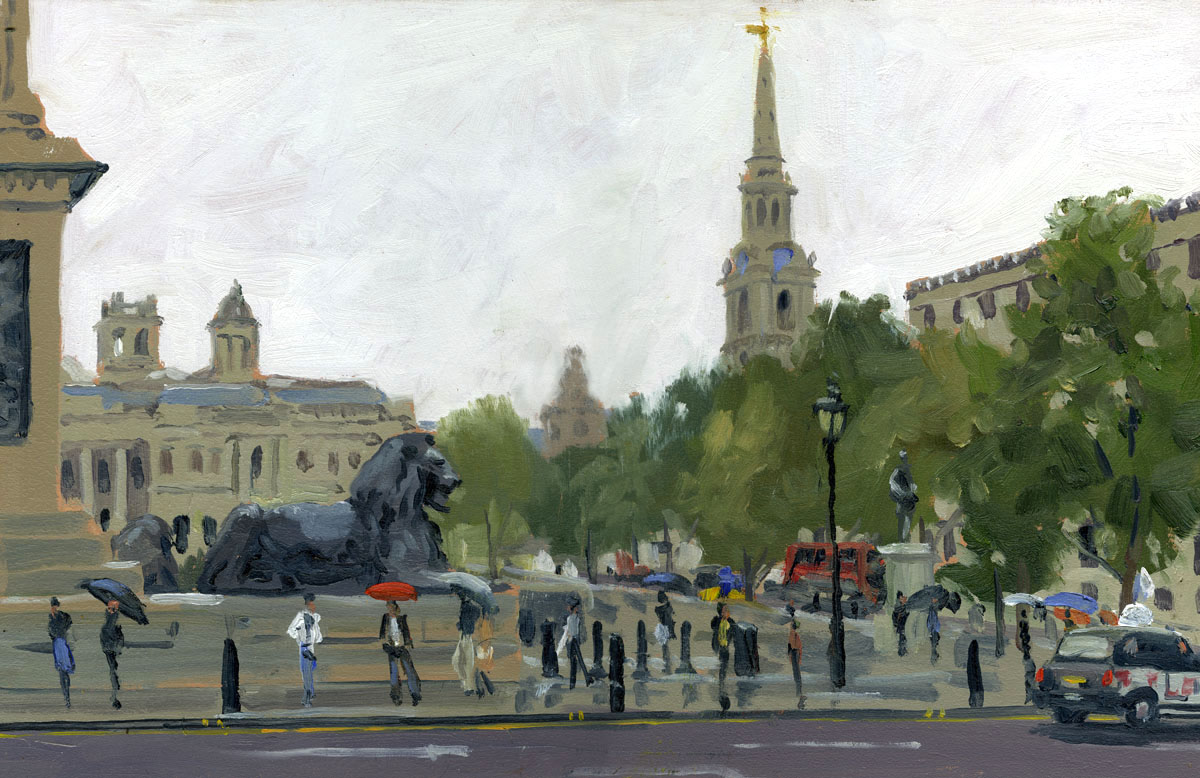
The first day of the Brass Monkey season. The forecast was for torrential downpour which put most people off, but in the event a drizzle was all we got.
Mind you I had to paint this from under the a brolly which is tiring, I must find a way of strapping it to the tripod. It is so nice to be painting in oils
again. I was very careful in this to get the subtle tone relationships as near as I could. The first relationship I established was from sky to buildings, the
contrast of these two areas was absolutely key as it gave the character of the day. I never see the point of being somewhere and then trying to make it look
as if it was painted on a better day than it really was. Grey days are harder to paint but they have their own distinctive beauty that sometimes gets overlooked.
.
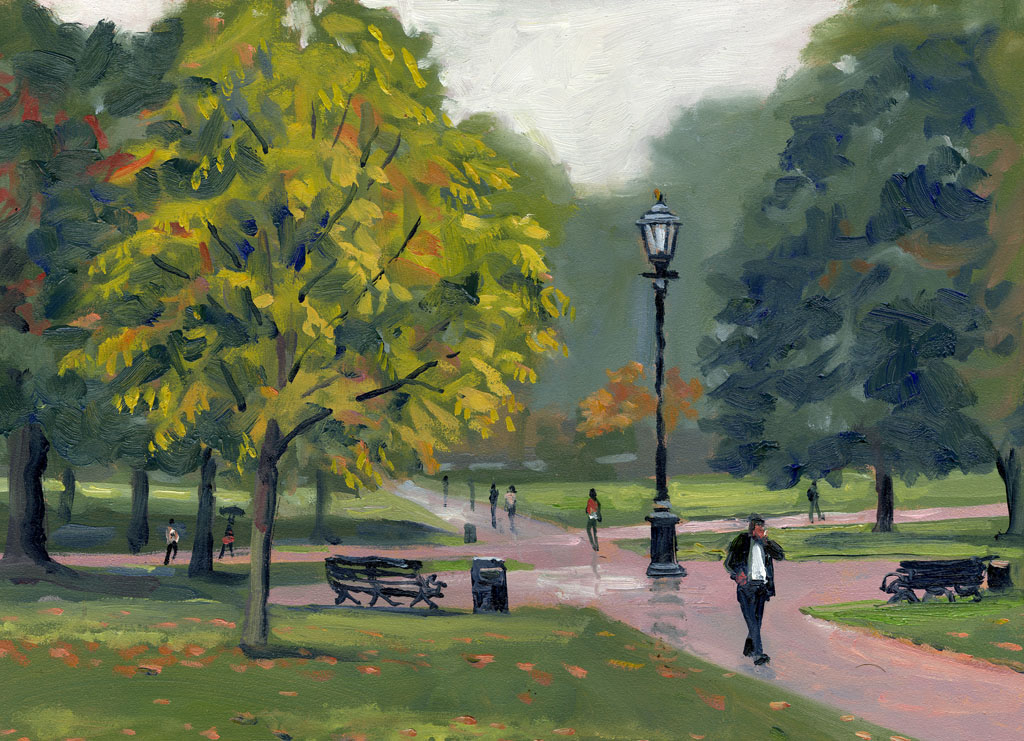
The meeting area with the Monkeys was Green Park and I found Dennis Mossman bravely painting away under a tree. I joined him and did this sketch
which has a somewhat Narnia feel due to the Lamppost. It need a better and possibly umbrella toting figure or a couple to make it work decently. I’ll do
that when it’s dry enough I think. Autumn is late this year with just the first flush of colour appearing.
.

Last one of the day. This is St James Park. I fancied a simple scene after the first two so I enjoyed doing this. In this one I got the figures in at the very
early stage. I must remember to do this more as it makes the picture more integrated. The figure in the previous painting looks stuck on in comparison.
.
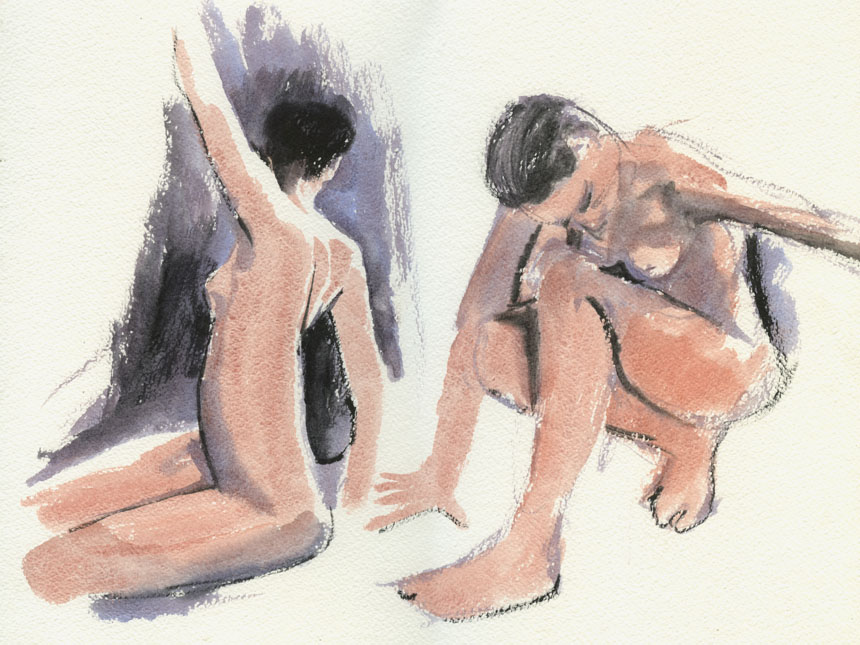
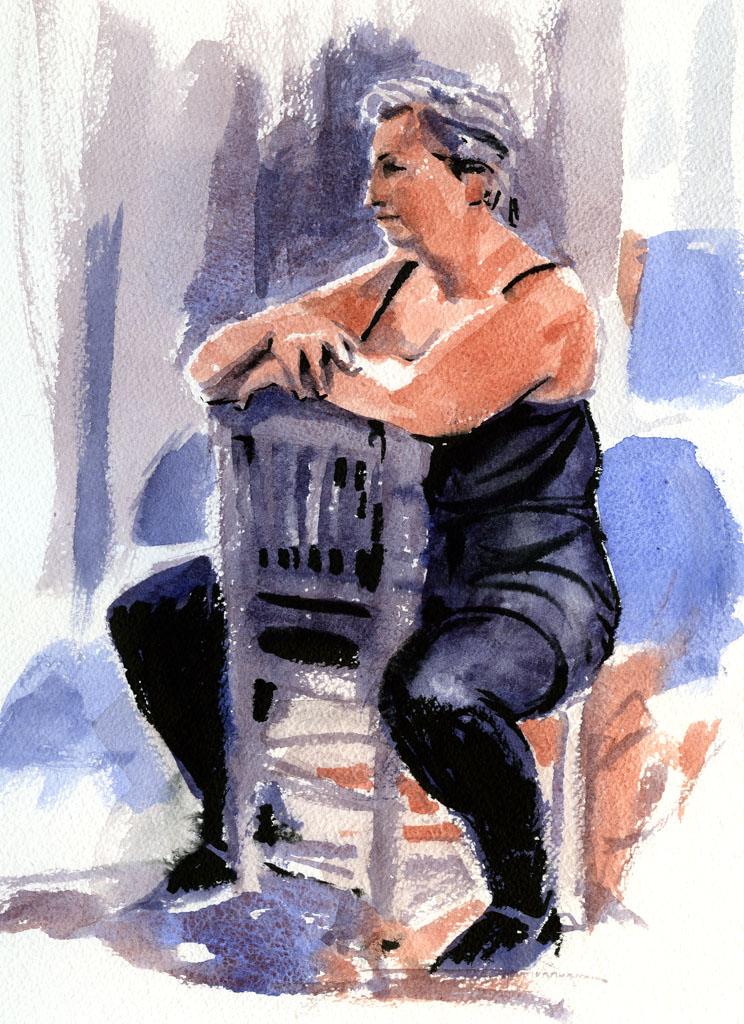
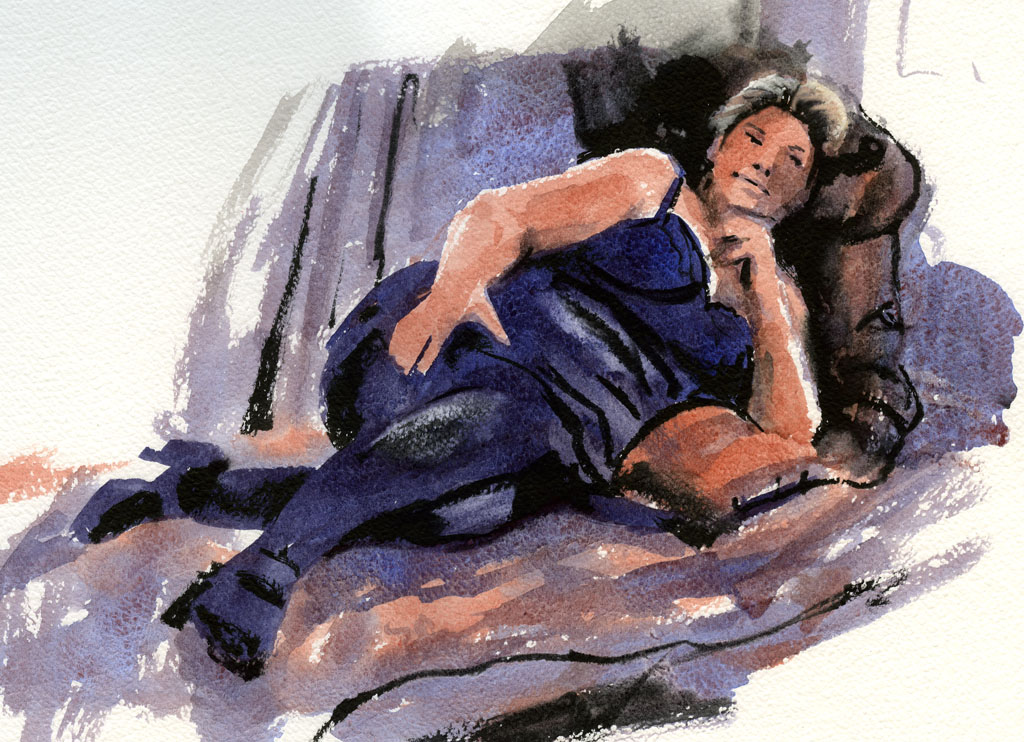
Life drawing again. These are done with the waterpens again but adding ordinary watercolour too. These are 7min each.
.
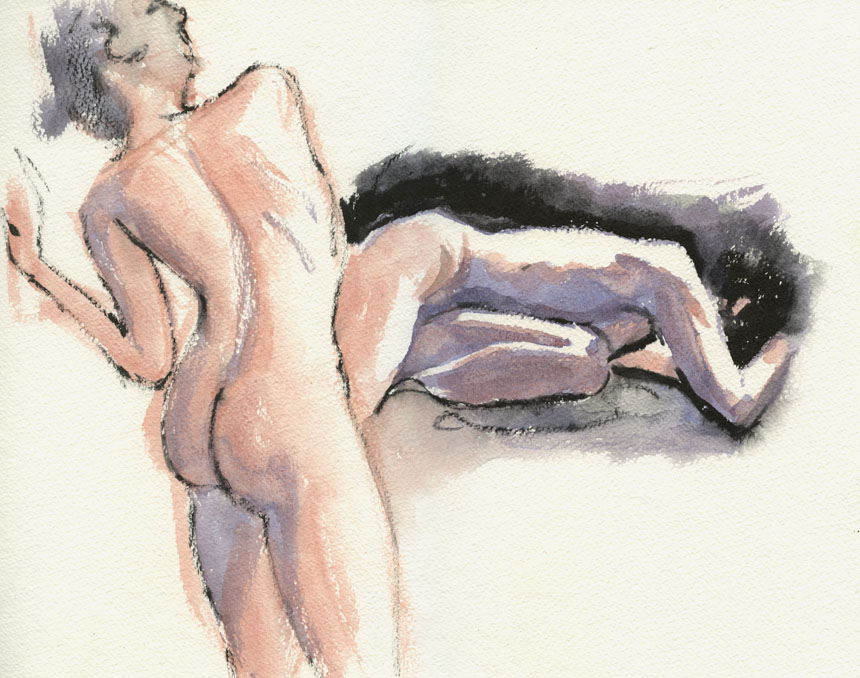
Two more 7mins. I love doing the quick poses it gets the whole drawing focus into gear.
.
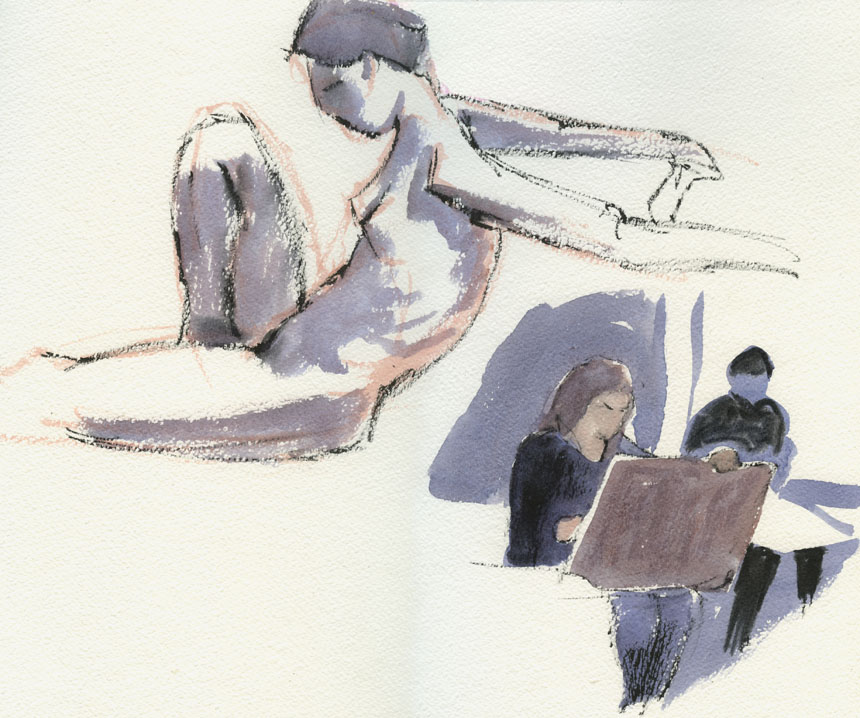
Anothe quick one. Sometimes a drawing looks right after a very few marks. So this took maybe 3 min, allowing me to sketch my fellow drawers as well.
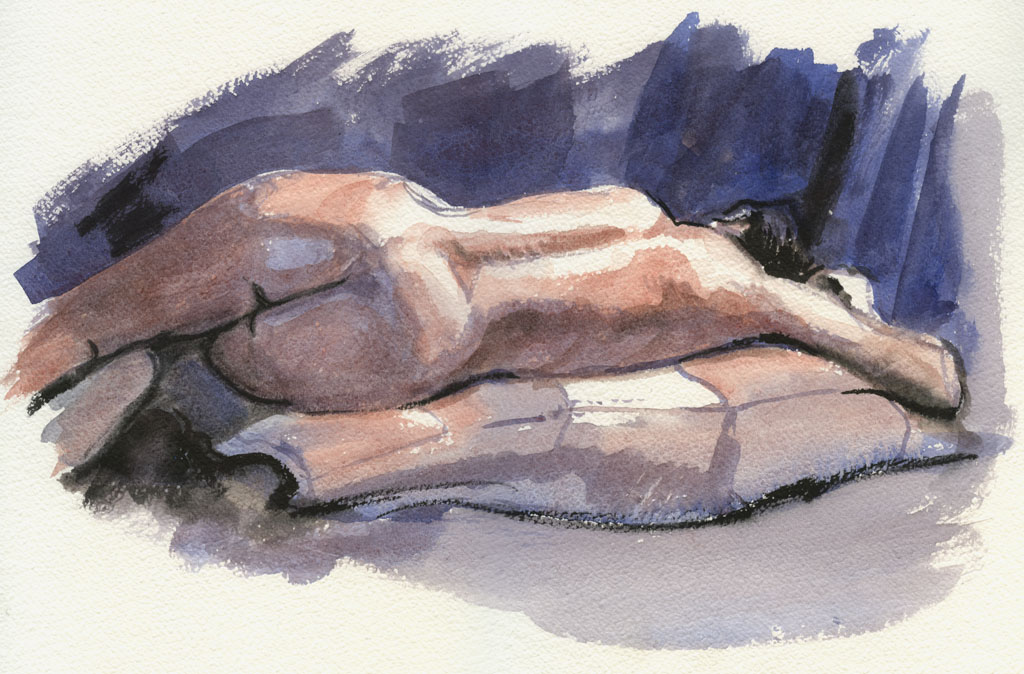
This is a 30min pose. I am doing no initial drawing just straight in with the paint, which I am starting to much prefer.
.
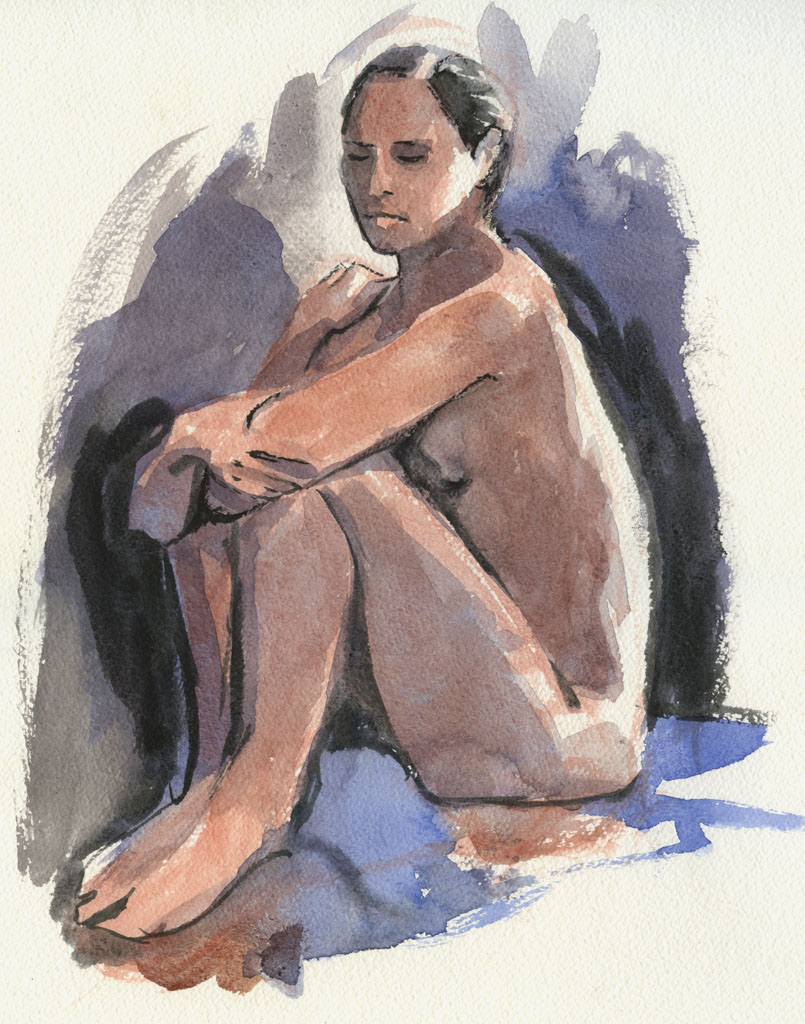
Another 30min. Odd it feels like 10min at the longest when you are drawing. I always try to bear in mind that for the model it
feels like 60min! I worked more slowly here. Considering each wash for a few moments before laying it in.
.
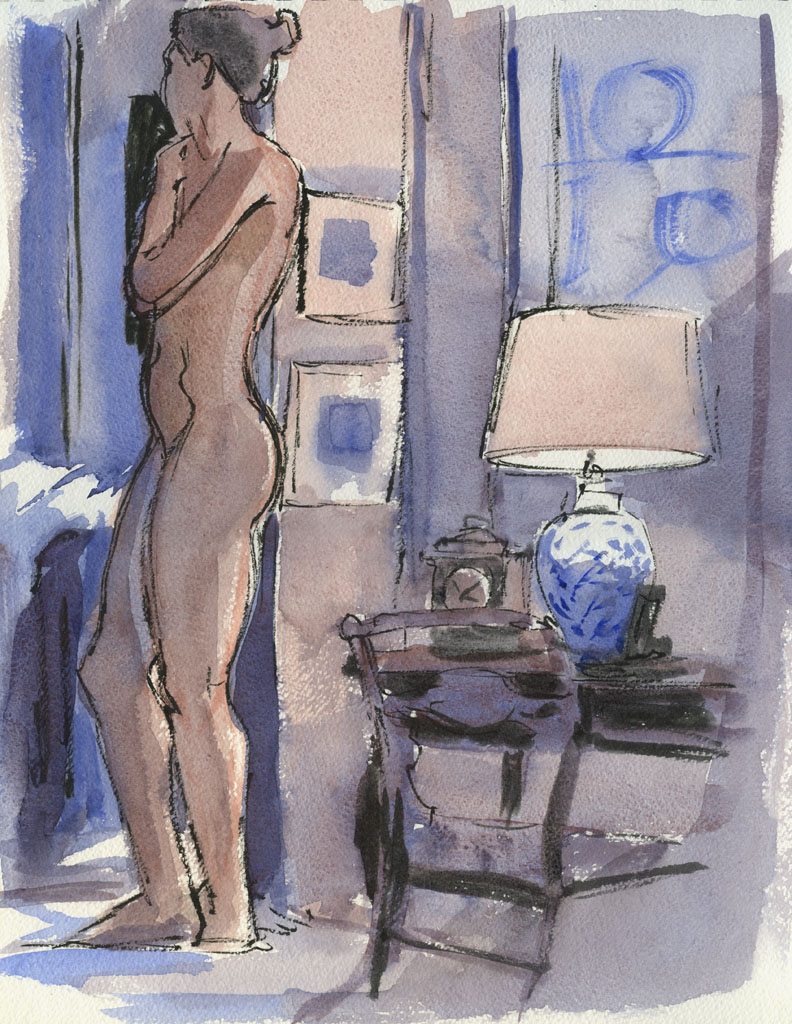
Last one of the session. As much of the scene as I could get down in 30min. I liked the relationship between the model
and the lamp and the way the light flowed between them.