Rob Adams a Painter's Blog painter's progress

November 16, 2013

The Devil in the Detail

Detail. Many artists make it their life’s work to eliminate it. Simplify, combine and other words to reduce and edit litter “how to paint” books. To be detailed is for many painters a crime against art. I have more than a little sympathy with that view. I try to refine and simplify in my own work. The general public however disagrees. They love detail, the more of it the better. This creates a dilemma, to impress your peers you need to show a sophisticated reduction of content, for the general viewer they want to revel in the small touches.

Artists dismiss the overly photographic. I generally agree here too. What I ask is the point of copying a photograph into a handmade version in paint? The public however disagrees here too, with artists cringing at that innocently given accolade, “Oh it’s just like a photo!” Even people given to trawling the web looking at paintings disagree. Looking at Facebook pages that collect art the more photographic in quality the more “likes”. From my perspective as a painter the public has bad taste and does not know good painting when it sees it.

Oh how arrogant that sounds! It is a thread that runs through all the arts to some degree. In music composers don’t want to compose nice Mozarty tunes they want their compositions to be difficult and demanding of the listener. Literary critics want serious incisive writing, the public want page turners. In TV the public has won, with anything intelligent ghettoised to Beeb 4 and watched by about 3 people. I could do a rant here on reality TV, soaps and food porn but that would be too easy. Instead I have to ask, “Am I wrong?”

Becoming an expert at something or indeed an aficionado changes how you see the subject you are involved in. Painters see a different picture from the casual viewer. Where I see elegant simplification the uneducated might just see crude and childlike! At a certain point in elevated sophistication the viewer takes on more and more of the responsibility until we reach Malevitch’s black square or Cage’s silence where everything comes from the audience and nothing from the artist. Art critics and art fans, work hard to see what they see. They imagine of course that these aesthetic feelings come from the art and not from themselves though logic would say otherwise.

So what is a painter to do. If I paint something the man or woman in the street might like, then the art establishment will dismiss me. If I paint to please the establishment and other painters, the general public will mostly turn aside. It is popular to think that the public’s taste “lags behind” and will in due course catch up. Well it’s been a hundred years and there is no sign of it catching up so far! The uncomfortable truth is that such a view is arrogant and almost certainly untrue.

The public’s taste is as it is because they are not painters, they are lookers. They judge a painting upon what they see around them and by photographs of reality. All your colour harmonies and compositional tricks for the most part are unnoticed. For a portrait they will just say, “It don’t look like her much!” they wont admire your deft scumbling of the background or the subtle passage of brushwork that defines the cheek.

The choice for the painter is a little bleak. Paint to please yourself and hopefully a small group of connoisseurs or “sell out” and do crowd pleasing potboilers. You can of course widen your market by painting those pictures that the amateur would like to paint but can’t quite pull off, but even this might attract scorn from your fellow artists.

This disconnect is quite recent. The high Victorian 19th Century paintings with their syrupy sentiment and moral certainty appealed both the the public and the connoisseurs and critics of the time as well. We cringe now at the paintings of puppies looking up adoringly at sweet children but I suspect that they would still be very much to current unsophisticated taste. In music they try to “educate” the public by doing a Mozart symphony and then tacking a bit of Shostakovich for them to sit through as well. A policy I have always found irritating and rather patronising.

The ideal of course would be to please everybody, but that is not going to happen. I have my own cringeometer which determines a step to far. I can only show this by example…

.

Solomon J Solomon

Here is an unlikely scene. A painting by Solomon J Solomon a painter of over heated romantic scenes and

one of the inventors of camouflage netting. Daft though this painting is there is a lot I like. The Saint’s head

is very well modelled and executed. It makes me chuckle however that St George finishes off the dragon with

one hand whilst hoisting the maiden with the other! Who said men can’t multitask?

.

Frank Dicksee

More maiden rescuing, a growth industry in the middle ages it would seem. This is Frank Dicksee, I find it hard to like anything here.

Why? It is hard to say, the maidens expression is vapid the colouring is generally a bit over rich. The lighting is inconsistent with the lady

being lit by a different day. The drawing isn’t too bad, but at the end of the day I look and don’t like. Frank got knighted but Solomon didn’t!

.

Arthur Rackham

Here is Arthur Rackham. I like almost everything here. Beautiful muted tones. Exquisite drawing, sweet but

the girl’s gaze holds ours which changes the mood.

.
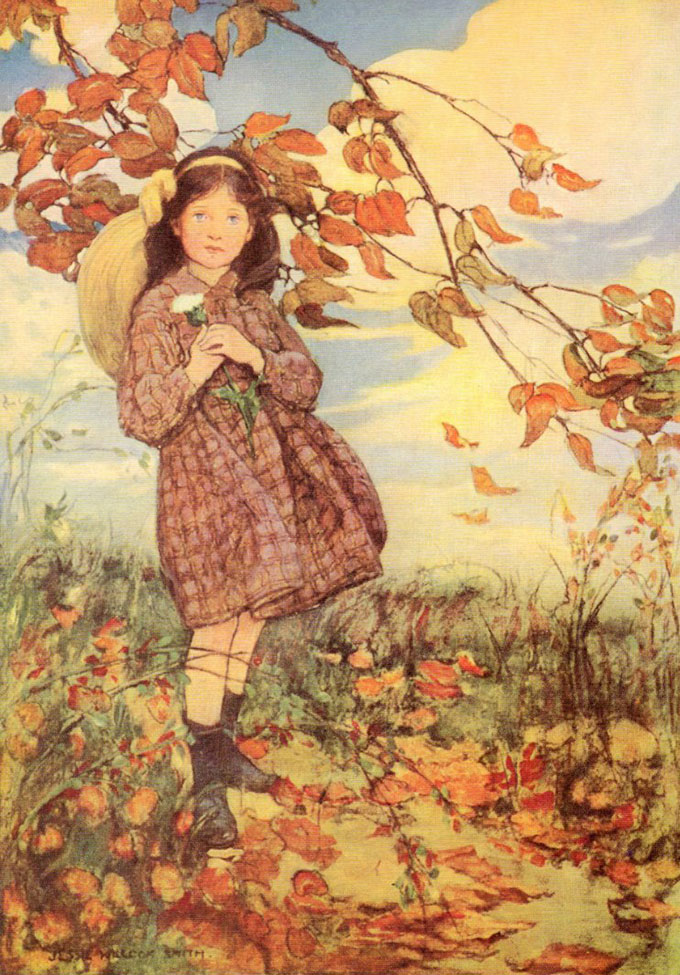
Jesse Willcox Smith

Another girl in the woods… this time by Jesse Wilcox Smith. It is perfectly well drawn and painted. The palette is restricted.

The girl’s gaze meets ours… but I hate it!

.

We reserve especial scorn for those who churn out the same old painting just because it sells. We call the artists hacks and their works potboilers, though I dare say their children were better fed than the more sternly aesthetic. I’ve done potboilers too, romance covers etc, I have also done plenty of paintings that would fail my own cringe test. Still I have this unfashionable urge to paint pictures that people might like. This has lead me to tread the boundary between detailed and simplified, in truth both have their uses, I don’t want to disappoint a viewer that likes a close look nor do I want to lose the person who appreciates in a more general fashion.  I am myself a person who appreciates and enjoys both qualities in a picture.

The problem I face is getting the two aspects to compliment each other. I am nearer to this in watercolour. I get people saying they love the detail, but in truth it is mostly absent and just suggested. Watercolour rather lends itself to this with the textures and abstract qualities of the washes standing in for observed detail. In oils I have to work a little harder, I end up blurring bits of detail to stop them catching the eye, but it would be better to paint them with the right degree of focus from the outset. Only a few pictures this post…

.

Ashburnham Arms, Greenwich, oils

A commission, I don’t do many of these but this was quite fun. A hard subject to make a picture of as the views were very restricted. I went down a few

to try and get the light right. It is in Greenwich. 10in by 14in Oils.

.

Richmond, Thames, Plein air, oil painting

The Brass Monkeys had a wonderful day in Richmond. This is the view of the Thames that greeted me. Almost too perfect and changing so rapidly that

the result is a little rushed. I have a few references that combined with this sketch will make a great watercolour I hope. 10in by 16in. Oils.

.

Richmond, Thames, plein air, oil painting

I moved on to this. As soon as I started they folded up the blue tarpaulin so I had to mostly make it up! I am trying to take a few different proportioned

boards out with me, it is easy to get stuck with standard shapes. 10in by 10in oils.

.

Richmond, Thames, The White Cross, plein air, oil painting

After a very good lunch in the White Cross I thought I had better immortalise it. The light was fantastic and the colours in the trees lovely. I only got this

drawn and glazed in, but with the tones and colours more or less there, finishing took only half an hour at home. 10in by 14in. Oils.

.
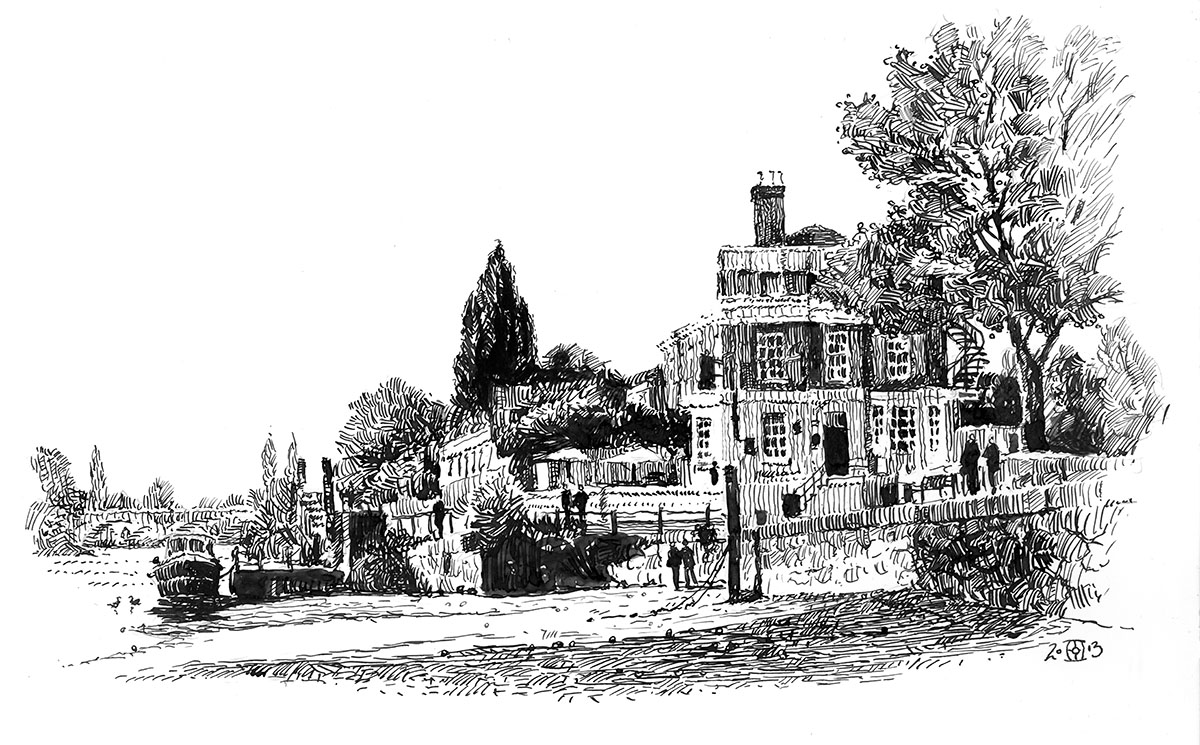
Pen drawing, Richmond, Thames

I thought the previous painting would make a good pen drawing to I dusted off my Gillott dip pen and set to. I don’t know why I don’t do more pen drawing

it is a great medium. I shall try and do more. A4 on Bristol board.
November 7, 2013

The Uncertainty of Being Definite

Filed under: Art History,Drawing,Painting,Philosophy,Uncategorized — Tags: , , — Rob Adams @ 3:34 pm

Why is is that as soon as we seek the definite we end up mired in the indefinite? I have been discussing “What is Art” recently with others, and having had to think about it I now know less than when I started. Before I asked the question at least I had a vague idea of what I was up to but rather less so now! Why on earth am I bothering to do this activity called painting?

Having given it a great deal of thought, I have the beginnings of an idea. It is popular for artists to say, “I have to paint it is a need deep within me.” Is it? Well wanting my dinner and having regular bowel movements are needs deep within me that I cannot deny, so is the next breath I take. Painting however is not in that league. If I had a choice of giving up speaking or painting the painting would have to go, so it is plainly not the most important means of communication to me. It is good for my ego to be good at something is perhaps the best that can be said. If I destroyed all my years of work and took up some other trade, would I pine and be miserable. Almost certainly not. If a thug threatened to harm a friend if I did not burn all my work I would torch the lot without a second thought.

So I have to conclude that all the saying of how important “art” is to them done by artists is merely posturing to add a rose tint to how they and others see themselves. If I am to pare things down as much as I can I would I think say that I paint because it brings me pleasure to do, and pleasure when others enjoy the results. I am a little addicted to it, but not so much that I could not go off and pursue other interests with at least as much pleasure.

Does this devalue what I do? I am not what you might call a dilettante, I work hard and quite devotedly to the highest standards I am able. I enjoy it for the most part and get a “kick” out of the small successes it brings. If the work was torn from my breast in a fervent of anguish and torment, would it be better and more worthy? Current opinion would tend to say yes. Is it a crime so say I do it merely because it is a pleasant and engaging way of spending a brief life? Oh how fortunate I think I am to spend this one existence in this relatively pleasant manner! (especially when looking at some of the alternatives!)

How did all this come about? As John Byrne of the Talking Heads asks, “How did I get here?” Did I have a plan? Well, from about 20, sort of. I was going to be an illustrator, because I liked looking at the artwork done by others. I think I am here doing what I do partly because of 1970’s science fiction book covers and comic books , and partly because of the passing thought, “I would like to be able to do this.” Maybe the thought had an element of, “How hard can it be?” After some practical investigation the answer was, “Very hard indeed.” It did not matter in the least to me that such work was scorned as “pulp” it did something to me when I looked at it that I liked. I have been digging up some of the images that spurred me on. Alas no Rembrandts, no Monets, I had seen these and enjoyed them but they didn’t bring the feeling, “I might be able to do that.” I do in an odd way wish my early inspirations had more gravitas, but there you go. I’ll start with the earliest that took my eye in such a way that I attempted to emulate. All images are the copyright of their individual owners.

.

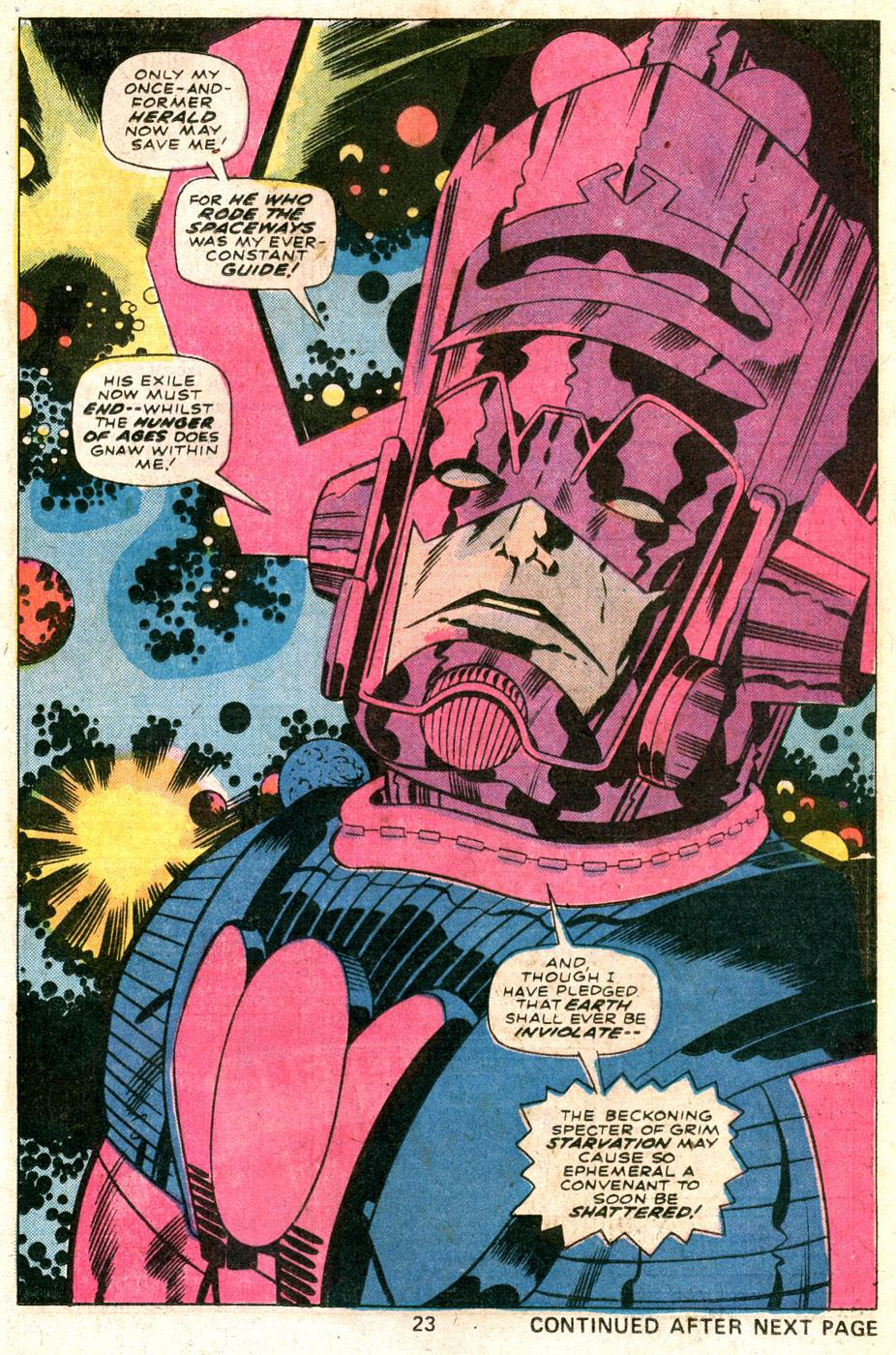
Jack Kirby, Galactacus, marvel comic, silver surfer

The first sort of artwork I tried to emulate was derived from Marvel comics. This is Galactus the Silver Surfer’s nemesis.

It is drawn by Jack Kirby. I didn’t copy I was never a direct copier but I tried to do my own versions. I think it was this that

hooked me as it showed how damned difficult it was. My attempts were pathetic and even at that age (13 or so) I couldn’t

fool myself that they were remotely as good. I didn’t give up though I covered reams of paper with badly drawn muscle bound

figures in uncomfortable clothing that would be bound to chafe.

.

Sydney R Jones, dreawing

Another and disparate thread was pen drawing, which was the bulk of my initial output. This is Sydney R Jones. I don’t know

where I got the book from but I had it from early on. One of my Father’s maybe. This was another thing I attempted to emulate.

I had more success here, I didn’t reach Mr Jones’ quality but after a lot of work I could draw a building in reasonable style though not

with the delicate touch of the above.

.

Chris Foss, book cover

Here is a book jacket  by Chris Foss. I spent hours pouring over similar images but it was Chris Foss that inspired me. I didn’t immediately try to copy

the style, I was 15 and had no idea of how to begin such a task. It was not until 6 years later I had an airbrush and could attempt such a thing. I still

remember the moment my Father gave me the compressor and Badger airbrush for Christmas. I can also remember the sinking feeling when I tried it

out and found how very difficult it was to use well. I never was a giver upper though, soon I was deep into Frisk film and Dr Martin’s dyes. Despite all

this effort and hours and hours of getting the skill with the tools I just could not produce anything as fine as the painting above. The attempt had however

introduced me to Gouache and there were other artists who’s work I admired.

.

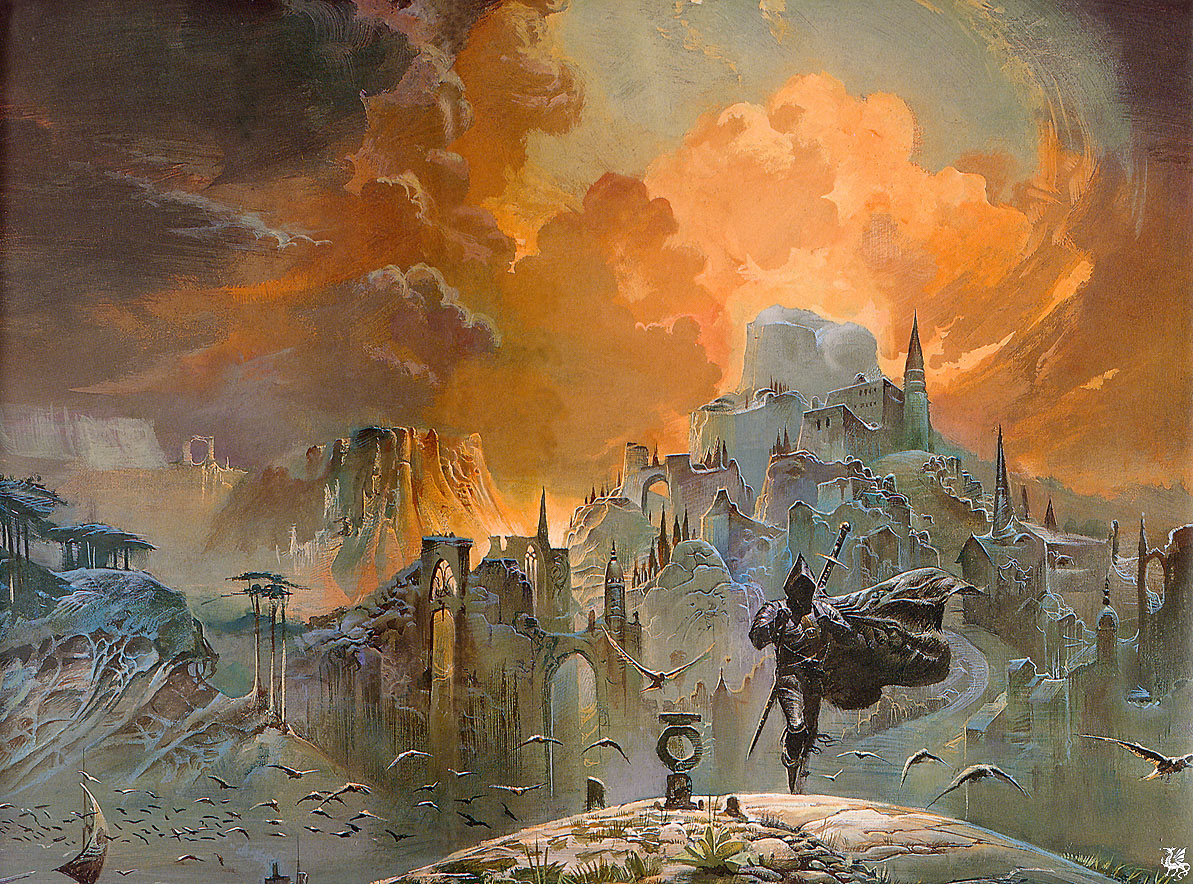
Bruce Pennington, book cover

I much admired Bruce Pennington’s work. Later artists like Roger Dean would use the same mushroom shapes and organic textures but Bruce was the first.

The paintings are very simply constructed in layers. You could build a theatre set from them easily. I set too once more but Mr Pennington was no more in my reach

than any of the others! I don’t seem to have been very cast down by this state of affairs. I was always confident that one day I would be able to do as well.

.

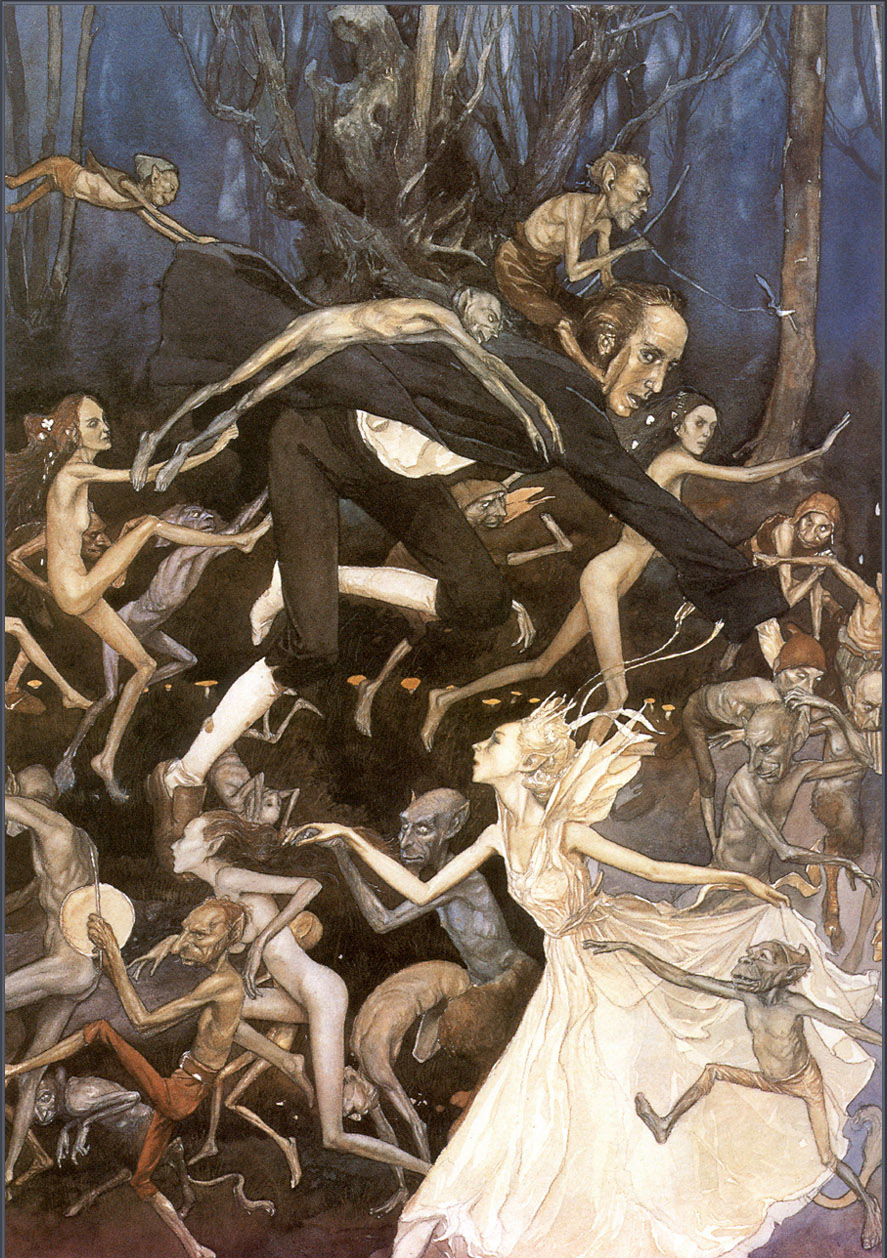
alan Lee

This is by Alan Lee. In 1978 Fairies was published. Alan Lee and Brian Froud were the illustrators. Brian Froud was OK

but it was Alan Lee that blew me away. I think it was that moment I realised what true draughtsmanship was and how

very far I had to go before I could do anything comparable. I was 24.

.

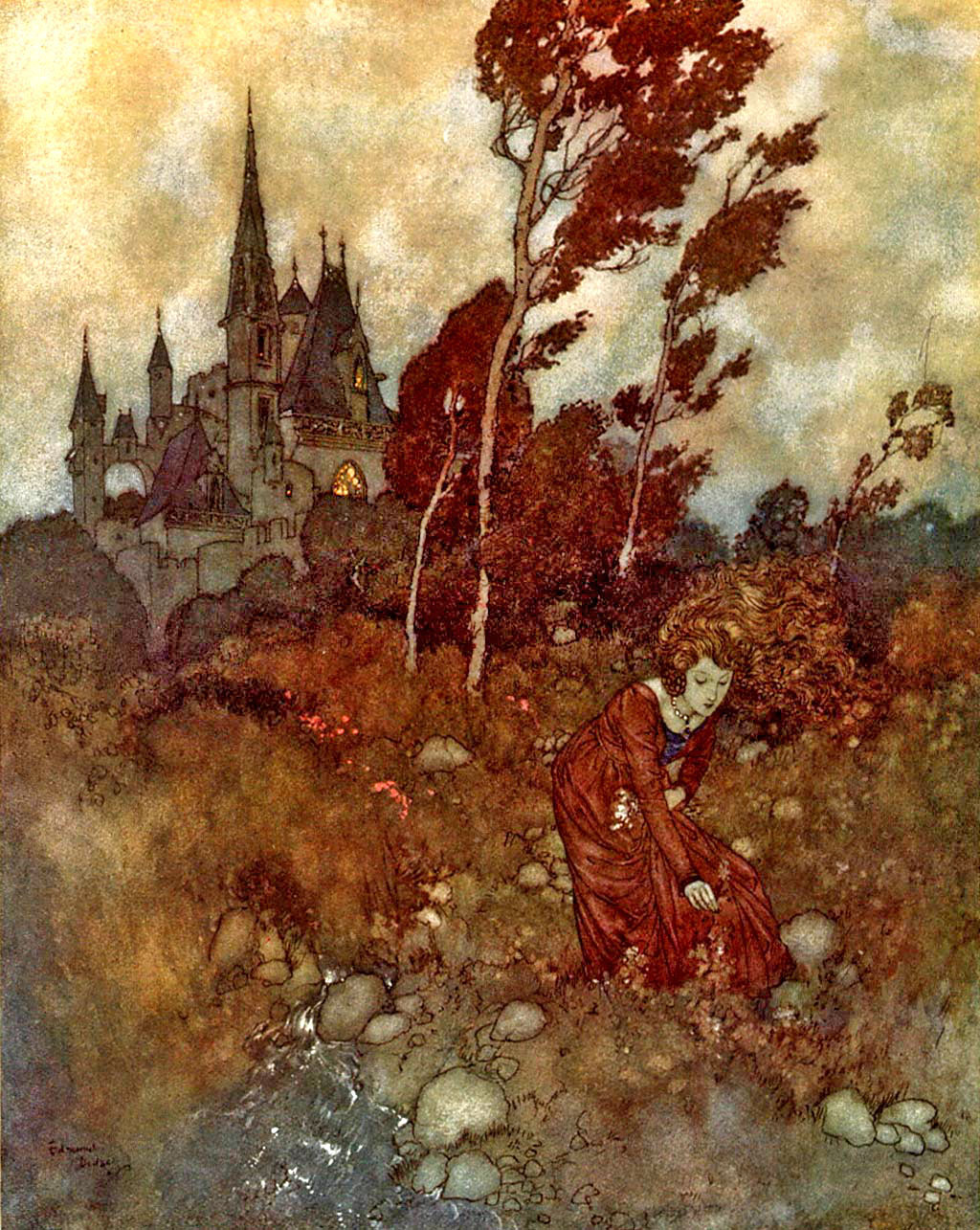
Edmund Dulac

It was not long after I met David Larkin who had edited the book and he after showing me Alan’s originals had pointed me to

some of Alan’s inspirations. So it was I sought out books with illustrations by Edmund Dulac. I was swept away by the subtle

atmosphere of paintings such as the above. Arthur Rackham was another who astonished me.

.

Frank Frazetta

At the same time I was admiring Frank Frazetta. I tried in this period to produce similar work. It was still not

in the same league, but with each attempt I got a little nearer. This gives me a small clue as to why I expended

all this effort. Not aspirations of high art, not upwellings of inner expression. It was the lure of a challenge.

.

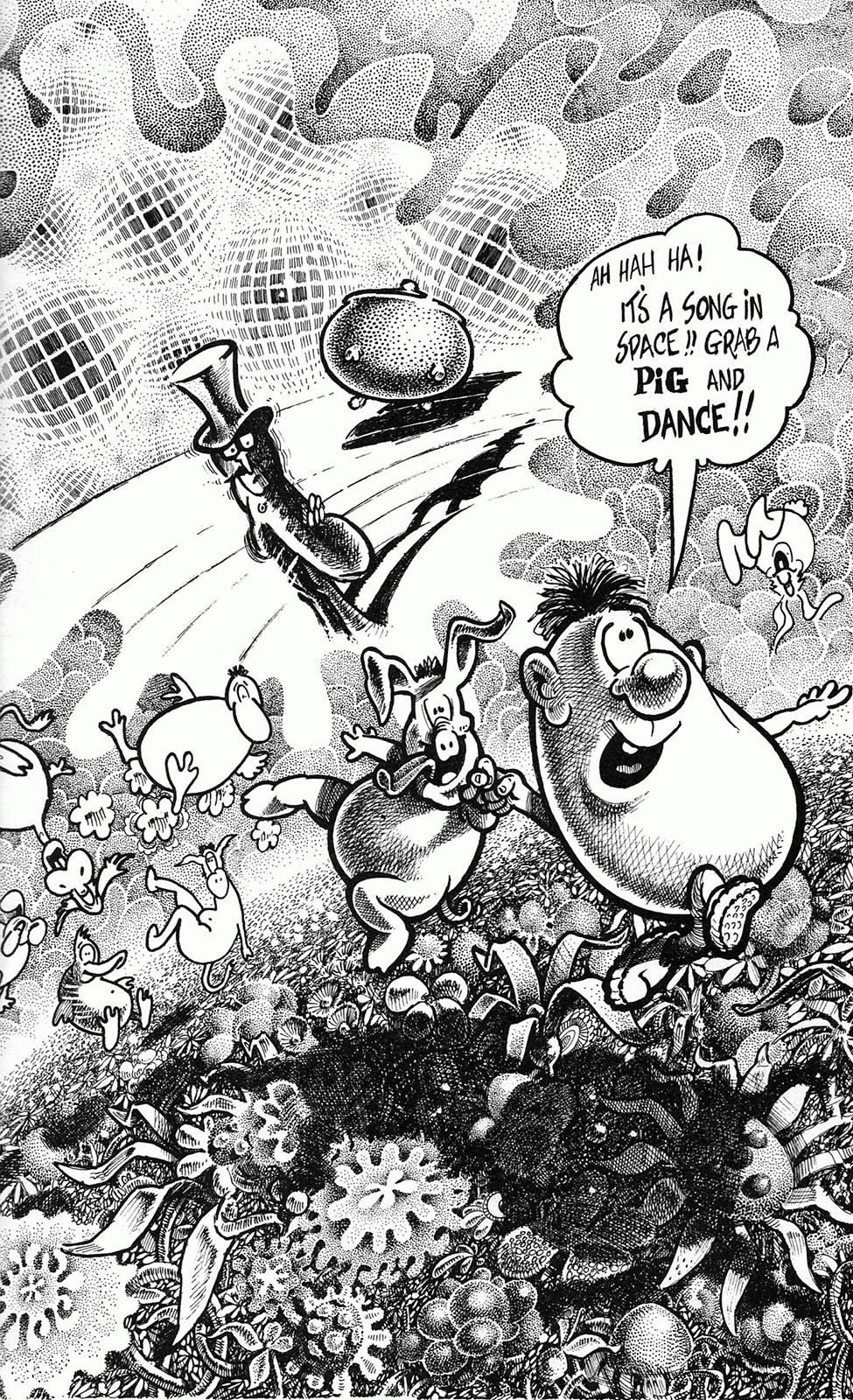
Fred Schrier

This is Fred Schrier. I was still mad about comics but had moved on to the underground variety.

I produced a fair few pages in this idiom but none as good as Fred’s. It is a strange thing learning a skill.

It changes you, you have to look at images like the above and pick them apart. How does the hatching work,

the different weights of line. You may well think the above is a bit of daft ephemera, but believe you me

just trying to produce a similar object will convince you differently.

.

So there they are some of the lights that guided me to my present location. There are others and later more respectable ones like Tom Girtin and Titian. Slowly all these disparate elements congealed into a middle aged bloke who paints bits of London. There is a connection however, and that is the skills involved. The skills of physical dexterity and also the skills of composition. The ability to focus and stand back from your own work. Learning each of these things leaves you changed, gives you a purpose. As a bi-product it makes you valuable to others. To my great fortune the world is not awash with people who have learnt what I have. I have achieved various ambitions, only to find they were better as hopes than they were as actualities. I became a comicstrip drawer, a book illustrator, 3d designer in turn and found Shangri-La in none of them. I have no reason to think that landscape painting will either, but there is a difference, I don’t expect this final phase to satisfy any ambition. I got a picture in the ROI which was nice but the feeling in no way matched painting a watercolour that pleased me last week, or indeed someone contacting me to buy a picture because it reminded them of a happy childhood in a place far from where they are now. I am I feel getting quite close to the place I have been heading all along. A place where a moment of sun or the passing of a person engrossed in their day lifts the heart. So simple, it doesn’t need defining, or explaining. There is no agenda for change or disquiet with the status quo. It doesn’t need certainty indeed uncertainty is vital. In a word… “joy”.

« Newer PostsOlder Posts »

Powered by WordPress

error: Content is protected !!