Rob Adams a Painter's Blog painter's progress

October 23, 2012

Sunshine and Showers in Surrey and Berks

Filed under: Drawing,Painting,Surrey,Thames — Rob Adams @ 11:22 am

Plein air is an odd occupation. You go out loaded down with equipment and weather gear, then you try and paint whatever happens to be about. When you set off the world is, in your imagination, full of fantastic pictures just waiting to be painted. Arriving at your venue however can bring about a rather abrupt and vertiginous descent to earth. The picturesque church you had in mind is a flat grey wall bracketed by almost black ewe trees. The whole lot is roofed with a completely featureless dull grey sky. It is just after dawn and the only sounds are the drips of the rain and the squirrels sniggering at you from their nice warm drays. You circle your victim, trying not to stamp over too many of the deceased, searching for a distinctive view, or any view for that matter. The light is so flat that every side of every object is lit exactly the same. After several futile circuits, punctuated by listlessly framing possible compositions with your fingers, you slowly set up your tripod and pochade in the furthest possible corner of the churchyard and fix a blank primed board in place.

Next is drawing the salient details out. The light is not a problem here so you get the thing sketched out with everything placed more or less as it appears before you. While you do this the sky grows a little greyer and the rain fall a little faster. Your subject looks not a bit better, but after a short spell of ritual squinting you start to mix up the tones and lay them in. Thinking about whether the thing will be worth the effort can be put off a little longer as you block in the approximate tones. While you work you try not to notice that your palette is completely covered in funereal greys.

With the last of the prime covered you can step back and consider the crime. At this point I usually get a strong urge to wipe the damn thing off and go for a “full English” in the nearest greasy spoon. The day chooses this moment to give you a glimmer of watery sunshine, and your subject lifts from the suicidal to the merely depressing. Time for a deep breath and fixing the moment of illumination in your mind’s eye you  put in a few optimistic lighter tones. While you wait for the light to come back you get the next layer of greys in defining the few shapes you can discern in the gloom.

With most of the work done you retreat again and with an act of will attempt to look optimistically at the masterpiece you have wrought. This is perhaps the hardest part of the process of painting. Putting your imagination into gear you try and imagine what would make the picture work as an image away from where you painted it. Does it need a figure? A relative visiting a loved ones grave might add pathos and suit the gloomy day… a hanglider caught on the church tower would add drama. There is no getting round, it desperation is setting in. To make things worse an early morning dog walker appears and asks politely if they may look at what you have done. You hope they will see something in it that you don’t, but they look for a long silent moment plainly wracking their brains for a comment that doesn’t include the word “depressing”. “That’s nice…” they manage at last and hastily move on after a brief complaint about the prevailing meteorological conditions.

Then the light suddenly returns. Ignoring the hosannas that the circling cherubim are singing you leap into panicked action and start whacking in the effect before it goes. Madly dipping into colours that have so far been unneeded as they were not grey. After a few brief minutes the glimmer is gone, the cherubim silenced and the drama over. You couldn’t care a brass penny for that though, your turgid study in abysmal greys is transformed. With fewer brushstrokes than could be numbered on both hands and the contents of a couple of boots your picture has gained an identity, distinctive atmosphere and a sense of place. All those greys you hated so much have become a subtle foil that set off your touches of restrained colour. There is no need for solitary mourners or indeed dangling gliders. Your painting isn’t the triumph you were optimistically dreaming of as you drove through London in the dark, but neither is it a cause to chop off your ear and TNT it to a female friend.

I hope this encourages some readers to try getting out there and try painting “en plein air”. All painting is a bit of an emotional roller coaster and painting out of doors is especially fraught with the possibility of disappointment. In my opinion though the lows only serve to make the moments of achievement feel the sweeter. It is at the very least a harmless brand of masochism that leaves you mostly undamaged and cheerfully scoffing your breakfast as quickly as you can, so as to get out there again as quickly as possible!

This (I hope you realise tongue in cheek) account was prompted by a kind invitation by Steven Alexander to spend a few days painting in Surrey with a few of the Wapping Group. The weather teased us with sunny spells and showers garnished with steady drizzle, but nonetheless at the end of the day the table was filled with paintings all pulled kicking and screaming from the surrounding area. A special thank you goes to his partner Anne who had to put up with soggy plein air painters, who at a distance are hard to distinguish from itinerants,  cluttering up her house. Here’s the results, perhaps not any call for hosannahs but a few winners amongst the also rans.


.
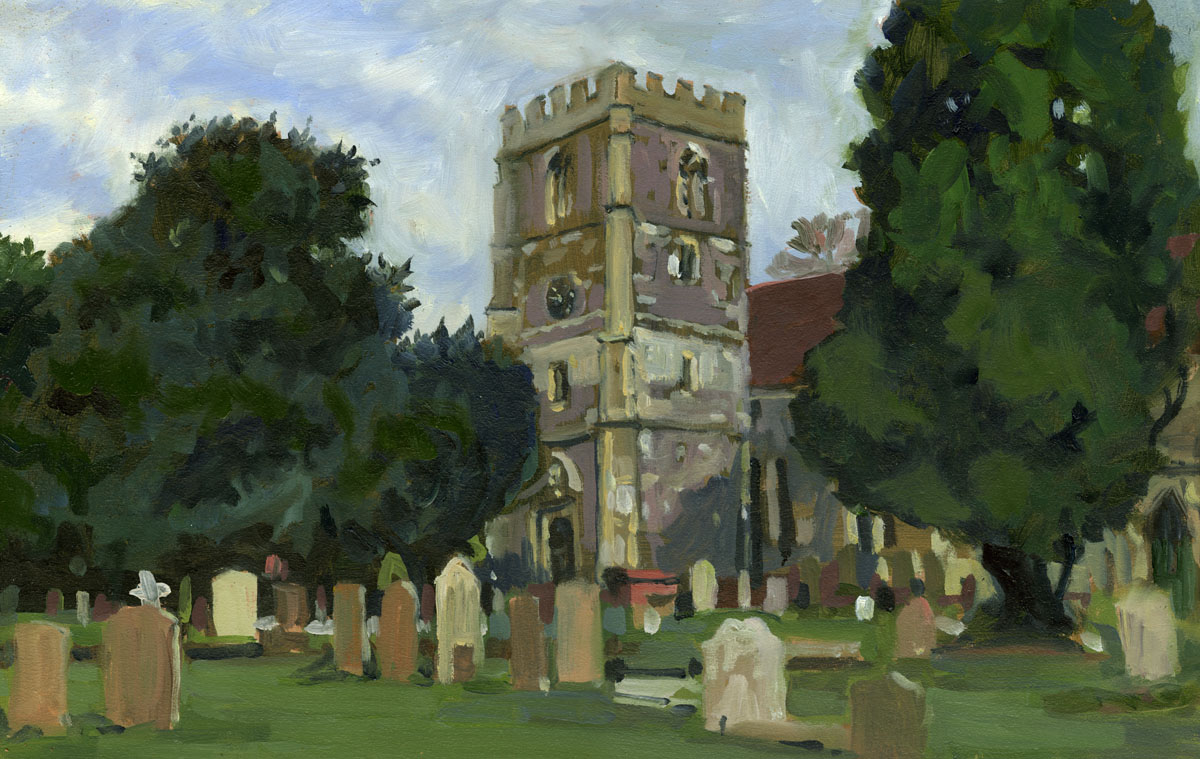
Bray, Surrey, Plein air, oils painting, church, graveyard

This is St Michaels Church at Bray which is in Berkshire. I had to be very careful not to overstate the lights. There are still a few that I will probably

knock back once it is dry. A few areas of sky will need a spring clean as well. 16in by 10in.

.
Bray, plein air, oils, painting

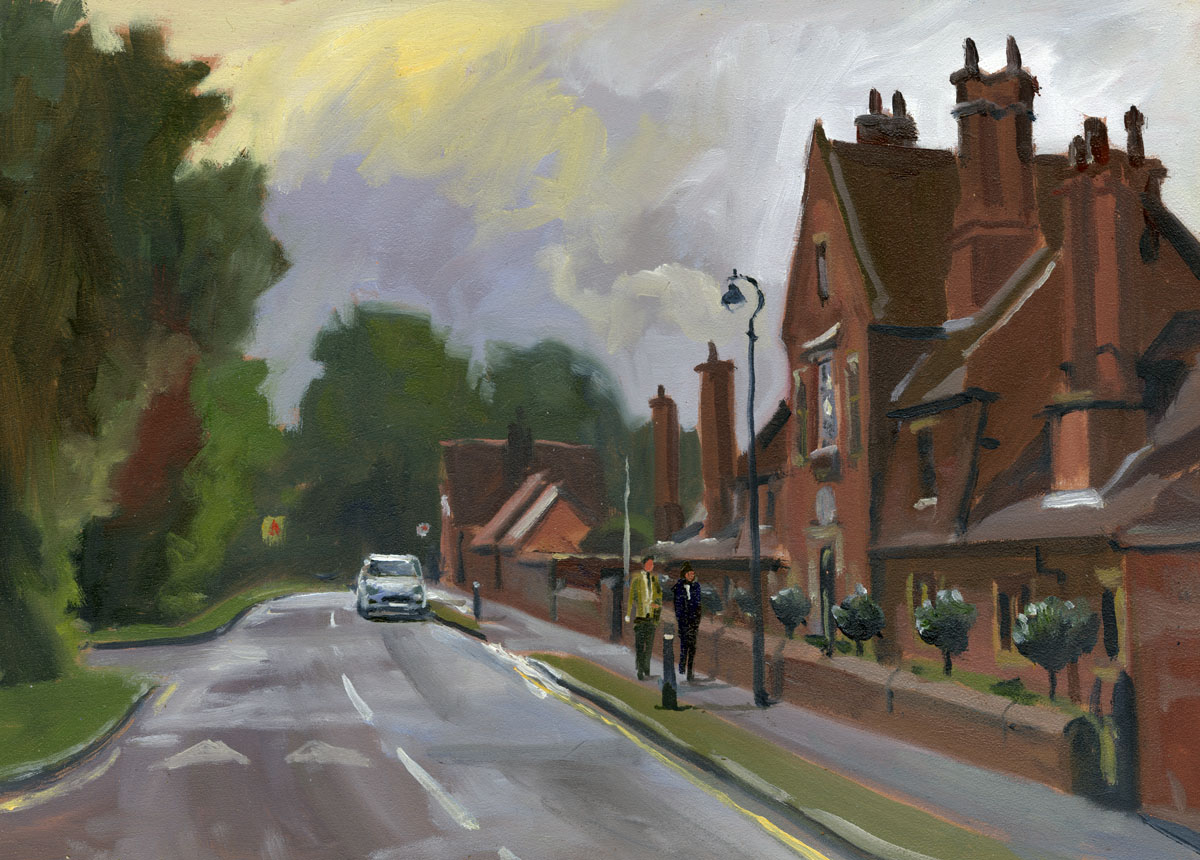
These are some alms houses again in Bray. I need to sort out the traffic but this was interesting against the light. 14in by 10in oil.

.

Bray, lock, barge, thames, plein air, oils, painting

This is painted from Bray lock. Nothing took my fancy at first but this old canal barge passed through the lock and I though it made a picture. I painted

the basic scene and did the barge later. 16in 10in oil.

.

Windsor, castle, plein air, landscape, painting, oils

I joined Derek Daniells, Michael Richardson and Steven Alexander as the day was ending and we all stood in a row and painted Windsor castle in the

distance. I don’t often do the “telephoto” thing, but here there was no choice. Only about 35min with a big brush but great fun to do. 16in by 10in oils.

.

Mapledurham, berkshire, stately home, plein air, painting, oils

This was a trial to paint. The weather had delivered a fine persistent  drizzle that the lightest breeze would blow on to your palette. I got this all blocked

with the beginnings of some detail but my paint was turning to mayonnaise and wouldn’t take on the board so I had to stop. Great subject though, it is

Mapledurham in West Berkshire, I hope to return on a better day! 16in by 10 in oils.

.

Mapledurham, berkshire, rain, field, plein air

Painted crouched under a brolley near the previous scene. I could only manage about 20min before it started to rain so much the trees vanished entirely

leaving only a couple of furrows to paint! The others were getting soggy in a nearby wood. 12in by 10in.

.

Yateley, Surrey, Field, plein air, oils, painting

This was a lovely scene and should have made a good sketch, but somehow I the rabbit stayed well and truly in the hat. I feel it only fair to post the misses

as well as the near hits here, as it is I hope educational in showing how to mess up a perfectly good subject. My error here was getting fixated on the field

which was a fascinating mixture of dew reflecting the sky and tracks made by animals and dog walkers. But in focussing on a detail I missed the whole.

Adding walkers was an act of desperation at the very end! It is near Pirbright in Surrey. 14in by 10in oils.

.

Mike Richardson, fence, plein air, surrey

I despondently went to share my disappointment with Mike Richardson who was painting nearby, but no sympathy was forthcoming so I

painted him as a form of revenge! Only a very quick sketch but miles better than the previous effort. 10in by 14in oils.

.

Here we are in a soggy field! Photo Steve Alexander.

.

Yateley, Surrey, Autumn, plein air, trees, fall, oils, painting

I came across this little scene after an abortive start on another. I had been intending to try and paint some autumn colour and this fitted the bill.

It is Pirbright in Surrey again. 14in by 10in oils.

.

Windsor, guildhall, town, street, plein air, oils, painting

This is Windsor guildhall Another monumentally grey day and I started this without much hope. I got all the architecture in before the rain started. I

was painting in a very exposed spot where I became entertainment for damp tourists! Once I had put in people and cars however it took on a life of its

own and in its way it is more interesting than the same view on a sunny day might be. Some of the hall itself needs softening I feel. 16in by 10in oils.

.

Sketch, watercolour

Finally a few sketches done with waterpens in my wee sketchbook. This is a rather damp Mike Richardson painting in a wood!

.

Another from Pirbright. I am starting to really like the waterpens as a sketch medium this took no longer than 10 minutes.

.
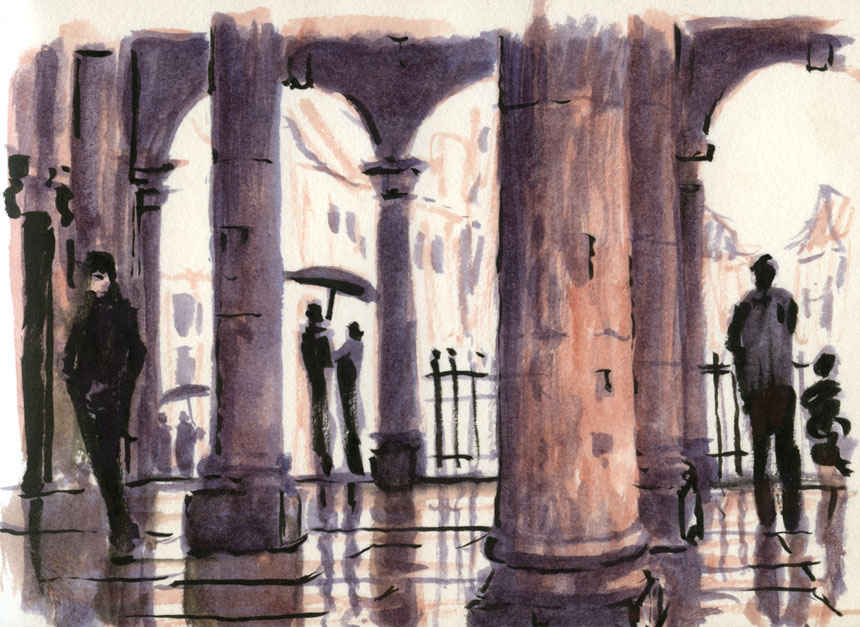
Windsor, guildhall, sketch, watercolour, drawing

Last one, this is the Guildhall in Windsor again. Altogether a great few days painting, a big thankyou to Steven Alexander for organising it and asking

me along.

October 16, 2012

Joseph Mallord William Turner

Filed under: Art History,Painting,Watercolour — Tags: , , , , , , , , , — Rob Adams @ 1:21 pm

I have always been a bit disappointed in art books about painters, or indeed TV documentaries. They often don’t seem to be much interested in the pictures themselves, more in the career, life ‘n’ times and peccadillos of the atrist. So have decided to review some famous artists I admire from a painter’s viewpoint, which is more focused on the work itself and how it was done. The other thing is to be realistic about the quality of the work. Just because an artist is famous and in the art history books does not mean all his or her work is admirable. In some ways the pictures where an artist misses the mark are more informative to other painters than the triumphs are, though we all love those too of course. I am I have to say a little nervous about setting out on such a course as anyone might protest, “What does he know about it?”. Well, a critic could be accused in the same way, so I could say to them, “You don’t paint yourself so what do you know?”. For myself I think both viewpoints are worthwhile. Any painter will tell you however that the best praise and the most painful criticism come from other painters especially if you admire them. Lots of people have admired my watercolours, but when Trevor Chamberlain told me he liked them I walked for a few days 6in above the ground!

Todays victim is JMW Turner. I am not going to rehash his life story, you may find a quick precis of it on Wikipedia. Turner and all his works and much more are here on the wonderful collection put on line by the Tate Gallery London: Paintings.

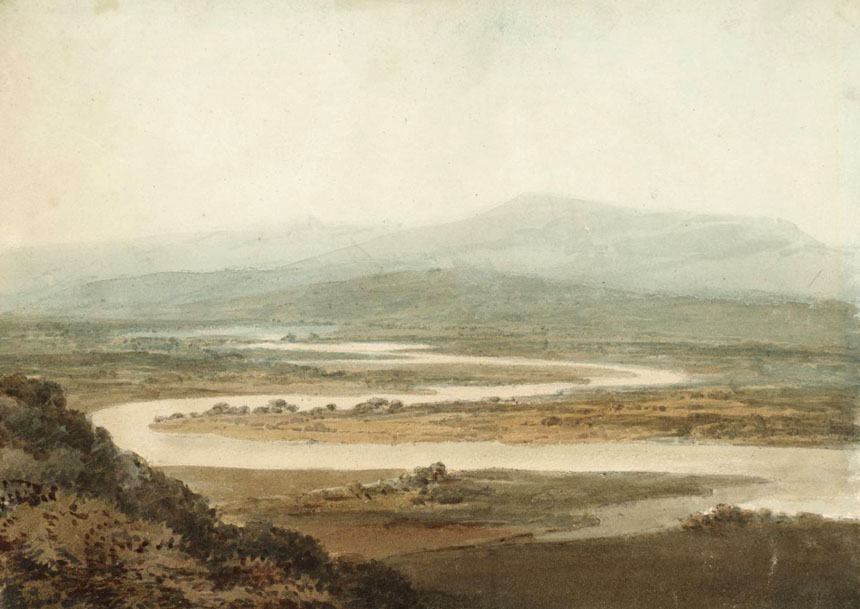
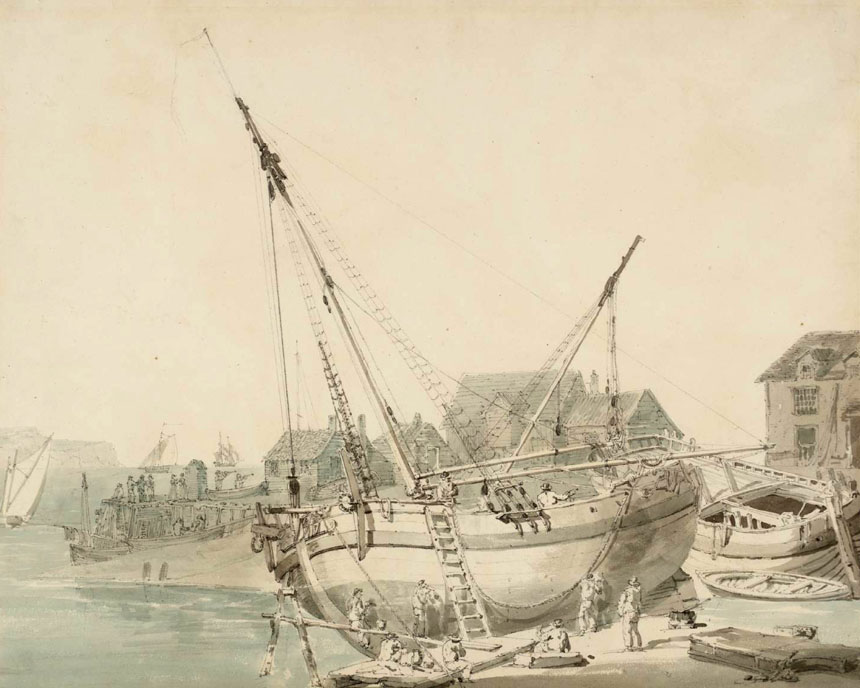
We first see Turner in the company of Tom Girtin, copying watercolours in the collection of a certain Dr Monroe. Some of these were by Cozens, below are some paintings by Turner, Cozens and Girtin so you can see the similarities and differences.


Turner

John Robert Cozens

.

Turner

Thomas Girtin

.

Turner

Turner after Cozens

.

Turner

Here are the dynamic duo Turner and Girtin apparently working on the same picture!


The sheer quantity and quality of Turner’s output is a little forbidding. He  produced over 350 oil paintings, 2,000 watercolours, 30,000 paper works. Many of the 30,000 paper works in sketchbooks are also in watercolour, which means that primarily Turner was a watercolour painter. A lifetime total for oils of 350 (including many unfinished under paintings) is really not very many for such a long lived artist.

The art historical view, touted by all the books on him that I have seen, is a steady progression from detailed and tight, to inchoate sweeps of colour verging on abstraction. On closer examination however this is considerably less than the truth. By careful choice of paintings throughout his career I could easily make the opposite case, by choosing indistinct early works and finely wrought later ones. The truth is Turner painted loose impressions and colour notes from early on and detailed finished works right up until the end of his life, or at least until his eyesight began to fail. The progression toward the abstract is something I feel just did not happen in the way it is often portrayed. It is maybe possible that Turner came value his more atmospheric paintings as a truer representation of the sublime; but many of the works that are touted as Turner moving towards abstraction are unfinished works, only underpaintings, that were intended to be revisited.

He painted from quite early on in the manner where he laid in the general tone and palette of the painting and then drew out the finished work by resolving, reworking and leaving until he considered it finished. This is a very common way of working for artists from ancient to modern. To exhibit these as finalised works as galleries do is I feel to misrepresent the artist, his work and his intentions. I have seen colour tests on the backs of sheets put forward in catalogues as examples of how far Turner was ahead of his times and presaging the arrival of modern art.

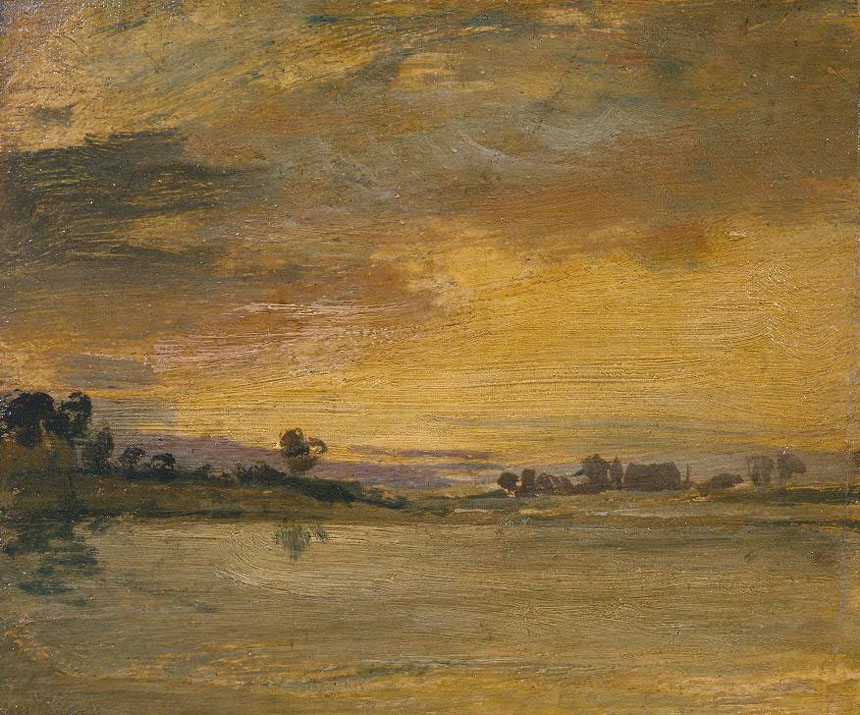
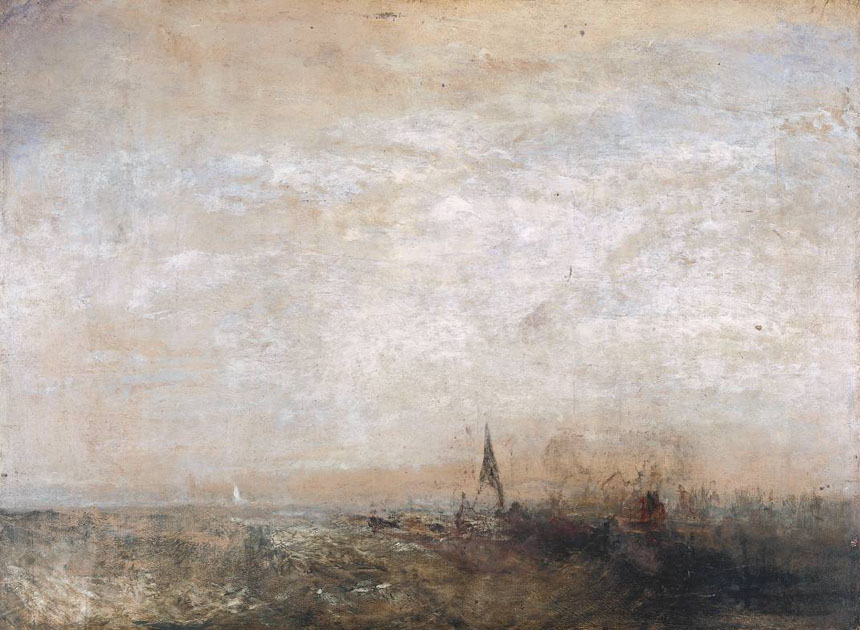
Next are a few finished and unfinished works from various times in his life. The number of unfinished examples from later on is larger obviously, early on he could not afford to leave expensive canvasses lying fallow!

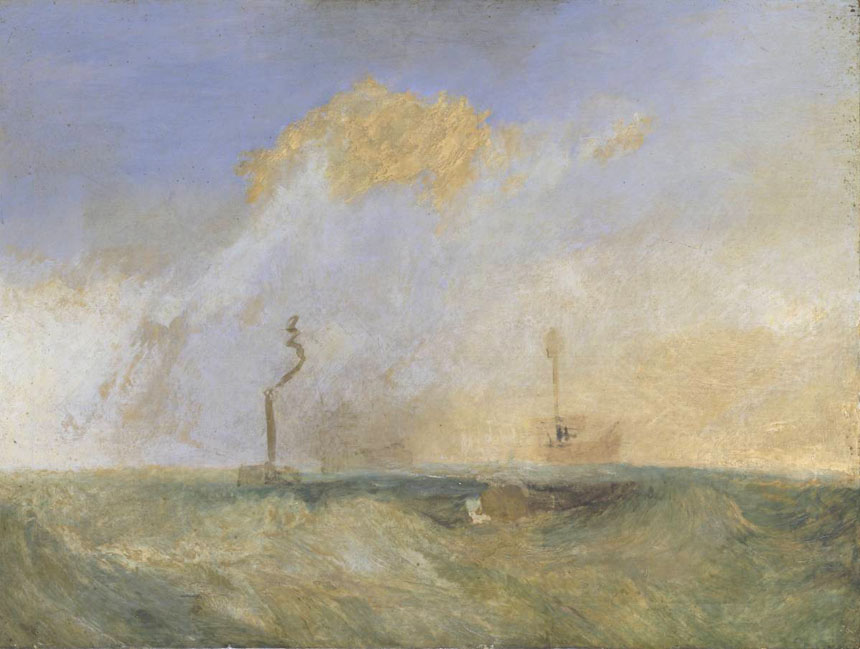
TurnerThis is from 1805.

.

Turner

Then from 1825.

.

Turner

Here we are in 1850, see he was trying to be Marc Rothko his whole life! To compare next are two finished and exhibited works from early and late.

.

Turner

This was painted when he was in his twenties in 1796.

.

Turner

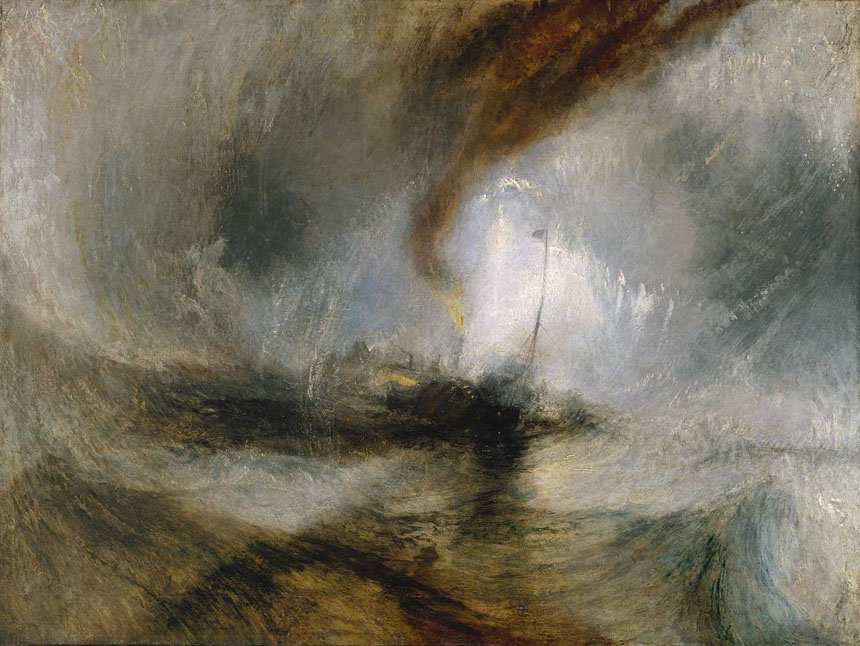
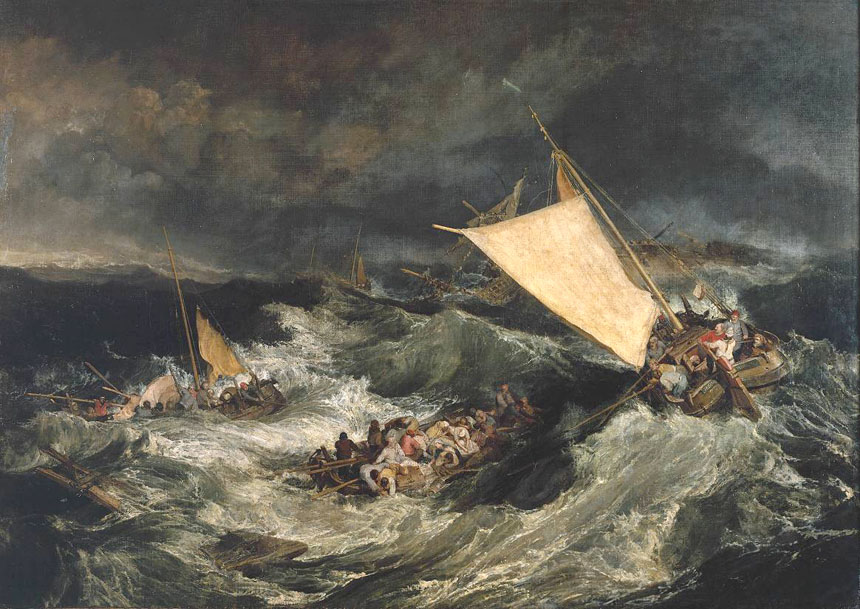
This is from 1842 and about as abstract as he gets in exhibited works. I don’t however think that his intention is abstraction. Everything makes good

pictorial sense. He is just trying to paint the wild confusing power of the sea as best he can. You cannot see the ship distinctly because as Turner well knew

in such conditions it was truly the case that only vague glimpses would be seen.

.

Why is his art so misrepresented in books, exhibitions and documentaries? It is basically I think because art historians have a story they wish to tell about art moving in a tidy progression from representation through abstract to modernism and the story of Turner’s work has to be bowdlerised to fit that story, rather than the actual story of his work and progress, which I think is really quite different. I cannot somehow imagine Turner reading these dubious tales of his artistic progression and recognising much of his own artistic career. The whole arc of art moving from “traditional” to “modern” is mostly a fantasy and not, as far as I can see, born out by the painted works that history records. Turner, poor soul, has been chosen long after his death to be the cornerstone of this art historical fairy tale.

The result is that we do a tremendous disservice to one of our greatest artists. In one fell swoop we make him both more and less than he really was. The sad thing is that modernism and its related offshoots have a perfectly respectable genealogy that goes back to the earliest of times, but it is on a different branch to Turner and earlier western painting. To claim him as a direct antecedent of modernism is rather like me claiming that hippos are my direct ancestor, we share ancestors in the past, but we are not on the same timeline or grazing the same pastures. Not that he didn’t influence later abstract painters, just that he trod an entirely different road.

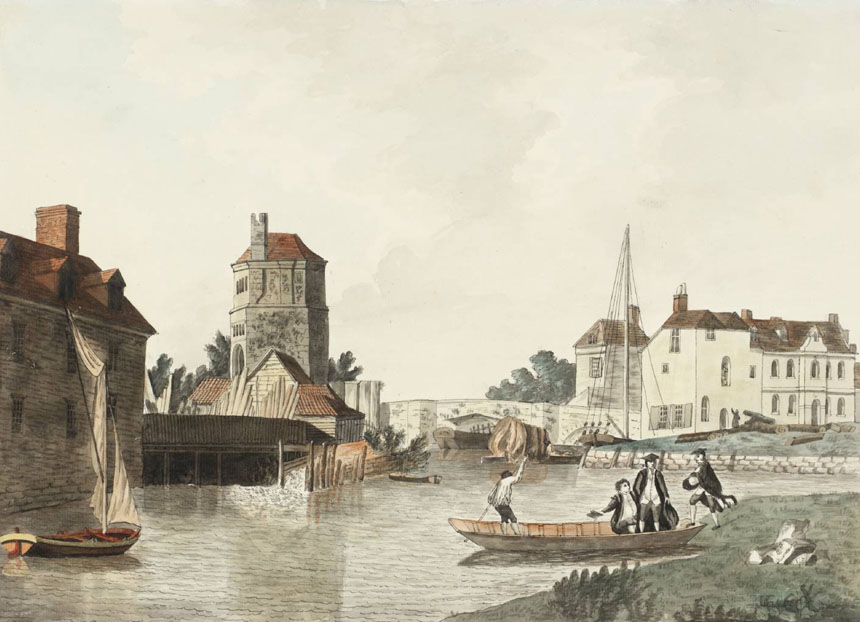
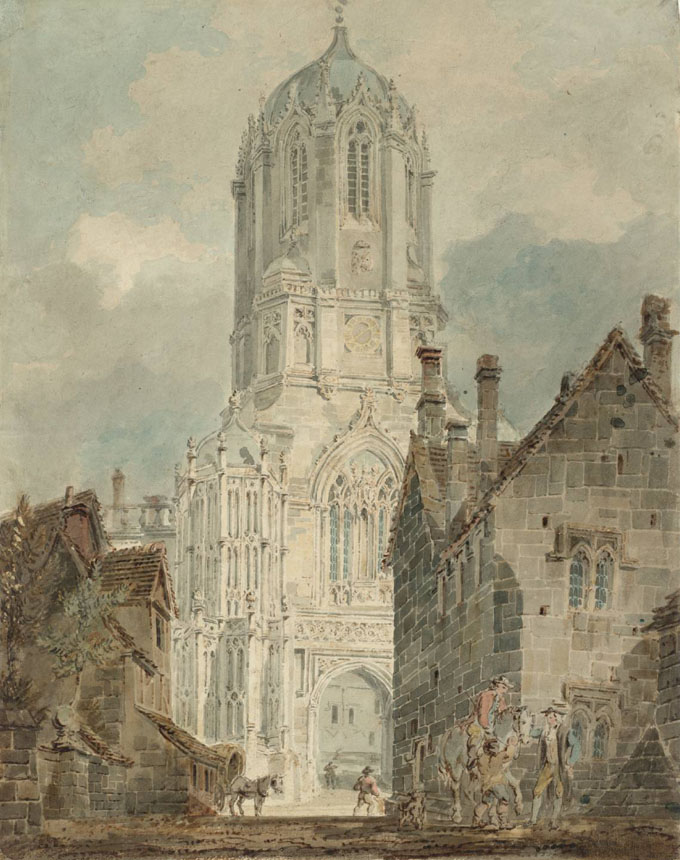
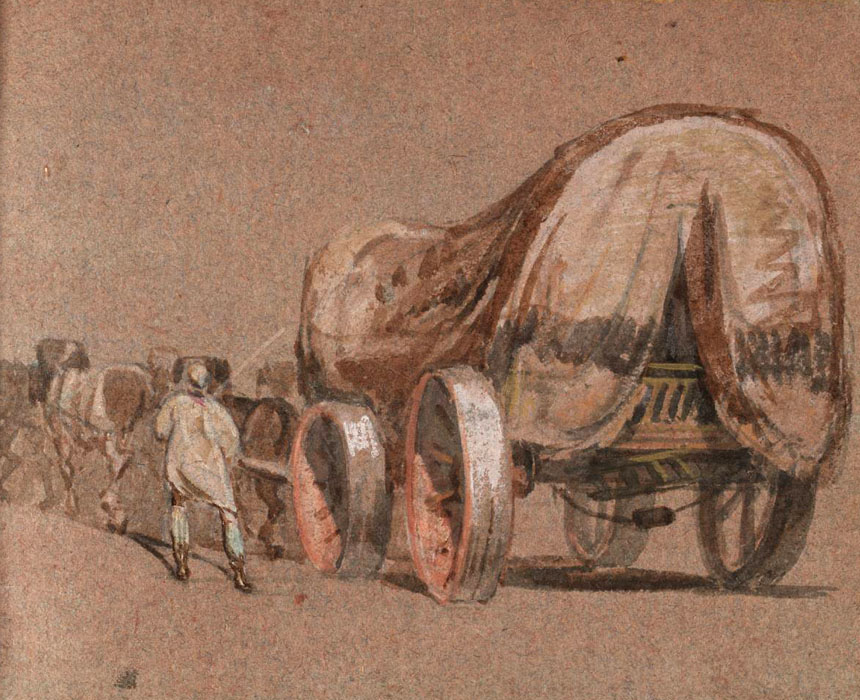
Turner was pretty precocious and improved rapidly from his juvenile style emulating earlier painters to a confident and accurate draughts man. The two examples below are only 5 years apart and both of his home city Oxford.

TurnerOxford in about 1787 so he is 12 years old.
.

Turner

Here he is in 1792 five or so years later at seventeen or eighteen.

.

I suspect, though it is hard to confirm dates that it is the influence and friendship of Tom Girtin, or rather the competition of two young men striving in the same arena that produces this huge step forwards. Also whether in company or by himself Turner starts to fill his sketchbooks with finely observed drawings.

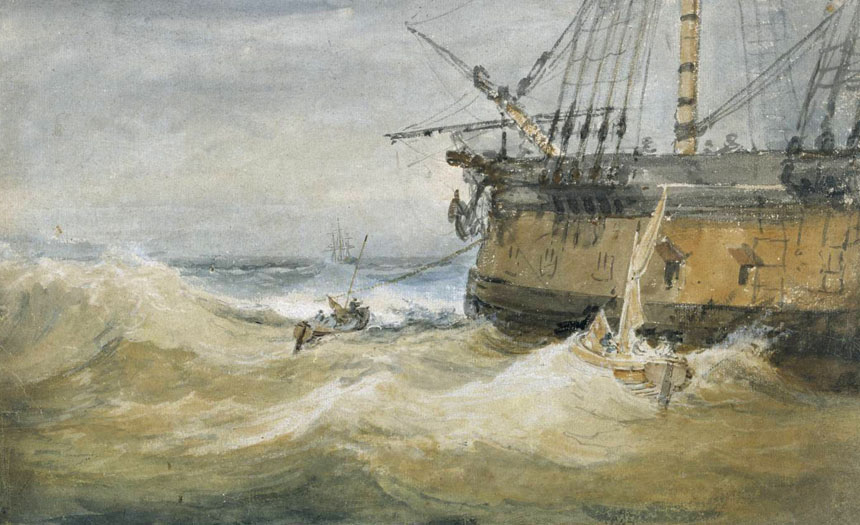
TurnerThis fine and accomplished sketch is from 1796.
.

Turner

This seascape, a subject he would paint his whole life, is from 1796 too. Not bad for a twenty one year old!

.

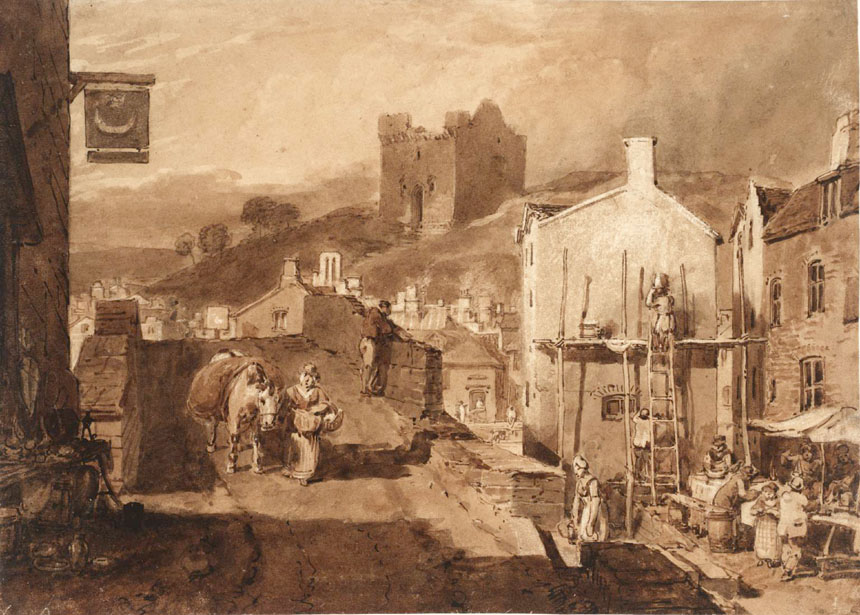
By 1806 he is producing masterly topographical renderings in watercolour.

TurnerThis is Morpeth from around 1806.


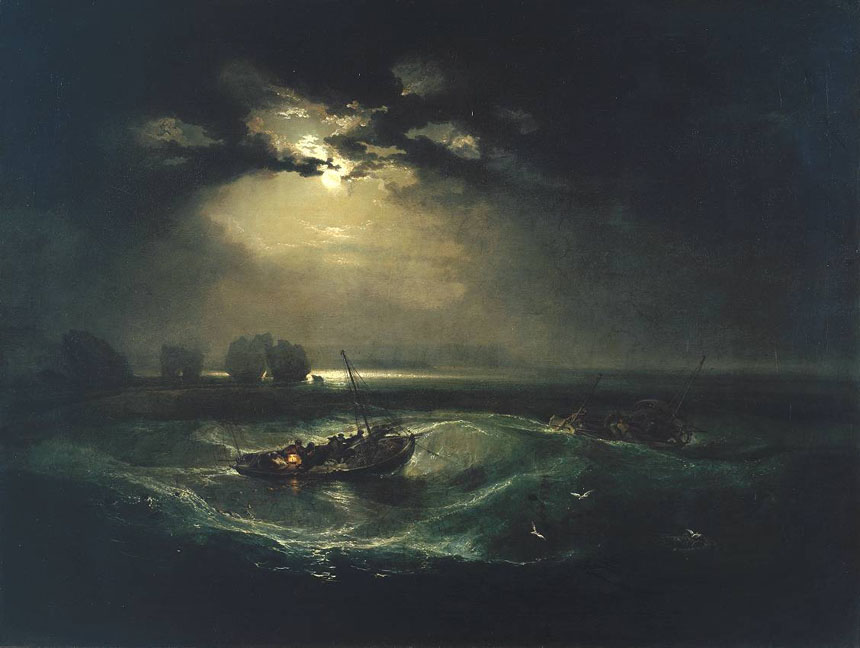
He is also painting ambitious oils for exhibition such as this painting from 1805.

TurnerThis fine seascape hangs in the National Gallery London.
.

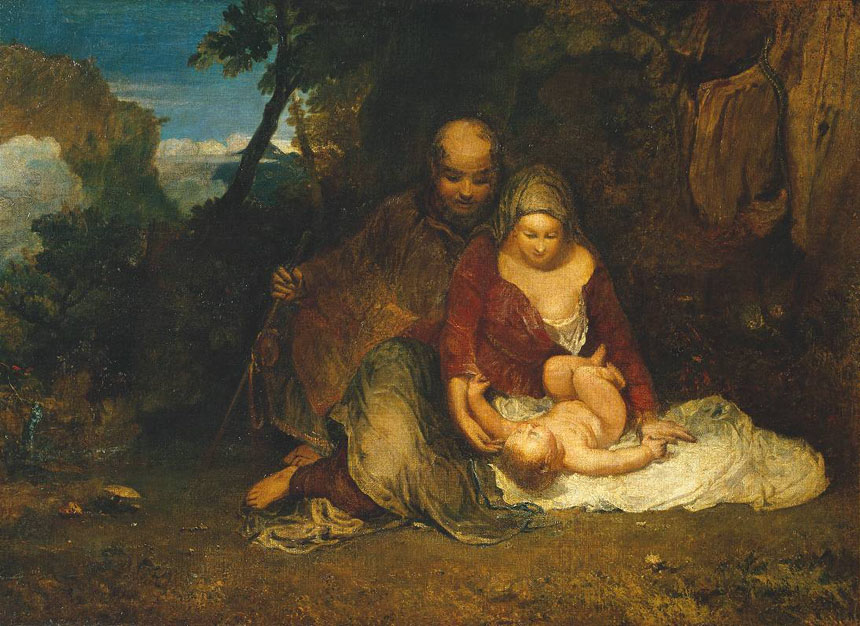
TurnerWe also see him absorbing the influences of earlier painters as in this shaky attempt at a Titian from 1803 after visiting the Louvre.
A good try, but not really convincing!

.

Turner

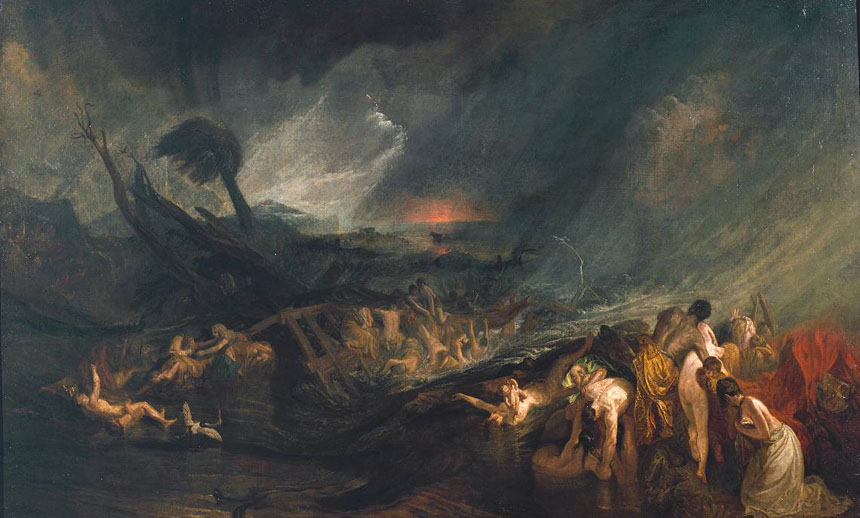
 Another influence is popular mythological and biblical epic paintings which were very much in vogue. Here is the Deluge from 1805.

.

Turner

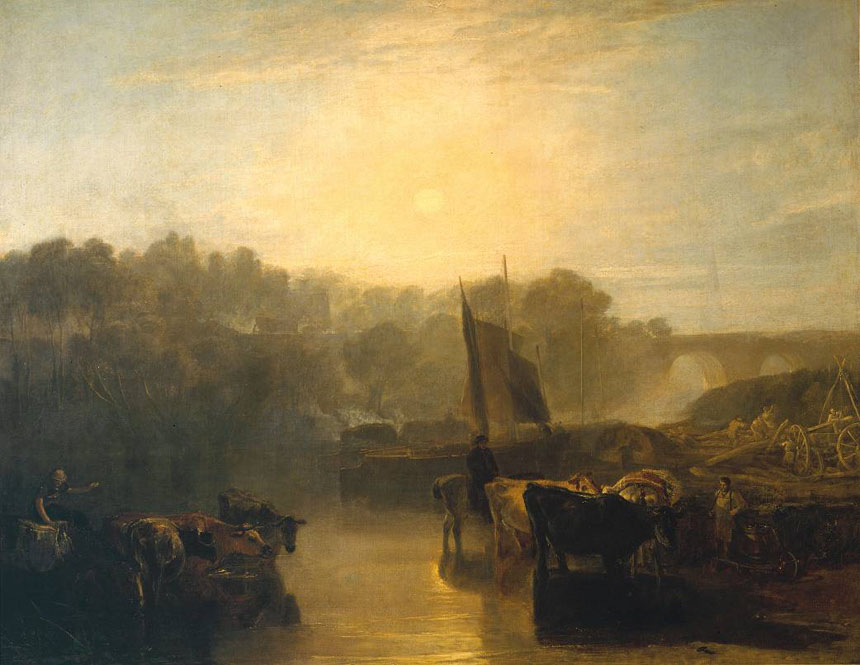
We cannot leave out his other influence that was to last his whole life. Claude Lorraine inspired a great swathe of his work, here is an early one from 1806 of Abingdon.

It is from Claude he gets his love of that suffusing light that makes the whole picture seem to glow. Unfortunately he also gets a penchant for scattering classical figures in various states of undress scampering about. I chose the picture above as they are thankfully replaced by cattle a la Aelbert Cuyp.

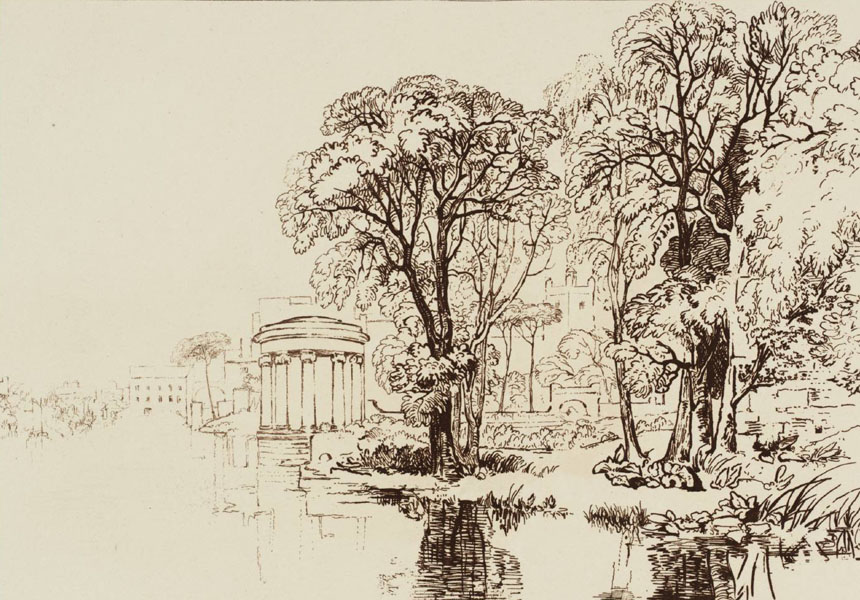
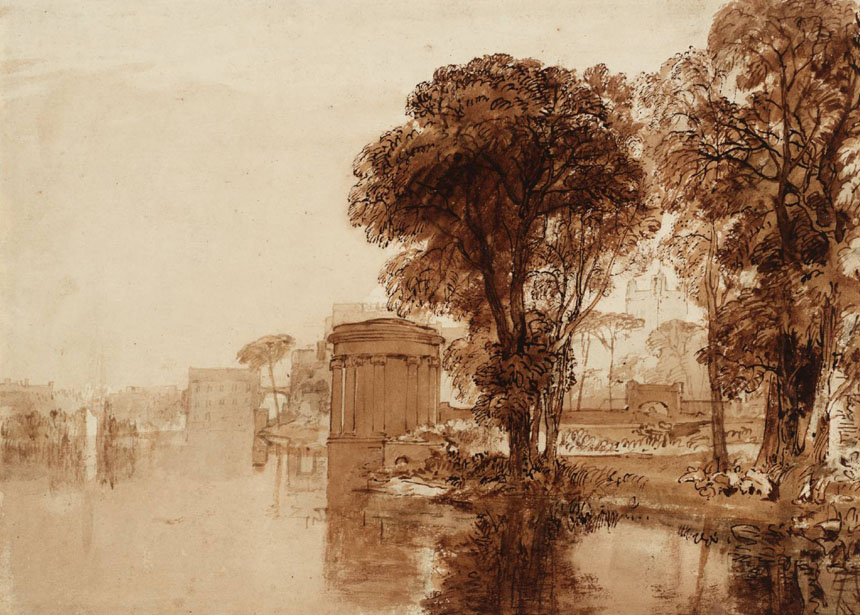
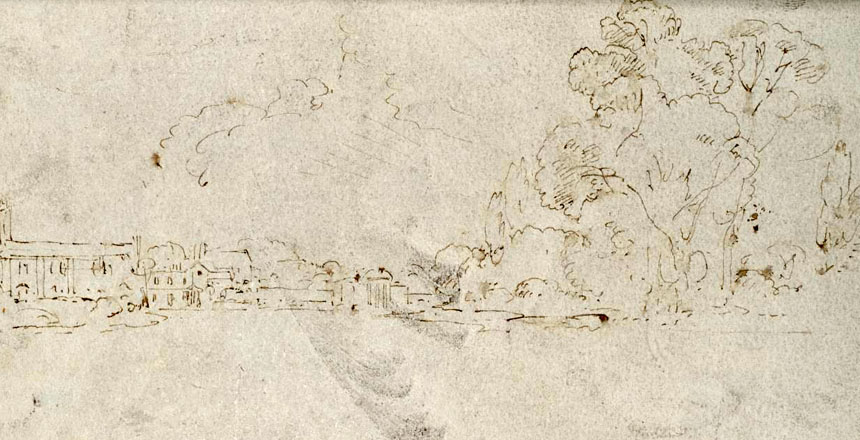
What is often passed over by writers and critics is that the majority of Turner’s work in his lifetime was spent producing reference paintings and drawings that were to be engraved and sold as editions. To this end he undertook a punishing series of travels to the far corners of Britain and far across Europe. The large oils were only a small part of his output, but important nonetheless as a means of self promotion and the gaining of prestige, which in turn drove sales of his engravings. Here is one of Isleworth with the sketches probably done around 1806 through various stages to the final engraving.

Turner

.

Turner

These two are from his sketchbooks and probably done en plein air on the same day.

.

Turner

Here is the compositional drawing worked up from the sketches.

.

Turner

Then a sepia wash drawing as a guide for the engraver.

.

Turner

Finally here is the finished engraving sold as an edition.


Whether Turner coloured these entirely himself I doubt, I dare say it was quite a production line with Turner plus assistants beavering away to get the work done as quickly as possible.

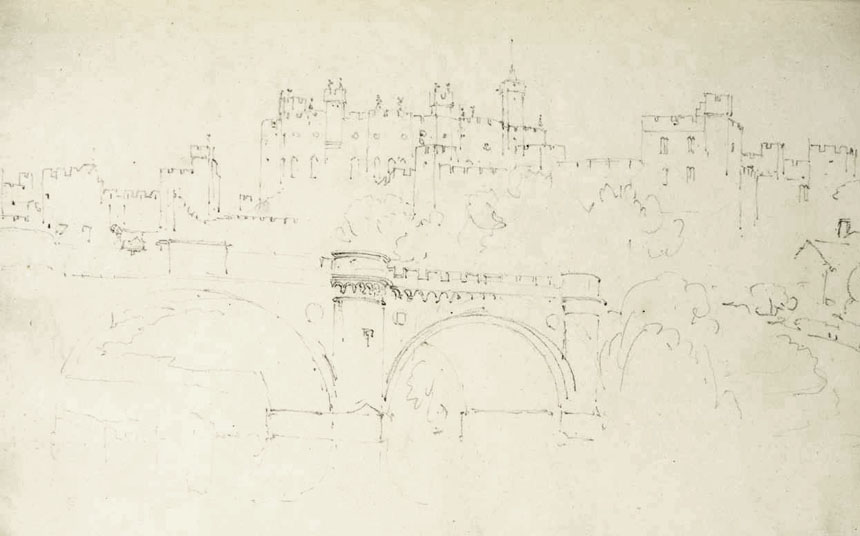
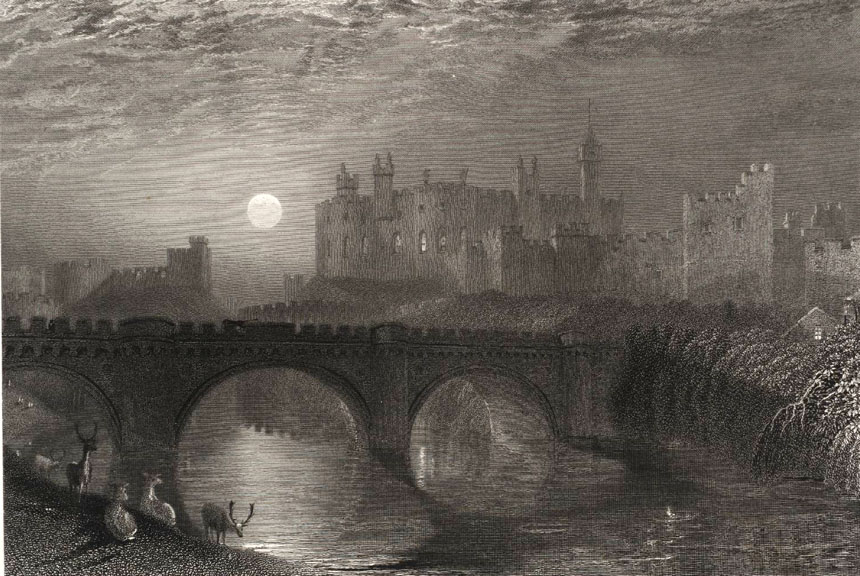
For his research Turner developed an amazing technique of noting down subjects and things that interested him. His process in about 1830,  25 years later, is pretty consistent, below is Alnwick.

TurnerThis sketch is typical, he just notes down the salient features, the mood and colouring would probably come from another sketch possibly not even
of the same subject.

.

Turner

On his return or perhaps in a moment of rest in between travelling he would work up a watercolour version.

.

Turner

Here is the final result, a steel engraving this time I think.


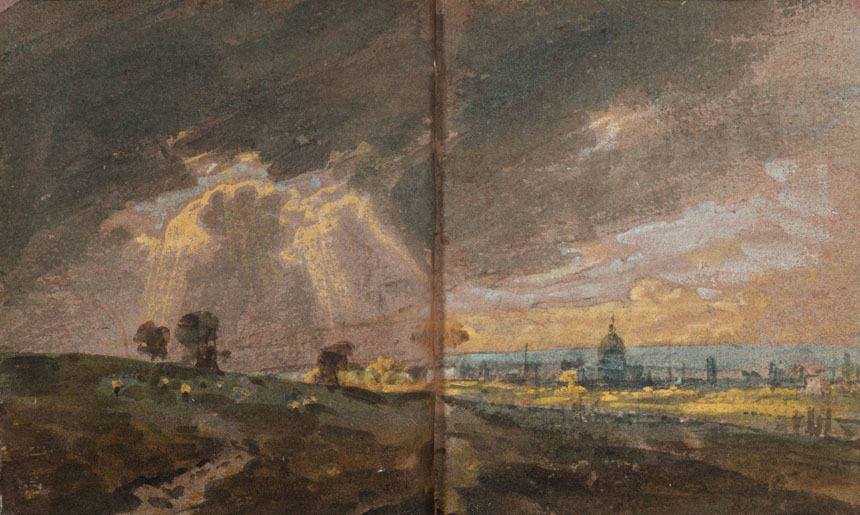
Below is an early sketch of lighting and mood. He could have referred to these sketches at any stage in the future to give the bare bones of a subject a dramatic and realistic mood.

Turner

Towards the end of his life Turners eyesight begins to fail, and from the late 1830’s onwards his colouring becomes uncertain with him tending to paint too brightly. Here is a quote from Richard Liebreich writing in 1872 defending Turner.

“According to my opinion, his manner is exclusively the result of a change in his eyes, which developed itself during the last twenty years of his life. In consequence of it the aspect of Nature gradually changed for him, while he continued in an unconscious, I might almost say in a naïve manner, to reproduce what he saw. And he reproduced it so faithfully and accurately, that he enables us distinctly to recognize the nature of the disease of his eyes, to follow its development step by step, and to prove by an optical contrivance the correctness of our diagnosis. By the aid of this contrivance we can see Nature under the same aspect as he saw and represented it.”

Another more recent assessment is by James McGill, as reported by Maev Kennedy in the Guardian in 2003.

“Mr McGill is convinced Turner was slightly colour-blind, and this particularly affected his perception of red and blue. “The blues are all wrong, either too dark or too bright, and the reds get stronger and stronger, which is exactly what you would expect. And I have no doubt that later in life he had untreated cataracts, which would have made the centre of his field of vision very blurred, with some objects at the edges in focus – and with exactly that effect of dazzling shimmering light we see in the paintings.”

“With the type of cataract which I believe Turner had, it is quite possible to see foggily through the cataract, until you are look ing directly into bright light. Then you’re in trouble, because all you can see is the dazzle – and that’s what we get with Turner.”

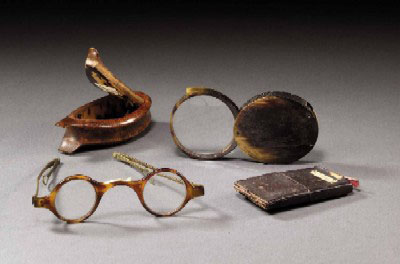
Here are his glasses. which were tested to determine how Turner’s eyesight had decayed.

Turner

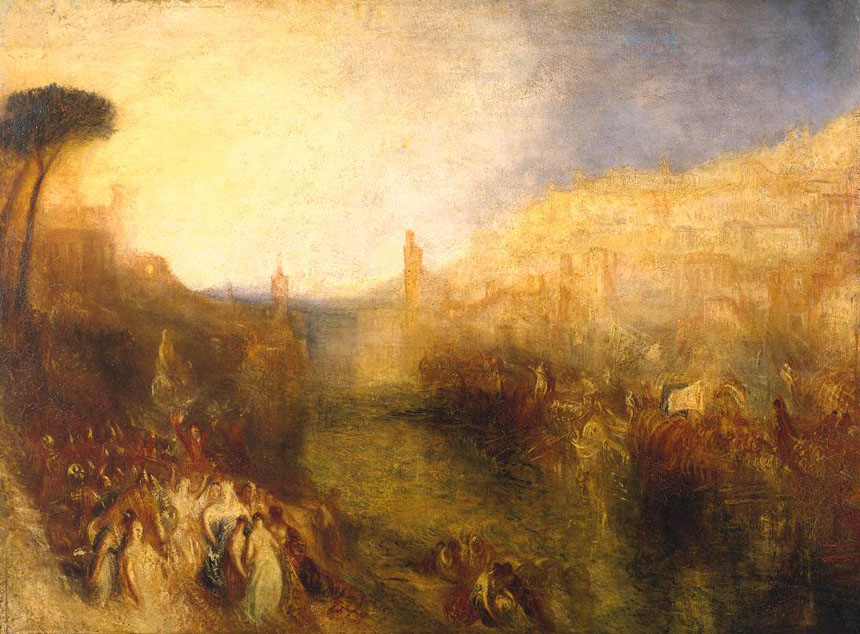
Below is a very late picture which shows his sad decline.

Turner

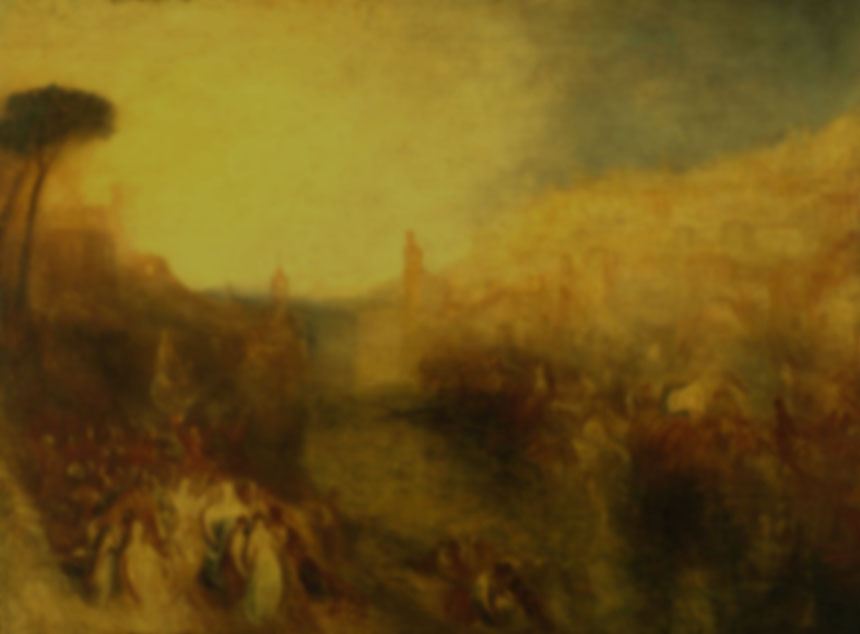
Below is how this might have seemed to the painter as he worked.

Turner This is only a rough guess but it gives you an idea of how heartbreaking it must have been for a man like Turner to have his eyesight decline.
It has alas been also the case with other painters that decaying eyesight and the decline of old age are taken as a move towards abstraction and presented as a step forwards. Degas and Monet have been used in this way too. I find it, I have to say, as an insult to these great men, and a cruel and insincere act to use their sad decline in old age to prop up a poorly conceived and simplistic view of art history.

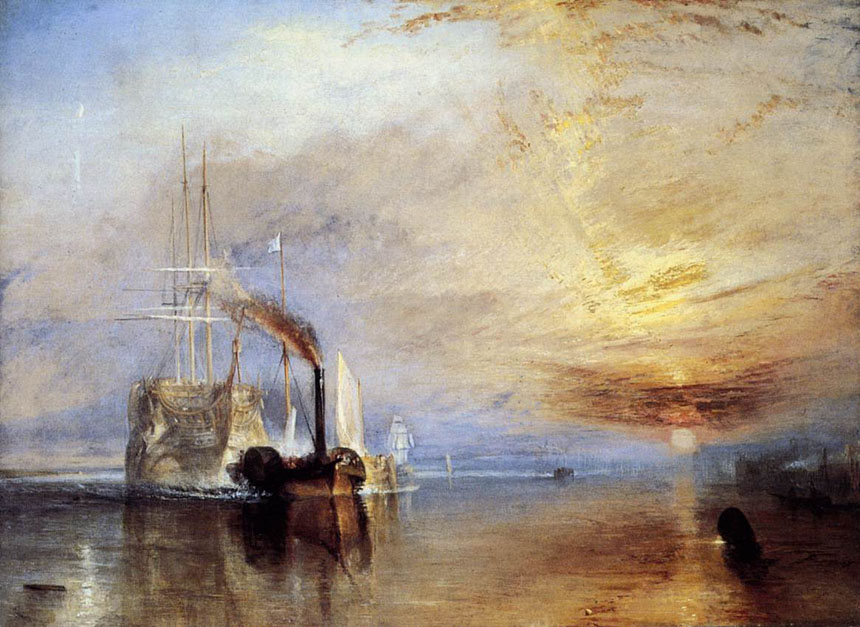
We shall leave Joseph Mallord William Turner on a high Here is his own favourite of all his works The Fighting Temeraire, this is often represented as the new age replacing the old, which I don’t disagree with, but I think he is also thinking, as in another similar picture, of the death of his great friend and fellow painter David Wilkie.

Turner

The images of Turner’s works in this article are copyright by the Tate Gallery London.

« Newer PostsOlder Posts »

Powered by WordPress

error: Content is protected !!