Rob Adams a Painter's Blog painter's progress

October 30, 2013

Spirituality and Art

No not a post about religion, you can relax! A post prompted by two things, one Grayson Perry’s Reith lectures on the art world and discussions on an on line forum about drawing. They both caused me to think about how artists think about themselves. There is I have come to think a disconnect between what artists would like to believe they are and what they actually seem to be.
On the forum discussion (about drawing) I suggested that drawing was a craft, like making shoes or chairs. This drew howls of protest from the public gallery. No it seems drawing was a way of channelling your soul on to paper, a meditation on the possibilities of the infinite, anything, anything but craft! I tried logical argument (or so I thought) but to no avail, I was asked why I was demeaning drawing.
It occurred to me that drawing had been promoted while I wasn’t paying attention to the purest form of prayer, the Lords prayer of artistic spiritual communing. People who know me will not be surprised that the appearance of a sacred cow will always prompt me to ask awkward questions.
In the spirit (if I may use the term) of research I looked at a selection of well known artists CV’s Emin etc. A high proportion stressed how drawing was very important to their process. I did consider posting some of their efforts and I really did try and find evidence of skill, but truly there was none. If any of them had shown up at Rubens’ door seeking a job they would have been out of luck. Below is the prospectus for a life drawing class at St Martins.

“Over the course of a week you will be encouraged to lose your inhibitions though a wide variety of practices and materials. You will be asked to confront your own ambitions within your artistic practice and to consider how to make your work relevant to yourself and to contemporary artistic practices in the wider sense.

During each session you will be introduced to a new approach to thinking and making. We will look at the work of living artists and explore relevant themes and practices. Some workshops will make use of sound or involve a live performer such as an actor or dancer. You will be encouraged to engage with new concepts and practices and to try a wide variety of differing materials – some traditional, others less so.

You will be encouraged to work with the skills that you already possess. We will not teach you ‘how to draw’ but rather aim to enable you to fully engage with and realise your own creative potential, build up confidence in your own artistic identity and think like an artist.”

I particularly like the encouragement to work with “the skills you already possess.” and the “we will not teach you, how to draw” heavens no that would be terrible. The results of the sessions are here so you can judge for yourself. St Martins Drawings there are some efforts that look like the student has potential, but knowing current art teaching they would have been told to loosen up and draw worse! One cannot help but notice that the model is lit by a single light plonked behind her. Which to my mind speaks of a monumental insensitivity to the visual world. You would not catch a photographer trying to capture the human form in that uncaring way.

I digress, but only to show that skill is very much not part of drawing to the contemporary mind. Nor is representation of the external. So what are we left with. The last line of the prospectus gives a clue. “realise your own creative potential” but leaves us puzzled as we are being allowed no tools whereby that might occur. You would not tell a music student “We won’t tell you how to play a musical instrument, here’s a room full of stuff with a few musical instruments thrown in, just give them a go and seek your own personal music.”

How does this connect with the “spiritual” I am not using it in the religious way, but in the way that people refer to things having indefinable qualities. We use (or misuse) the word “energy” in a similar way. Great artists are meant to imbued with an unparalleled access to this force, after all it couldn’t just be practice and hard work could it? I hinted online that maybe Michelangelo had his off days too… I was completely unprepared by the reaction. I was told that such a thought was absurd and only a jealous no hoper would demean the greatest of drawers. In reality I admire Michelangelo hugely, so it felt odd that they thought I disliked him. The problem of course was that I had said that an official beatified saint of drawing was a mortal and like us all occasionally had feet of clay.

Once again I refer to the excellent St Martins prospectus. “you will be encouraged to loose your inhibitions.” and later “build up confidence” now here I agree confidence is key. You do not however gain confidence by loosing your inhibitions. You increase confidence by becoming increased in your capabilities and you gain capabilities through study, practice and hard work. Many of the “inhibitions” can be due to lack of skill!

Later they refer to the “artistic potential” here at last we are getting to the heart of the matter. What is this thing that is assumed to be there, this “potential” ? Does it lie within us like a curled up flower within a bud just waiting for the clouds of inhibition to be swept away in order to unfurl in its glory? Why that is astounding! How wonderful, it means that somewhere  in my head must be a great novel, a stirring symphony fully formed just waiting to be released.

Of course this is absurd, but we very much like the idea. We so much want to be more than this fleshly robe. We want soul, we want an animating spirit, we don’t want biology and physics. We want art to flow from us like a river, we want to mine our inner selves for buried treasures. We do not want to dig foundations and build up brick by tedious brick until we have a house that has beauty but also all the signs of our own frailty.

I’d better give you some pictures after that lot… a few life paintings will be tagged on at the end in order to fully demonstrate that my own feet are well weighted with clay!

.

Greenwich, watercolour, plein air, painting

A well known view. I did it in three sessions, the first a plein air drawing with a couple of washes. I had to stop as I was a little too late in getting there

and I am taking a little more time to draw of late as well. Once home I established the basic tonality from reference but returned next evening to finish.

1/4 sheet Watercolour.

.

Croom's Hill, Greenwich, watercolour

This is Croom’s Hill leading down to Greenwich. At last the autumn colours are showing. I have found this wonderful colour in the Daniel Smiths range

called Zoicite that is a murky green with wonderful granulating properties. Quite tricky to use but adds interest and texture to greens.

.

Self portrait, Rob Adams, oil painting

Here is a rare beast, a self portrait! I was preparing to lop my hair off one evening when I was taken by my rather wild appearance

in the mirror. So barbering had to be delayed while I painted. I managed after a fair amount of buggering about and cursing to get a half decent

photo to finish it from. Always good to assess the damage that life is doing to your face. 12in by 10in Oils

.

Greenwich, London, plein air, oil painting

I did a drawing buildings tutorial with two friends, and managed to fit this sketch in as they wrestled with the horrors of architecture. this is part of the

Maritime Museum in Greenwich. 8in by 10in oils.

.

Greenwich, Thames, plein air, river, oil painting

On my way back to the car a storm was coming in, I just couldn’t resist trying to catch the drama. I had to lash my tripod to the railings! It is so easy

to just walk by these opportunities. Thames at Greenwich. 6in by 12in oils.

.

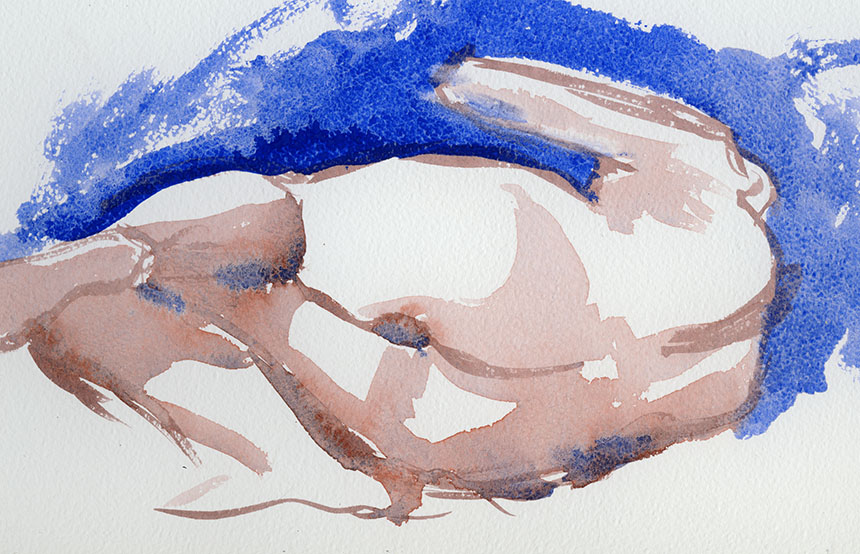
Life drawing, nude, watercolour

7min.

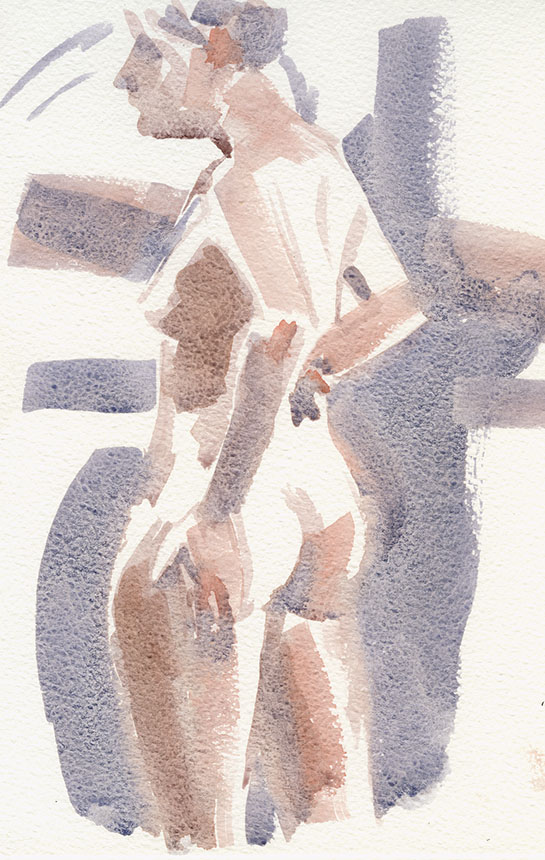
Life drawing, nude, figure, watercolour

5min

.

Life drawing

two 7min

.

Life Drawing, nude, watercolour

7min, was pleased with this one, every now and again you catch something in the quick sketches.

I nearly always prefer them to the longer paintings.

.

Nude, Life drawing, watercolour

7min. Esther is a fantastic model who takes up some very challenging poses!

.

nude, live drawing

Another wonderful model Alice. Here’s one where the feet of clay are very much in evidence, lovely pose, great lighting but the drawing was too far out.

30min.

.
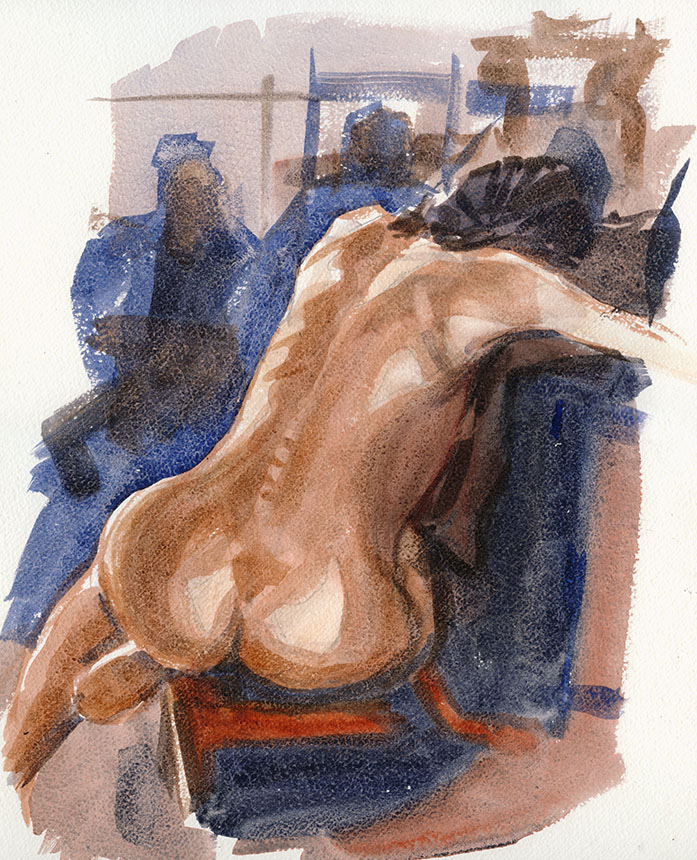
life drawing, nude

Alice again. A bit better here despite not doing an initial drawing but just diving in with the paint. 30min.

.

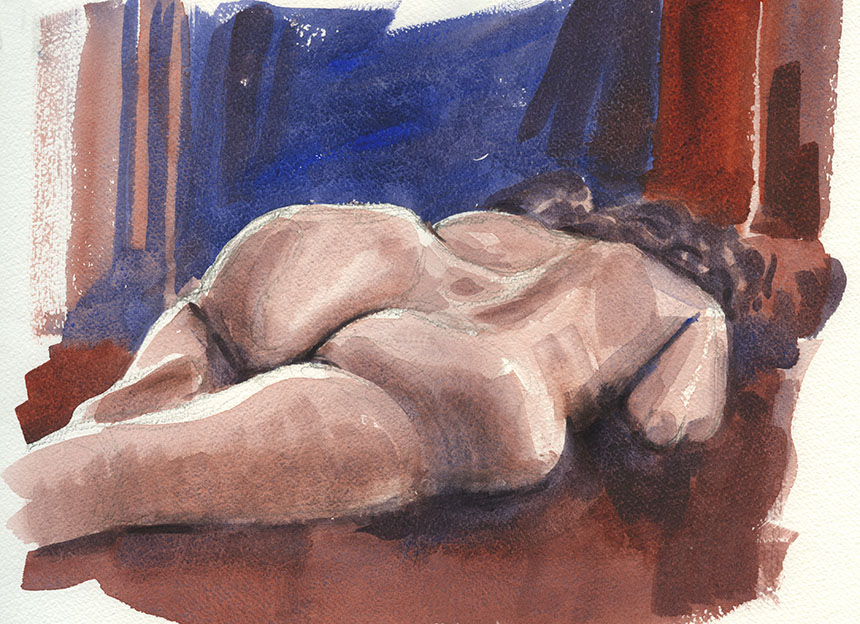
Life drawing, nude, watercolour

Another one with no initial drawing. Flat on poses are the some of the hardest. I was painting here on hot pressed

Arches with flat sables. In fact the whole painting was done with a half inch brush!

30min.

.

Life drawing, nude, watercolour

The best one of the session with Esther I had a little longer at 45 min.
September 27, 2013

What is Art For?

Filed under: Art History,Drawing,Life Drawing,Uncategorized — Tags: , , , , , — Rob Adams @ 6:34 pm

In a recent forum debate the topic came up as to whether art had a point. The debate was quite varied with some saying it didn’t need one and others saying that shared culture benefitted all mankind, most seemed to say it was a sort of therapy for the artist, a few that it was a focus for meditation for the viewer and the more hardheaded souls thought it was to make an investment item. I don’t necessarily disagree with any of these, but neither do I think any of them tell the whole story.

There are I think a couple of aspects that are separate. There is the “treasure” factor. A work of art if accepted as such is a store of value and enhances the status of the possessor. Then there is the aesthetic, where looking at the art item brings pleasurable or otherwise feelings, either way a reaction in the thoughts of the viewer that could range from delight or disgust to quiet contemplation. These are obviously not exclusive. A person attempting art appreciation wishes a return for their perusal. It could be appreciation of skill, it could be appreciation of subject matter, or an aid to meditation, a doorway to contemplation. This is the story from the consumer’s point of view. These are if you like the niches in the market that are available to the artist to fill with appropriate works.

Most contemporary artists would I suspect feel that it is the therapeutic or otherwise effects of the art’s creation upon and by the artist that are important and any effect it had on others was a side effect. The artist would make the act of expression and then leave others to make of it what they will. All very elevated of course but in my opinion untrue and wrong headed.

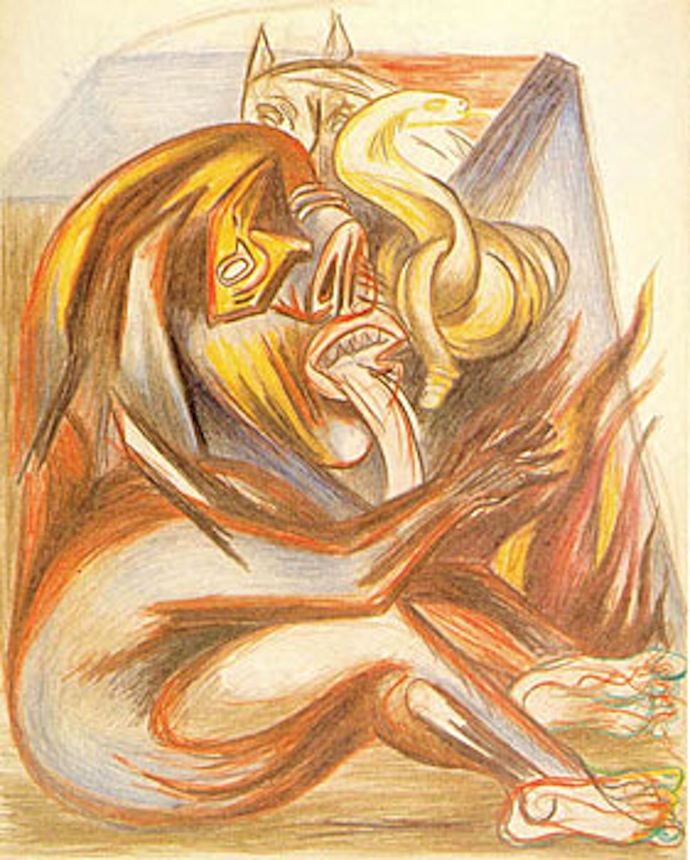
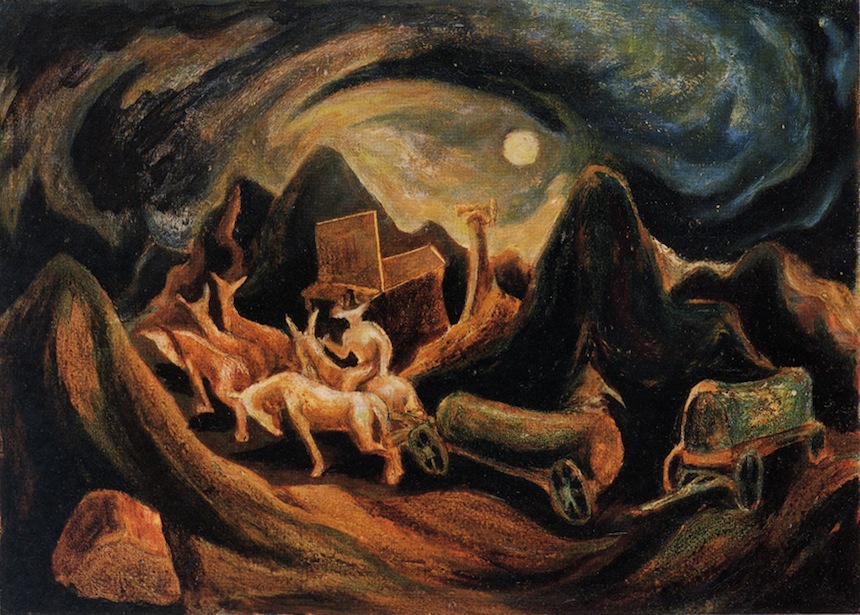
Recently the Times printed a list of 20 paintings that anyone should know. I won’t bother to list them as the idea of such lists seems to me entirely crass, rather like those books that reduce War and Peace to 20 pages so you can pretend to have read it.  The pictures listed of course followed the tired old art historical arc pedalled by current art historical wisdom. Abstract art was rather oddly represented by Pollock. The blurb below the picture read, “…any critical confusions about his stature have long since been cleared up.” followed by some daft waffle I shall not bother to unpick. It does say earlier that Pollock had become interested in the paint splashes on the floor when he worked as a (very bad) muralist. A rather dubious tale to my mind as Pollock flirted with a fair few in vogue styles before becoming splashy. What is interesting is how Pollock’s early and very undistinguished career has been air brushed out, here is a site devoted to him: Pollock. You would think they might be keen on his early stuff… but no there is a gap and he springs into existence almost fully formed. There are examples from his days with Thomas Hart Benson, they are pretty average for a 23yr old but not wholly awful, he also does a few years later some Picasso inspired scribbles. I’ll put them below, they are very hard to find so the images aren’t great.

pollock

pollock


They do seem to show he didn’t have any real idea of where he wanted to go. Even though I suspect the drips on the floor story is apocryphal I quite like it as I have had a fair few admiring the paint frame floor moments myself over the years and painted many abstract backgrounds created by flinging paint around for use behind fashion shoots. I was once, if you can believe it, quite in demand for such canvasses by the great and the good of the world of photography. We sometimes joked at the time about how the floor would make a good Jackson Pollock if we could but rip it up and mount it on the wall. I have also painted fake Pollocks a fair few times for adverts, I have read in art books about how Pollock had some sort of mastery and it was hard if not impossible to mimic him. It is I assure you not true. Pollocks are relatively easy. Thick paint for big dribbles and splashes, thinner for finer dribbles. Then just layer them up, thin thick, thin thick in four or five colours. The hardest part is to do it randomly without too much thought. Due to this of course fake Pollocks are a big problem with the fakes essentially just as good as the real ones. If the experts at the big auction houses are struggling how is a mere gallery visitor to know?

So what are Pollocks for? They are quite nice to look at, but so are any paint splashes. As a visual focus for meditation they are no better as far as I can see than a bit of much repaired pavement or aged concrete. You could argue indeed that the pavement carries a more interesting embedded history, more trodden in chewing gum for sure. If it was just their meditative qualities that were key then it would hardly matter whether they were by Pollock or someone else, so it is I would say the “treasure” aspect that is the defining one. Their cultural significance is mainly historical rather than aesthetic.

Another of the art items listed by the Times is the Lindisfarne Gospels. On the surface they do much the same job as the Pollock. They are treasure, and also made as an aid to meditation and devotion. They also have a good historical story with the Bishop Eadfrith in place of a depressed drunk. Though we don’t know if he or his scribes hankered after renown as Pollock did. Here is a page from the Gospel.

Lindisfarne, gospel


You can click on the above for a bigger view. Pretty funky stuff you have to admit. It is pretty much abstract, with only a few zoomorphics here and there. Easy to loose yourself in the textures and patterns. So what are the differences. Well for one I have tried to create these. It is not impossible, but it is also not in any way easy, as the dire art produced by many new-agers shows. To produce a fake Gospel page would be a tremendous labour. First gaining the skills, researching methods and other technical knowledge, then practice to gain the dexterity and finally but not least the execution of the page itself. It would in other words take years. It is hard to say what the final page would be worth if it took in the experts. A single carpet page ripped from the book of Lindisfarne would I suspect fetch millions, so why are there seemingly no fakes of the great carpet pages? Well it is simply that they would be too hard to make even at that kind of money. The same is evidently not true of a Pollock. I could and have knocked up a pretty good Pollock take off in a single day. I studied and practiced drawing stuff similar to the manuscript above for several years and still could not do it as well as the 7thC scribes!

I would hold that what makes a lasting aesthetic object and sets it apart from one that has mostly historical and ephemeral cultural significance, is the amount and degree of a person’s life needed to create it. There is very little in this life made by men that does not require skill and the effort of learning and practice to have lasting value. If you do not believe me just go to the British Museum and look at what has made it into the display cases from each era. Do you really think that in a thousand years’Equivalent VIII’ by Carl Andre will sit in a glass case to represent our historical era? Well going by what we have chosen to represent earlier centuries it will be examples of beautiful things created by high skill and lifetime’s worth of practice and learning. Tracy Emin’s scribbles and I’m afraid Jackson’s dribbles are I suspect rather unlikely to be there to be representative of the hopes and dreams of our wonderful and varied age. I might vote for an Aston Martin, a Spiderman comic, a mobile phone and a Hollywood movie! Engineering, technology and mass media are the crown jewels and the highest achievements of our age, I doubt any paintings at all will be present. On thinking about it I would not be ashamed for my times to be so represented, though I am a little sad I can’t see many paintings making it.

Life drawing has returned after a gap. It is always a shock how hard it is!

.

life drawing, watercolour, nude

The second one of the session, the first went badly wrong! Serves me right for taking water colours to the first evening! This one came out a bit

better. Half an hour is only just enough time, you have to be very focussed on the exact order you do things in so that you always have a bit you

can work on. If you get the whole lot wet then you just have to stop and can run out of time. Just two colours, transparent red oxide and ultramarine.

.

life drawing, watercolour, nude

Not the most flattering angle! I enjoyed painting this though as the shapes were so interesting. I like it when the human body looks

like a set of abstract sculptural forms.

.

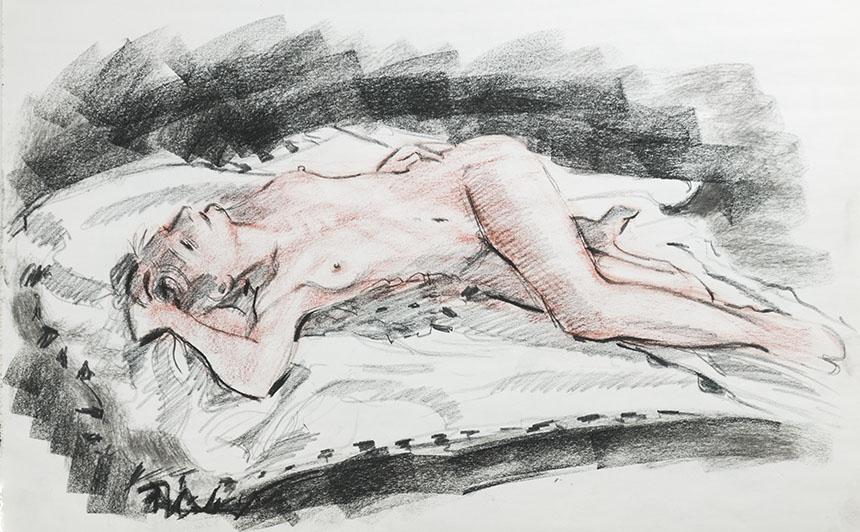
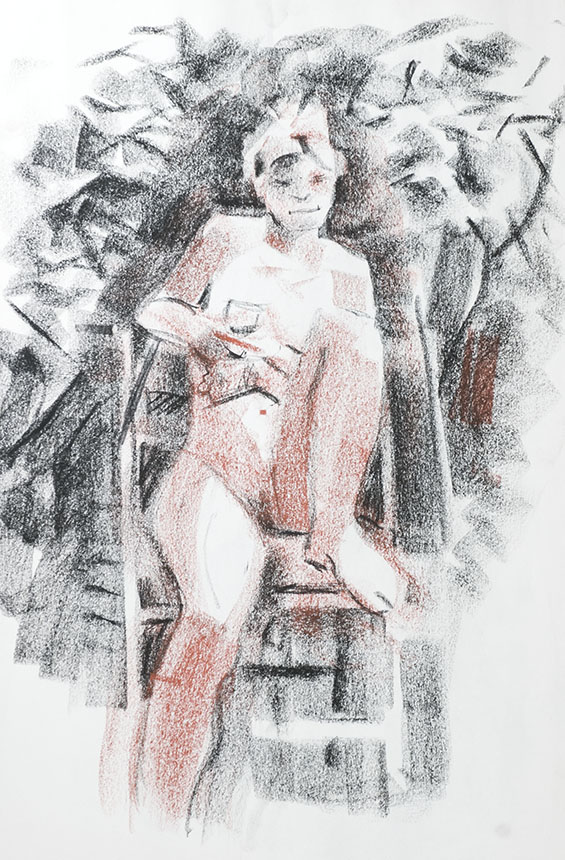
life drawing, charcoal, nude

This is actually the last evening of the previous session before the break. Esther our model posed outside in the garden looking I thought like a very lovely dryad.

The natural light was magical and as the evening wore on got better and better. Hard at first as it is quite diffuse and without any hard shadows. This

is two sorts of charcoal and some black conte.

.

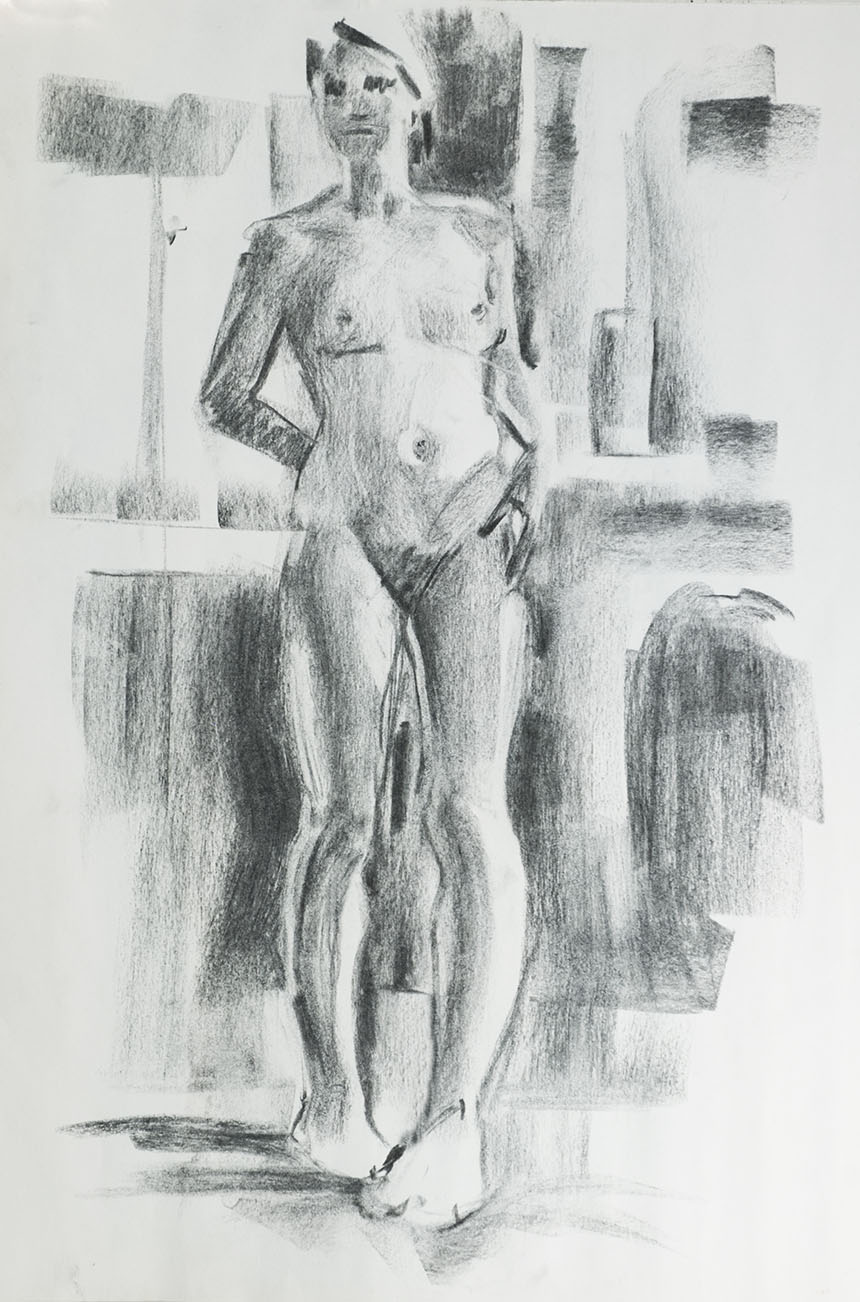
life drawing, charcoal, nude

It did get quite hard to see as the light levels dropped. I just tried to hint at what I could see and not define what was

lost in the gloom. Hard to see the paper too!

.

life drawing, nude, charcoal

I think this was done before the standing one. I remember puzzling over how to indicate the shrubbery without

over complication. The result is a bit futurist!

.

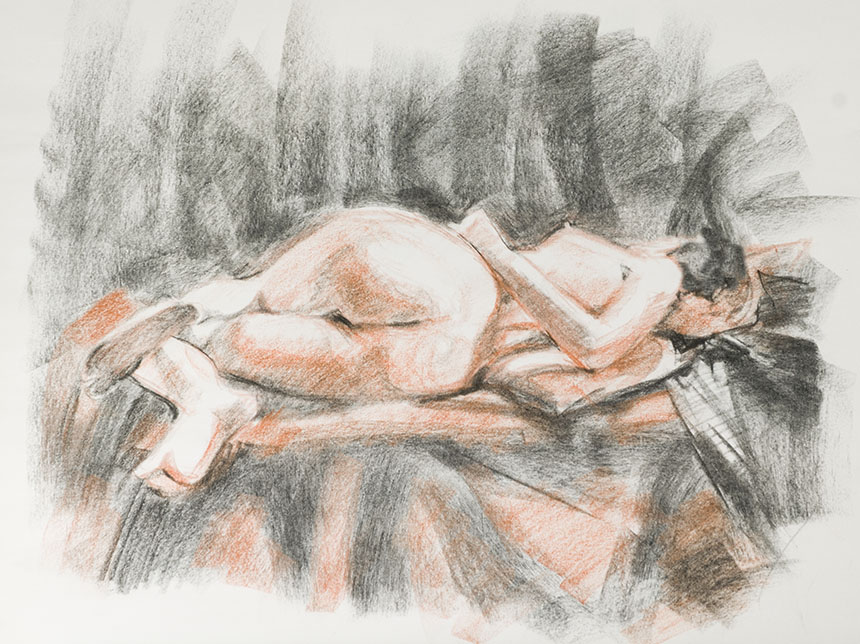
life drawing, nude, charcoal

Ran out of time and didn’t quite get a chance to unify the whole thing. I usually adjust the general tones of areas with light strokes of the side of the charcoal

which helps define the form and so forth.

.

Life drawing, nude, charcoal

Quite pleased with this one. I built the whole thing out of carefully considered strokes trying to be as economical as possible. It meant working a little more

slowly than normal but I like the spare effect.

.

Life drawing, nude, charcoal

Last one, I love the news print to draw on but it does yellow very fast. The drawings from six months ago are quite a bright yellow. I must find something

similar that takes the charcoal in the same way. Cartridge doesn’t have enough bite and pastel paper has too much. Any suggestions welcome!

« Newer PostsOlder Posts »

Powered by WordPress

error: Content is protected !!