A subject I have touched upon before. We all claim to have it, but when asked tend to be a little hazy as to exactly what it is. Artists are particularly fond of it. It is after all a simple explanation as to why you painted something a particular way. Sounds better than, “I tried to get it right but I couldn’t, so I gave up and left it.” I suppose. I think probably a majority of artists would claim to operate mostly by intuition, and think it a strength. Certainly fellow artists urge me to trust it. Well I’m afraid I don’t entirely.
There are two distinct parts to our thinking processes. There is the part that does 1+4 , I bet your head came up with 5 pretty quickly. There is however a part that deals with 172842 + 457913. I bet your brains weren’t so quick on that one! It isn’t just that the first was easier. You actually did no calculation at all, you just retrieved a memory. Whereas on the second you had to set to and mutter, “carry one.” under your breath. Researchers tell me that your eyes dilated and your heartbeat increased while you did the sum. Another huge difference was that the process that led to the first answer happened outside conscious control, but the operations required for second one had to be overseen by the conscious mind. 539655 that’s an erroneous total, but I knew that your unconscious mind would probably make you look down for the answer rather than bothering to calculate!
One difference between the two questions is that the first is a common problem that it is worth having a permanent memory for. In the second case it would be very hard to have all the possible additions pre prepared and ready to fire. The first answer was delivered by intuition the second by calculation. We soon run into problems if we operate by intuition alone. Intuition sums up another human being in a few moments. The process as I noted before is automatic and what must be hugely complex operations are hidden from our conscious mind. In most of us the conclusions that intuition comes up with in such circumstance are given the status of a work in progress awaiting evidence. If we acted as if this intuitive summing up were true we would make many embarrassing errors in our personal relations with others.
When we come up with intuitions that are not well founded we call them assumptions. We might be taken to task for “jumping to conclusions” . This and similar phrases show that we are well aware of the pitfalls of acting as if intuition is fact. Yet in painting we are urged by many to do just that. When we are urged by tutors to “let ourselves go” or “go with the flow” that is just what they are suggesting. They like to call it self expression but it is really more like partial expression. We like all animals live on the cusp between two forces. If you see a cat stalking you see the two aspects working in harness, the desperate urge to leap tethered by calculation as to the moment that the unconscious should be allowed full control. Once the charge is started then there is no time or mental space for strategy, but it is the calculating side computing the probability of success that pulls the trigger.
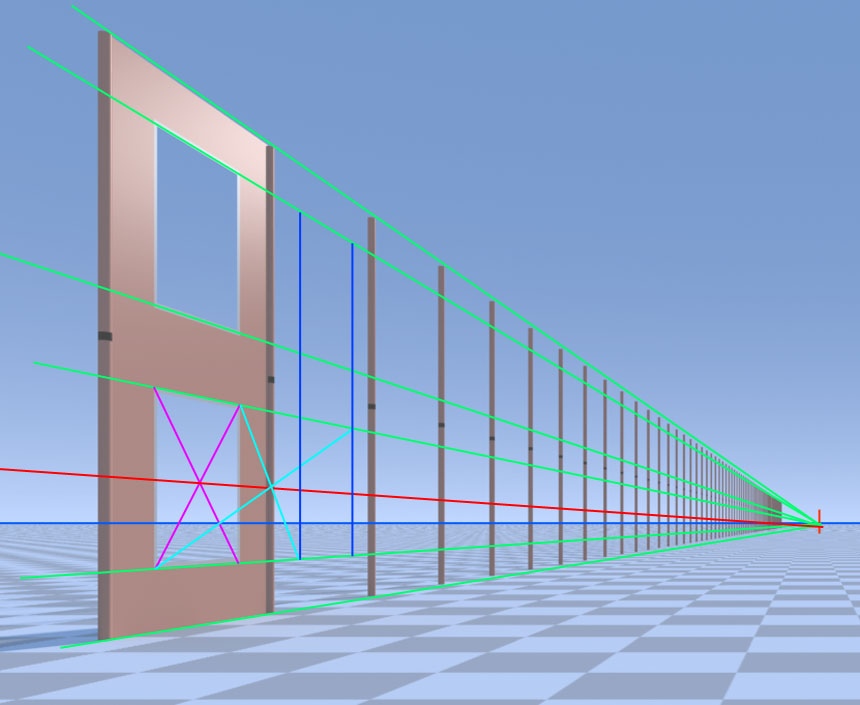
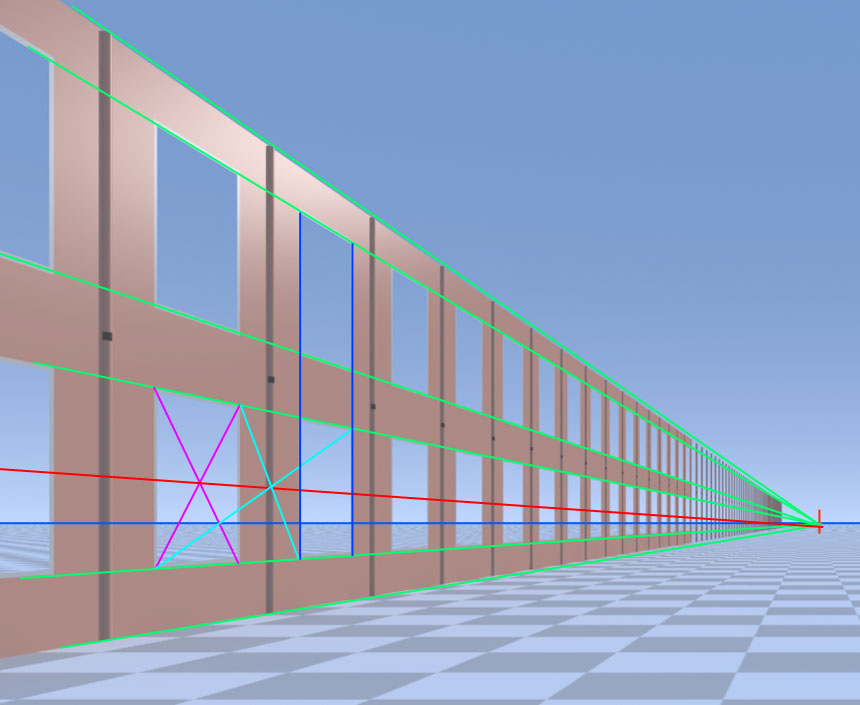
We can jump to conclusions with drawing too. Most untrained artists when drawing a building will make a long side wall that is actually foreshortened less than they see it. Because their intuition is telling them that it is the longer wall and can’t be a mere fraction of the gable end. The eye actually sees it as a mere fraction but in the lazy mind intuition usually wins out. When drawing buildings I have actually seen people measuring and making a mark in the right place , then adjusting it to be wrong! Many of you will be familiar with the Müller-Lyer illusion below.

If this arrangement turned up in a scene would you really draw in the lines the same length? Even when your conscious calculating mind knows that they are the same the automatic nature of your intuitive thought constantly tells you that they are of different lengths. I don’t know how it is for you but my intuitive side wins out and I cannot help but see them as different. Many optical illusions but also many drawing errors are rooted in this effect. The unpalatable fact is that if you leave drawing to intuition alone then you will make some pretty basic errors. One I see in many artists both professional and amateur is to stretch all the verticals, often by as much as a third. This is due to the way we unconsciously assess horizontals and verticals. With tone we run into difficulties too. Below we see two squares that the unconscious part of us assesses as different which are actually the same.
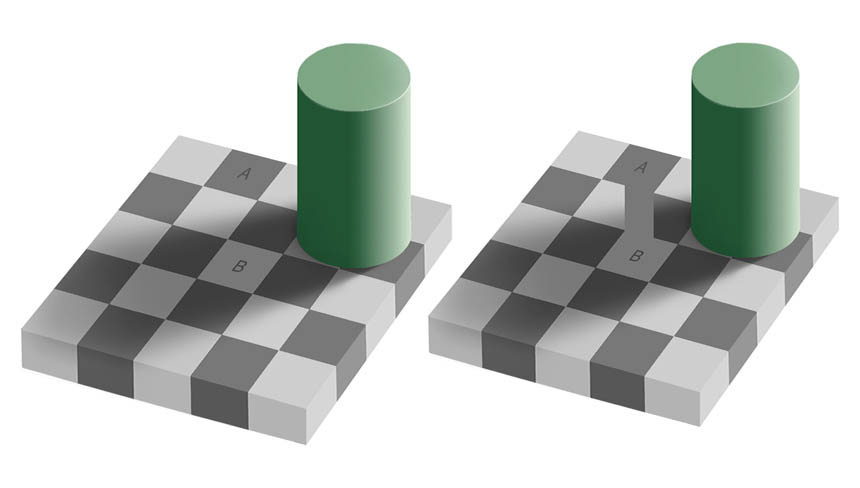
Here again the conscious part of us is no match for our intuitive side. It is no wonder that we struggle to get the tones in our paintings to reflect what we actually see. Even though we can see the tones are the same we cannot accept that the dark square in the lit area will be the same colour as one of the light squares in the shadows. I suspect that very few of us unprompted would paint them the same if actually painting this scene. To depress you further the story is no better with colour. Below is a classic demonstration of how fallible we are.
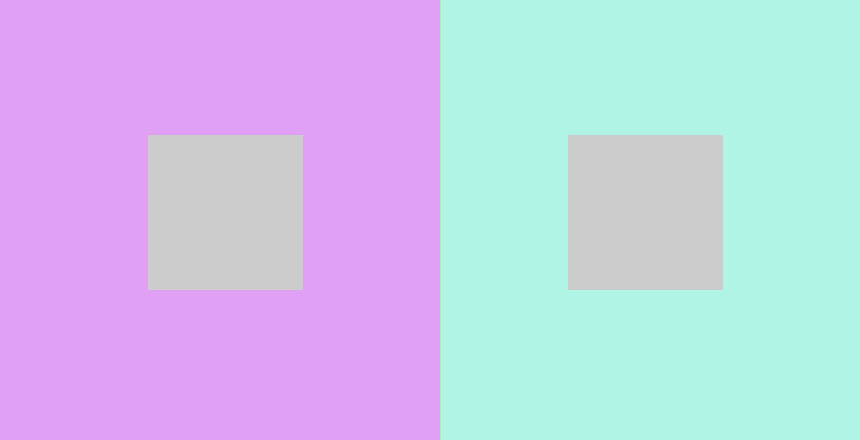
For all we are assured that the two grey squares are neutral grey, we cannot see them that way. Intuition tells us they are different even though our eyes must be reporting them as the same. Once again this often occurs in real scenes when we think we see colour where there is none. I have even seen painting tutors tell their students that they can better assess colour out of the corner of their eye in peripheral vision. Despite the proven fact that we see no colour whatsoever in that area of the eye. What will happen is that the unconscious will paint the areas without colour information with vaguely appropriate colours to supply a contiguous whole. There is nothing particularly wrong in doing this but you should be aware that the colours are supplied by your imagination not your eyes!
You may be getting the feeling that I am suggesting a very cold and calculating manner of painting. Far from it, I want information from both sources. My eyes and my intuitive processing of visual information. However I want any major painting decisions to be audited by my conscious mind in order to check for unwarranted assumptions. We cannot parse every act of hand and eye, but we can learn to harness both sides in concert. One of the signs that we are doing just that is when we are “lost to the world” and totally immersed. You may assume that this is caused by intuition in full flow, but I’m afraid that the opposite is the case. It is when you are doing calculated thinking that intuitive thought is often suspended. Below is a link to a video of a test of observation and counting from a famous experiment.
The above may or may not work for you, but it does for quite a high proportion of people. Another thing you can do to show this is true is when you are walking with a friend ask them to calculate a sum. They will tend to stop walking (an intuitive automatic function) in order to carry out the task! So when you are painting and totally engrossed you are not as you might think using your touchy-feely instinctive Captain Kirk side, you are probably using your Mr Spock calculating abilities. It is only when you come up for air that your intuitive “How do I feel about what I have done?” part has its say. When I am painting at my best it is almost a porpoise like rhythmical activity. You dive deep into the activity and then come up for air and then dive down again. If either side gets to dominate it can cause problems. We have all had that feeling where a storm of conflicting emotions sweep through us when we are considering our own work. Also when we have become too absorbed in the process and have somehow lost the plot.
Both of these attributes can be honed by practice and experience. You learn how to check for incorrect assumptions, but each time you do you hone the unconscious process and next time the “intuitive” function will be a little more on the money. This is a vital process, you cannot “oversee” all the many acts that make a painting, so you must leverage the amazing, but at the end of the day I suspect unintelligent abilities, to take as much of the strain as is appropriate. So what of emotional truth and “gut feeling” ? Well, you can as they say, “Go with your gut feeling” but the decision to do so should I think be a conscious one, not a default reaction. If any of this intrigues you at all then I can recommend Daniel Kahneman’s book Thinking Fast and Slow for further and better thought out information. I’d better stop typing and get painting or all my posts will be as dull as this one!